Online Reporter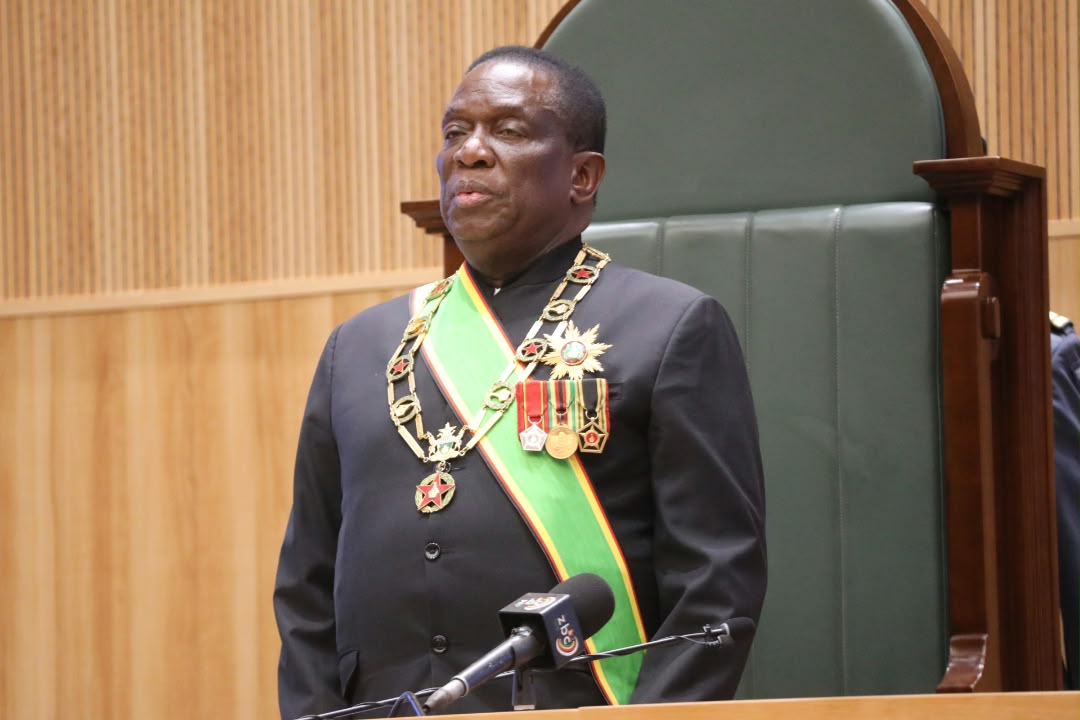
ONCE a year, President Mnangagwa gives a formal combined State of the Nation Address and outlines the Government’s legislative programme for the next 12 months, with the entire top levels of the Executive, Legislature and Judiciary present to show the full national unity and the importance of this annual reset.
Because of its importance, it has traditionally seen the maximum ceremonial in a republic, ceremonial which underlines the fact that our national unity encompasses a lot.
Legislators supporting the Government, legislators such as traditional chiefs who remain independent, and the legislators representing opposition parties all march into Parliament together, another sign that we are one nation despite our diversity in background and views.
The State of the Nation Address allows us to reflect on the successes of the past 12 months, and look at the reasons for failures. And it is a sign of our modern times that basically we are moving forward fast with successes totally dominating the last year.
There was no need for excuses or seeking out causes beyond our control.
Listing the achievements, the President placed first the fact that everyone is benefiting from the successes of the Second Republic, urban and rural, with no one and no place being left behind.
This is important, since we all need to be involved in pushing forward and so we must all benefit from that national effort.
This is linked with the first detailed achievement on his list, the macroeconomic stability with stability of prices, the currency and exchange rate and not just single digit annual inflation recorded all this year, but low single digits.
That stability provides the bedrock for the steadily more prosperous Zimbabwe we are building. Everyone benefits from that stability and this ensures we can all share in the rising prosperity.
One huge major change has been the foreign currency position. For just over a year we have been running a monthly surplus on our trade, exporting more than we import for the first time in 60 years as we push ahead in earning our way to prosperity.
With other inflows, more than US$10,7 billion in foreign currency flowed into Zimbabwe in the first six months, making the President’s rather conservative prediction of an easy record US$20 billion is safe prediction.
As already noted, businesses in Zimbabwe have stopped complaining about foreign currency shortages since they can buy all they can afford from their banks to meet their import bills.
They worry about interest rates, although these are inching down as the stability programmes become entrenched.
But generally everyone is seeing steady progress with the very fast growth rates, although it needs these continuing for several years in a row to make major differences to ordinary families. But we are now in that self-sustaining growth.
Agriculture has its ups and downs, since it depends so much on the weather. But the more than 27 percent growth last year brought a lot of money into rural pockets.
While an El Nino is forecast for the coming season, the Government is moving beyond just making sure we all have enough to eat and has developed a complex six-part programme incorporating all we have learned and experienced to minimise damage and strengthen farming communities.
Mining growth continues, not just with new mines and riding the upper part of global price cycles, useful as that is, but through adding value to our minerals by processing them here before we ship them.
This year saw Africa’s first shipment of lithium sulphate, the next stage beyond lithium ores, coming from Zimbabwe and over the next year our output will all move to this more valuable level.
On energy we are now managing reasonably well, with no load shedding despite the growing economy and growing needs of farmers, miners and manufacturers.
That has been the result of a national effort. Zesa has been adding and renovating hydro and thermal units, private giants have been building their own power stations, thermal and solar, and schools, hospitals and ordinary people have been securing more of their own needs with panels on their roofs.
It all adds up. Thanks to the reserves we had accumulated and the fast footwork by Government and the private fuel sector, we experienced none of the shortages triggered by conflict in the Gulf.
Industry has been moving fast, and is now the biggest contributor to gross domestic product, as manufacturers move from processing and packaging almost fully made up imports and instead start concentrating on processing and making products from what our farmers grow and miners mine. Our new steel industry, and the downstream industries it is allowing, is one prime example.
The legislative programme is largely updating and improving existing law, to make it more effective without adding to development burdens. But there are parts where we are opening new avenues.
One case is the legal framework for combating drug and substance abuse. We have learned a lot since we launched our major campaigns, and have been tailoring and refining that campaign with ad hoc decisions that worked.
Now we can put the whole lot and the legal coordination framework into a new law.
That will incorporate what works in practice, rather than sifting through conflicting theories, and practical application is after all a hallmark of the Second Republic.
Other legal changes will strengthen the justice system, often by making sure ordinary people can contribute such as by protecting whistle blowers. With the macroeconomic stability, we once again can clean up our financial law to incorporate the systems that we have found worked and dump the systems which did not.
The President did not want Parliament, his Government or the nation at large to rest on its laurels after the successes.
He noted we have to maintain and even speed up progress; we have to make sure that women and youths and others once left behind can be included in our progress.
Building Zimbabwe is a national effort. We will all benefit, but we all need to be part of the building teams and we need to work together effectively.