daniel chigunwe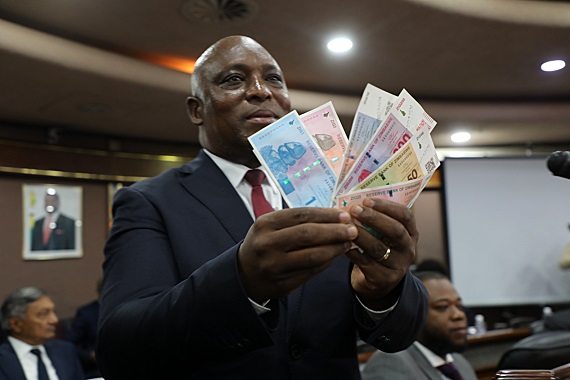
TODAY is the first anniversary of the ZiG and the restoration of a local currency that has been building up the required levels of trust and stability to become in the reasonably foreseeable future the sole national currency of Zimbabwe.
The success is built on what has happened behind the ZiG, both at the fiscal policy level of the Government and the monetary policy level of the Reserve Bank of Zimbabwe. That the two authorities are not just on the same page so far as creating and maintaining a stable currency is concerned, but are prepared to work together to control money supply has been an outstanding success.
The ZiG was more than a replacement for the Zimbabwe dollar set at a new value. It was the result of a prolonged campaign by both the Reserve Bank and the Ministry of Finance, Economic Development and Investment Promotion to track down every public and private sector tap feeding uncontrolled money supply.
At the advent of the Second Republic, the Government, through the Finance Ministry, locked itself into strict fiscal policies, where the Government only spent what revenue it received with minute borrowing allowed only for capital budget items that would produce a guaranteed and adequate flow of direct revenue almost instantly to service that debt.
At the same time the Government tightened up its own finances, with effective procurement and accounting policies to make sure that the budgeted spending went on what Parliament agreed it should be spent on, and gave value for money.
That should have fixed the major problems by removing what had been assumed to be the major source of rising money supply without the required economic backing or growth. It was found to be a lot more complex than that.
The private sector, and especially those speculating and borrowing for speculation, plus those in this sector prepared to manipulate foreign exchange rates through the black market, was the main non-Government source of extra money supply. That had to be taken care of in a series of moves that lasted right up to 2023 as the ingenuity of those profiting from non-productive financial manipulation seemed almost infinite. But they were finite and eventually were all blocked.
At the same time the policies to get the foreign currency markets working through the banks were paying some dividends, starting with the auction system taking over from the previous fiat allotments. However, again there was some stickiness with foreign currency earners preferring to keep as much of their retained currency in nostro accounts rather than joining the auctions.
It was also discovered that the purchase of the surrendered foreign currency was creating extra money supply, which was stopped when the Government took over all the quasi-fiscal functions of the Reserve Bank in 2023, and bought that currency itself. Governments cannot create money and all it involved was moving money between accounts in the consolidated revenue fund.
With the Reserve Bank now, for the first time in more than half a century, being a pure monetary authority, steps could be taken to build up the gold and foreign currency reserves to a level where a new proper local currency was possible. This was backed by President Mnangagwa, who physically inspected those reserves shortly before the ZiG was introduced, through the Finance Ministry, by demanding that half of all mining royalties were paid in kind, or converted to gold, specifically to build the reserves.
With all the bits in place, the ZiG was introduced and became the official local currency on April 8 last year. It was discovered that it had been overvalued on launch, but that was fixed, and since then it has been at a reasonably stable rate with the US dollar, largely because the Reserve Bank backed by the Finance Ministry has been controlling liquidity and keeping money supply below the level of the foreign currency reserves.
It is not tied to the US dollar, so rates can vary as with all local currencies, but that variation will be driven by proper markets, not by speculators.
This in turn has seen inflation fall to very low levels when expressed in ZiG terms, even a tiny negative rate last month, and even in January falling below the US dollar monthly inflation rate.
Liquidity challenges appear to have been largely caused by some banks not doing normal banking business from their ZiG deposits, but the Reserve Bank intervened by using those ZiG surpluses from those banks to fund a productive lending programme at lower interest rates for purely productive borrowers, so sorting out two problems with a single programme.
The foreign exchange markets have also settled down, partly helped by Government demanding that at least half of all taxes must be paid in local currency, even by pure exporters, which has pumped more of the private sector foreign currency into the markets, with the compulsory sales of export earnings also increased to 30 percent. That matching of import demand with supply of foreign currency through the banking system is another source of strength.
Zimbabwe runs a strong surplus between foreign currency inflows and outflows, thanks to the diaspora remittances, but the difficulty now is turning that very positive position into ensuring that importers could access practically the foreign currency they needed legally. That success has converted the black market into just a minor convenience store.
That has been seen in the black market, where the premium is now just 20 percent, the sort of level that will always exist since the black market is both a convenience market, and supplies currency for things banks will not finance, such as illegal drugs. The trading requirements of business are now met through the banks, where they are supposed to be.
So while we can all be pleased the ZiG is becoming the local currency we have been hoping for over many years, we should also remember that it is a respectable local currency because of the strong fiscal and monetary policies of the Government and Reserve Bank, and the convergence of those policies.


 Online Reporter