Online Reporter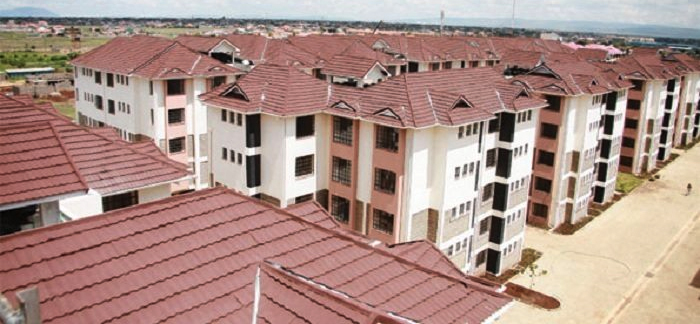
THE announcement by Government that at least 35 000 complete housing units will be delivered in Manicaland under its private sector-led development agenda is both ambitious and deeply significant.
It speaks to a broader national vision that seeks to transform Zimbabwe into an upper middle-income society by 2030, a goal articulated under Vision 2030 and operationalised through the National Development Strategy 2 (NDS2).
At its core, this housing initiative is not merely about bricks and mortar; it is about dignity, inclusivity, and the creation of sustainable communities that can anchor economic growth and social stability. Housing has long been a pressing issue in Zimbabwe, with rapid urbanisation, population growth, and economic challenges leaving many citizens in precarious living conditions.
Informal settlements, overcrowding, and inadequate infrastructure have become common features in both urban and peri-urban areas.
By setting a target of 35 000 units in Manicaland alone, Government is signalling a commitment to address these challenges head-on.
This is not an isolated effort, but part of a broader national goal to deliver one million housing units by 2030. The scale of this ambition reflects an understanding that housing is a cornerstone of development—without decent shelter, aspirations for improved health, education, and productivity remain compromised.
The emphasis on affordability, sustainability, and inclusivity within the Housing Development Strategy is particularly noteworthy.
Affordability ensures that housing is, not a privilege for the few, but a right accessible to the majority. Sustainability speaks to the need for environmentally conscious construction methods and long-term viability of housing projects, while inclusivity ensures that marginalised groups, including low-income earners and rural communities, are not left behind.
These principles align with global best practices and demonstrate that Zimbabwe is, not only looking inward, but also benchmarking against international standards.
The allocation of significant resources in the 2026 national budget to support infrastructure such as roads, water, sewer systems, and electricity is a critical enabler. Housing cannot exist in isolation; it requires a network of supporting infrastructure to make communities livable. By prioritising these elements, Government is acknowledging that true development is holistic.
A house without clean water, reliable electricity, or accessible roads is not a home—it is a shell. Therefore, the integration of infrastructure development into the housing agenda is a welcome and necessary step. Director of Economic Affairs and Investment Promotion for Manicaland, Mr Munyaradzi Rubaya, rightly pointed out that this initiative builds on the progress made under NDS1, which achieved a 71 percent completion rate, delivering 156 000 units against a target of 220 000. While the shortfall under NDS1 highlights the challenges inherent in such large-scale undertakings, it also demonstrates that tangible progress is possible. The lessons learnt from NDS1—whether in project management, financing, or stakeholder engagement—will be invaluable in ensuring that NDS2 achieves even greater success.
The centrality of housing to Vision 2030 cannot be overstated. A nation aspiring to become an upper middle-income society must ensure that its citizens live in well-planned and serviced areas.
Housing is not only about shelter; it is about creating environments where people can thrive, where children can grow up with access to schools and healthcare, and where businesses can operate in proximity to their workforce. In this sense, housing becomes a driver of economic growth, not just a social good. The strategy’s emphasis on Public Private Partnerships (PPPs) is both pragmatic and forward-looking. Government alone cannot shoulder the financial and logistical burden of delivering one million housing units.
By inviting developers and financial institutions to play a leading role, while Government facilitates land and infrastructure development, the strategy leverages the strengths of both sectors. PPPs can bring innovation, efficiency, and capital to the table, while Government ensures that projects align with national priorities and serve the public interest. This model, if effectively managed, can accelerate delivery and ensure quality outcomes.
Yet, while the vision is commendable, execution will be the true test. Past experiences have shown that ambitious targets can falter due to bureaucratic delays, corruption, or lack of coordination. Ensuring transparency, accountability, and community involvement will be essential. Citizens must, not only be beneficiaries, but also active participants in shaping the housing projects that will define their futures.
Affordability must remain at the forefront—housing that is priced beyond the reach of ordinary citizens risks perpetuating inequality rather than alleviating it.