admin
admin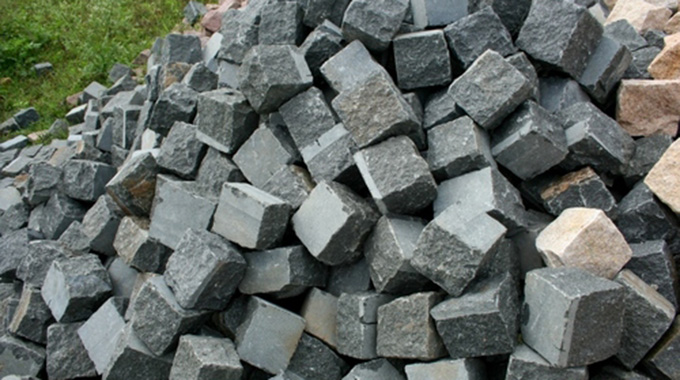
The decision to ban exports of unprocessed granite from Zimbabwe around 50 years after the first blocks of raw granite were exported shows the need to have continuous, if friendly, pressure on mining companies and investors to move beyond the stage of just digging up minerals and sending them elsewhere for the valuable processing.
The granite move came a couple of months after the first granite cutting and polishing plant was commissioned in Mutoko, when Richbasin Minerals of China worked out that it made more sense, and cut costs, to process the granite near the hills and quarries where it was blasted out of the ground, rather than move huge blocks massing over 10 tonnes by truck to a port and then ship them off.
We assume Richbasin, being a purely commercial concern, was not making the investment in its modest factory out of the kindness of its heart, but because it did the calculations and found it made better business sense to bring the equipment to Mutoko and then truck out the cases of tiles, counter tops and polished slabs.
For a start every case would be of full value, with zero waste being shipped out.
A fair proportion of each of those rough-cut blocks was obviously going to be cut away, but someone had to pay for the transport of the tonnes that were not wanted, as well as the part of each block that was wanted.
Since the granite cutting was in a granite area there was no problem disposing of the waste safely and without messing up the environment. Adding a bit of artificial granite sand and gravel to the huge piles already there from natural weathering was not going to be a problem, or probably even be noticed so long as some care was taken.
Recruiting a trainable labour force was hardly a problem either. Although there might not be Zimbabwean workers already trained to cut and polish granite using the latest technology there are plenty of Zimbabweans who have had a technical education and can be quickly trained to operate modern technology precisely and produce exceptionally high-quality products.
With luck a fair number of these trainable Zimbabweans come from Mutoko and are more than willing to find decent jobs near home and family, which makes life simpler for a business person looking to recruit for a rural area.
There have been complaints at the messiness of the quarrying by some companies in the parts of Mutoko and Mount Darwin where miners have been blasting for decades. Environmentalists, while agreeing that a resource needs to be tapped, have been arguing that more care is needed, with less waste.
Local communities have been wanting to see a return on their natural resources, and while there were a few jobs in the mining, the tripling in value that comes after processing is largely made up of the capital investment and the greater number of jobs, along with the better jobs.
In fact, in all value addition a lot of that value comes from the labour put in, and that value is therefore reflected by the new jobs.
While Zimbabwe has been making a point since the advent of the Second Republic that investors are welcome and that doors will be opened rather than closed, there has also been a feeling that as many of the new jobs created as possible should go to Zimbabweans and preferably to Zimbabweans who live in the area where the investment is being set up.
Most investors do this automatically, for very good business reasons. Costs are considerably lower when you can recruit locally and do not have to buy air fares for “home leave”, work out how to bring in families, give allowances for education “back home” and the like. And when the new employee lives down the road already then these additional costs are even lower.
We see this in other mining concerns, including the largest giants where everyone from the CEO, through the engineers and geologists, and down to the skilled workers and unskilled workers is a Zimbabwean.
The outside “tiger team” might have to come in to help set up the mine or processing plant, and train the highly trainable local staff, but a going concern might just need a nitpicking quality controller making sure that what is being made is exactly what is wanted.
There were concerns that the ban on raw granite came a bit soon. But the regulations allow for this. First those who have contracted to supply a certain number of raw blocks can continue to do so until the contract needs renewing, and secondly the Minister of Mines and Mining Development can grant exemptions if there is a good cause.
Both of these business-friendly moves keep what is there intact, and can give a respectable breathing space to allow the mining concerns to bring in their equipment, or work out contract processing with those who are ready.
The Government, at least the present Government, has not been unreasonable in the past, but does want to see movement rather than just talk when it comes to processing.
In return it is prepared to back the processing investor. No one has to worry about finding suitable sites, getting the required licences or anything else.
Efficient civil servants, and if necessary the relevant Cabinet Minister or even the President will make sure that red tape will not clog the development and that setting up a processing plant is very smooth sailing.
We followed this route with chrome and nickel, both of which were exported as ingots of metal in colonial days, but then returned to ore exports as the old companies were wound down.
But once new investment had restored local processing, then the ore exports were banned again. This also favours the investors.
When someone is ready to put in a major processing plant they want some assurance that there will be work for that plant, and that competitors will not just be able to move the raw mineral and make their money outside the country.
Platinum miners are now moving towards the next stage. There are already concentration plants, that convert ore to concentrates containing the platinum group metals.
Now in the latest capital expansion there is enough being mined to make the refining not just viable but a good business decision and shortly they will no longer require their exemptions, granted freely, but rather can expect wholehearted support to make the next level of investment a reality.
And of course gold has been processed locally for just about forever.
This approach, of making processing a sound business decision as well as a desired outcome for Zimbabwe, benefits everyone, the investor as well as those getting the new jobs and the national economy as exports rise in value, earning the foreign currency the nation needs.



 Online Reporter