

 admin
admin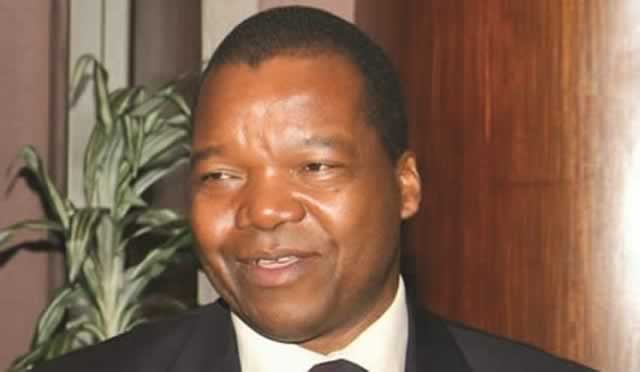
THE appointment of respected economist and banker Dr John Mangudya as the new Governor of the Reserve Bank of Zimbabwe and the unveiling of a $100 million Afreximbank-financed interbank facility are exactly the tonic that the country’s economy — reeling from a biting liquidity crunch — needed at this point.
President Mugabe appointed the former CBZ chief executive officer for a five-year term effective May 1 and his appointment has been hailed as a masterstroke by bankers, economists and the business community. On Saturday, Finance Minister Patrick Chinamasa unveiled the $100 million facility that is expected to help ease the liquidity crisis in the country as it will unlock idle finance in banks.
Dubbed AFTRADES (The Afreximbank Trade Debt-backed Securities), the facility will operationalise inter-bank trading as the large banks which have surplus will provide funds to the underperforming banks which have no liquidity to channel to the market. The facility will be structured as a collateral swap where Afreximbank will issue securities to participating banks in exchange for collateral.
The multiplier effect of the facility is that the productive sectors of the economy, which include industry, agriculture and mining, will get new capital investment while the projected increase in trade will consequently translate to economic growth. This facility will assist in the revival of the country’s financial system which is a pre-requisite to a functional economy.
The facility will boost confidence in the economy and the banking sector. By unlocking deposits held by surplus banks through making them available to those banks with short-term liquidity challenges, liquidity that is idle will be used to stimulate the interbank market. Consequently, the net effect of this is that the circulation of money in the financial system will improve.
The unveiling of this facility coupled with the appointment of a substantive RBZ Governor is what the doctor ordered for Zimbabwe’s economy. The markets are likely to react positively to the appointment of Dr Mangudya to the helm of the central bank because he has a proven track record and impeccable credentials. He believes in “discretionary fiscal and monetary policies” and is a Keynesian economist who believes in discretionary fiscal and monetary policies and in the rational expectations hypothesis.
Keynesian economics or Keynesianism is the view that in the short run, especially during recessions, economic output is strongly influenced by aggregate demand (total spending in the economy). In the Keynesian view, aggregate demand does not necessarily equal the productive capacity of the economy; instead, it is influenced by a host of factors and sometimes behaves erratically, affecting production, employment, and inflation. Keynesian economists often argue that private sector decisions sometimes lead to inefficient macroeconomic outcomes which require active policy responses by the public sector, in particular, monetary policy actions by the central bank and policy actions by the government, in order to stabilise output over the business cycle.
Keynesian economics advocates a mixed economy — predominantly private sector, but with a role for government intervention during recessions. Zimbabwe is in the process of reviving its economy and Dr Mangudya faces a tough task of formulating policies that will ultimately assist government implement its economic blueprint — the Zimbabwe Agenda for Sustainable Socio-Economic Transformation. He has to formulate a monetary policy that dovetails with the fiscal policy as expounded by Chinamasa in his 2014 national budget presentation.
The turnaround strategy will only succeed if the country’s productive sectors are fully operational. Agriculture, manufacturing, tourism and mining need all the support to be productive. The country has a precarious balance of payments scenario; there are low export earnings, no credit lines and no foreign direct investment. We need to improve on all these fronts to get back on track.



 Online Reporter