admin
admin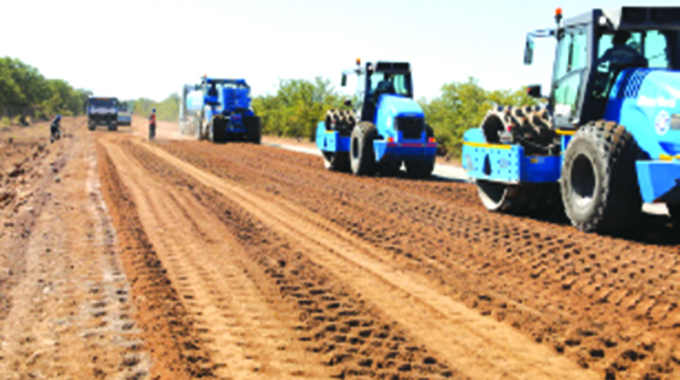
MANY roads from major national highways down to rural roads have been rebuilt or repaired and brought back into top condition under the Second Republic. This is commendable.
So the resuscitation of the 180 road maintenance units under the Ministry of Transport and Infrastructural Development is important. We now need to equip these units so they can do that near continual maintenance work that every road requires.
Even the best-made roads see small faults appearing, especially in the wet season where rainfall running off can erode verges or work into small cracks. Without maintenance, a trivial crack that no motorist would probably notice, can be washed open into a pothole and worse. Eroding verges can be dangerous and as they eat into the tarred surface, will create more damage.
Yet all these faults start off with something little, and if the road maintenance unit in the area is on the ball, the little crack or the small washaway, is quickly fixed, and if there is some sort of possible design fault in the drainage system, then that can be fixed as well.
One reason why our roads did fall into such a dreadful state by the time the Second Republic came into office had been the neglect of maintenance compounding the extra use of roads built decades ago for far lighter traffic.
But with continual maintenance the damage from that extra traffic would have been lighter and the problems would have been diagnosed quicker. Users of roads also have to remember that sometimes repairs might have to be delayed, or at least permanent repairs. Most damage occurs in the rainy season, but often only a temporary fix is possible until the dry seasons when the permanent repair can be made.
Although there are 180 of these maintenance units, we still need to recognise that each has a fair amount of roads to maintain since we are not just talking about the national highway network, although that is very important, but quite a lot of other roads as well.
Of course, with the fairly high density of units each can inspect its assigned roads fairly often and move more swiftly when routine and special maintenance is needed.
But everyone also has to maintain their own responsibility. In both urban and rural areas the main damage to roads, especially the side roads, comes when the road is converted into a river after drains are either never dug or have been allowed to silt up. Even a good gravel road will last if it is properly drained.
So a lot of maintenance of these minor roads can be done by the people who live along them, regardless if they live on a small farm, a house, a block of flats or a business. A few hours with a hoe and spade before the rains start, or at least after the first fall has softened the ground, will help preserve the road, as will prompt reporting of any fault like a crack or incipient pothole.
The stress on maintenance of existing infrastructure as well as the extension and upgrading of infrastructure is being seen in many Government programmes, and in any case is common sense. A lot of our problems, such as power station faults, water treatment deficiencies, stray cattle, as well as bad roads, arise from the retreat from proper routine maintenance that all systems need.
Emergency work is always more costly, and if the routine work is done properly is not often needed.
Often the work was not done because those responsible did not accept responsibility. Sometimes they were not equipped to the work. Sometimes decisions were made to run what was there into the ground in the hope that it would be replaced, often at high cost.
The first thing is to make sure there are people who are responsible and that they are equipped to do the work, hence in the road sector the return of the maintenance units and their proper equipping.
But we see this in other areas, sometimes from the design stage. The Government, for example, has made it clear in its borehole drilling programme and the supply of the solar pumps that the new village business units will take responsibility for their borehole, pumps and reservoir. It is theirs, owned communally through the business unit, and they are the ones who need to run everything properly and pay for the repairs and spare parts.
We see this with schools and clinic buildings. For most, someone does the routine maintenance, making sure roof sheets are properly nailed down, any gutters are kept clear, leaks are fixed and all those other bits and pieces that come under maintenance. Consequently these schools do not see their roof sheets blow into the distance during a storm.
The crucial point is that someone is responsible and exercises that responsibility. Maintenance budgets can often be quite low. A handful of roof nails, for example, is a lot less expensive than new roof sheets, and replacing the seal on a pump is far cheaper than buying a new pump.
We all tend to get very excited over the new works, the new buildings, the new infrastructure that the Second Republic is doing, having done or creating the right environment for someone to do it. Maintenance tends to be low key and rarely excites anybody.
But that is no reason to ignore it and we must keep in mind the maintenance requirements as we build up stock of proper infrastructure we need to make sure that we keep what we are building, adding to the pool, refurbishing what we did not look after.



 Online Reporter