

 admin
admin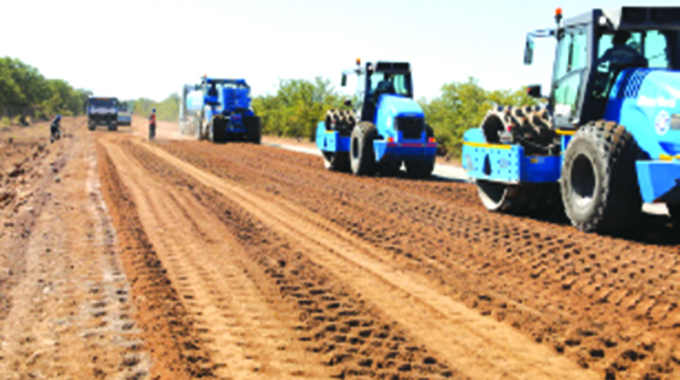
The set of four roads approved by Cabinet to be built by Zimbabwean investors, basically the top end of our now rapidly expanding road construction industry, in private-public partnerships, seems to tick all the boxes in innovation to expand the road infrastructure far more quickly than conventional tax-financed work would be able to do.
This centres on deals whereby the investor finances the work, and with the chosen investors actually does the work, and is paid over time from the tolls collected from the users of the new stretches of road.
The four new schemes are largely an extension of what we have already been doing with more responsibility transferred to the private company in each partnership and more formalisation of the standard contracts that will be implemented.
Tolls were introduced this century on the major highways to fund their maintenance and rebuild. There was a modest delay caused by administrative problems in Zinara, and some straightforward thieving, but these have been fixed under the Second Republic, with new, honest and efficient boards and managers.
The first sort of major contract was the rehabilitation of the main east-west highway, the Mutare-Harare-Bulawayo-Plumtree Road which saw an external company coming in to do the work.
A fair amount of taxpayer-financed work, especially on the Harare-Bulawayo stretch, in the first two decades after independence meant that this road was not as bad at the north-south corridor, but still needed quite a lot of work. The external company was to be paid out of the tolls collected on the then eight toll gates on this stretch and audit reports found that even when Zinara was not really functional these eight tollgates were being operated properly.
The Government made the next move with the detailed agreement for the upgrade of the Beitbridge Border Post and all the associated works, including decent housing for the staff that would be operating this revamped border post.
The private consortium would be paid out over 17,5 years basically from the parking charges at the border post. This has been seen as a major success, with Government and the investor, and most importantly the users, all pleased by the result.
The third extension was the decision to forget the rather expensive and vague projects offer by external investors for the major rebuild and upgrade of the Beitbridge-Masvingo-Harare-Chirundu Highway.
This needed more work that the east west link. It was largely converted, rerouted and rebuilt from strip and narrow tar in the late 1960s and the 1970s, far later than the Harare-Bulawayo-Beitbridge road, with little done afterwards and now required a lot of work.
The capacity of the best Zimbabwean road construction companies had been growing and they were now able, without outside assistance, of doing the job themselves. The Government, in a sense, acted as the main contractor and investor, hiring the companies to do stretches of the highway, but obviously the tolls on this road were going to pay for the work.
The huge, and very expensive, Mbudzi interchange, a complex collection of flyovers, was one bit that required borrowing, but with the borrowing being paid off over three years, again from the toll revenue on this highway.
So we had reached the stage where all the required elements were in place: efficient and regular cashflows from the tollgates, highly competent local companies that were capable of complex modern road construction, these same companies building up their access to capital, and users prepared to pay reasonable and rational fees to enjoy very good roads that drastically cut their travel and maintenance costs.
So putting the four elements together, and using all the experience gained on the earlier projects, meant that private-public partnerships could be expanded, with the important proviso that the investors could now be Zimbabwean. This localisation of investment is important.
First it ensures that the work will be done exceptionally well, since the investor is both doing the work and can only get a decent return if maintenance costs are low.
While the Government’s roads department will be doing the quality control, it is also handy if the company is down the road and any deficiency can then be promptly put right.
Secondly it continues to build Zimbabwe’s private sector, ensuring that local companies who are basically 100 percent local staff and pay Zimbabwean taxes, are the main winners. They will continue to grow and widen their reach, and quite probably will be able to win contracts themselves in some neighbouring countries.
The actual contracts are important. The bypass road to Forbes Border Post so through traffic does not have to go down Christmas Pass and through Mutare city centre corrects a problem that has been growing for well over a century.
Mutare was originally sited where the Methodists’ Africa University now is, and that worked fine when all traffic from the coast was by road.
When the railway came it proved cheaper to build this to the south of Christmas pass and move the small town, but unfortunately in that mountainous terrain the only site was a long low ridge bounded on each side by a small river running through a wetland. For the next 12 decades engineers battled with the need to route traffic down the steep Christmas Pass and through a growing city that found the build up of international traffic through the middle of the city a serious problem. The bypass is the innovative solution to put the Zimbabwean end of the international route where it belongs.
The Harare western bypass, from Mbudzi to the north, allows a lot of traffic, and especially through traffic, to miss the horrors of fighting its way through central Harare and its very congested traffic.
Paying a toll to miss a couple hours of that will be considered cheap. It also, as a convenient by-product, allows most MPs representing non-Harare constituencies and provinces to get to the new Parliament in finite time on their weekly journeys.
Once the Mbudzi interchange is finished, its effect on through traffic would not really be felt if heavy trucks had to then divert through the city centre. The interchange and the western bypass finally remove the two serious bottlenecks these transporters face if they are not delivering to the city centre.
The Shurugwi-Mhandamabwe Road is one of those innumerable short stretches of highway needed to connect a lot more people to the main road grid with a decent connection. If this works well there are probably several more of these sort of relatively short spurs on the national road grid that could be built the same way.
The northern highway from Karoi to Victoria Falls via Binga is a crucial and vital road.
A basic route was opened at the end of the colonial era, and has been improved over the independence decades, but really does need to be a proper national highway to ensure proper development of what was for too long a semi-ignored part of Zimbabwe.
Again the Second Republic has been seeing these gross deficiencies and working on fixing them, and this road connects a large block of Zimbabweans to the rest of the country, as well as making the obvious links between the eastern and western sections of the north of the country.



 Online Reporter