

 admin
admin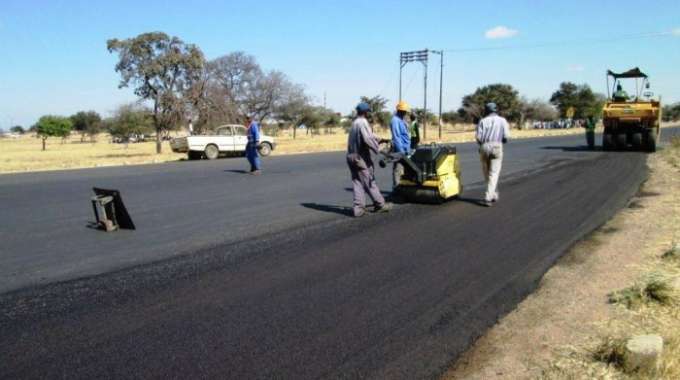
When we celebrate the $17,5 billion our farmers have already received for the grain they have delivered, with quite a few more billion still to come, we need to remember the people who made this possible.
While we are all aware of the Government financing of inputs, now being paid back, the solid work of the Agritex officers who taught farmers new techniques and helped the with advice as they grew the crops, we sometime forget those gangs you see fixing the roads.
And that work is vital. A farmer might have produced a magnificent harvest but if the only way they can get it to market is to use pack mules or the sort of vehicle the army buys for cross country logistics it is not much good. That $17,5 billion was for crops delivered, and to deliver someone has to drive a truck on a rural road, or even, if you a very small-scale and live near a depot, use an ox-cart.
But however you deliver, you need a road. If your road looks like a gully the reputable transporters will send their regrets and give you a miss and the cowboys will take your entire profit just to shift the harvest to the nearest main road.
Fortunately the Government was alive to the problem. Years of neglect and the heavy rains in the last season, the same rains that produced the record harvests, had severely damaged many roads and so money was found to fix them as an Emergency Roads Rehabilitation Programme was put in place,
So far just under $1,5 billion has been spent, and no one is even suggesting that we stop work. But for that money spent so far we got a lot of work done in just four months, much of it in giving farmers access to their markets.
When we talk about 6 141,2 km of roads regraded and 2 161km of roads regravelled, with 701 “drainage structures”, mainly culverts and the like, being fixed, Permanent Secretary of Transport and Infrastructure al Development Engineer Amos Marawa can feel that a good job has been done.
While national highways grab the headlines, those 8 000km plus of the rural feeder roads are what the farmers really needed to continue the process of converting them from subsistence growers, who can cope without much infrastructure so long as they have a backpack or a wheelbarrow, to businesspeople who need infrastructure if they are to produce and sell.
The other stuff is important, especially the potholes repaired on 4 794,8 km since those are the main danger for transporters trying to make a set of shock absorbers last more than one trip.
Verge clearance limits damage, partly be restoring the drains and the Ministry has channelled money to fixing the drains.
A properly drained road does not get wiped out in a heavy storm when the runoff does to the side, rather than scouring a channel through the surface.
Even urban areas have won big after the necessary declaration of emergency was made to allow the Government to move into municipal areas, which are supposed to be self-governing when it comes to infrastructure but fairly obviously were not even starting to cope.
In Harare, to take just one example, most of the main roads can now handle heavy traffic and trucks no longer have to creep along at 5km/h. While motorists might get excited about having no potholes, the real winners for the economy are those trucks and the roads that have been fixed are the roads that trucks use. So businesses can once again get in their raw materials and get out their production.
The sad state of Harare roads is seen the minute you move off the main roads. Some of these side roads make the average regraded gravel rural road look wonderful. An urban side road where a passing casual observer might wonder if thieves stole the tar could at least be graded, if there is no money for new tar.
Householders and suburban businesses have tried to do something on some roads, so we have bricked in potholes and even, in a few cases, a bit of new tar.
But while this sort of community effort must be encouraged many of these repairs show the work of amateurs and often those bricks become loose and other problems arise.
Perhaps the engineering experts could put up simple instructions on web sites, the new way of preparing pamphlets, to show people who live along something that resembles an army artillery practice ground how they do basic repairs with material they have in their gardens.
An emergency repair programme was required and was put in place four months ago. If the Finance Ministry was worried about the cost most of it will come back from extra tax revenue. When the farmers spend their harvest money, the people they buy from at least collect VAT, and 14,5 percent of $17,5 billion comes to more than $2,5 billion, so it looks like by next rain season the Treasury will be close to breaking even on this.
But we need to move further and faster. Emergency programmes are fine, but as quickly as possible this needs to be the standard, what people do all the time as a matter of routine. Devolution is helping. Many rural district councils are buying graders, for example, so they can keep their road networks in basic functioning shape.
But many road authorities need better sources of income. Until the Second Republic Zinara was in bad shape, with certainly some corruption but also poor management, with a high percentage of what they collected, basically licence fees and tolls, going on administration and internal infrastructure, not on roads. Zinara is for all practical purposes a tax authority, and it should be modelled more on Zimra, which has very low percentages spent on the actual collection and makes a big deal in its annual reports on just how low this figure is.
Zinara needs the same mindset. Its job is to collect the user taxes road users have to pay, not to provide employment or construct office buildings. Even tollgates, a necessary expense, need to be designed carefully to minimise costs.
There are arguments to top up the Zinara money with direct payments from the ordinary taxes, and this has been accepted at least in emergencies. Certainly rural road authorities, facing a problem of spread out users, cannot rely on road taxes.
Urban authorities, with each kilometre of road serving scores of motorists who presumably pay licence fees, are in a different position and need auditors to ensure they spend Zinara money on roads.
Even twenty years ago Harare was proud of its suburban roads and a single pothole was quickly patched and householders were warned if they filled in a drain or failed to keep the culvert pipe under their drive clear.
We can get back to that. Meanwhile, let’s thank the Government for the emergency work.



 Online Reporter