admin
admin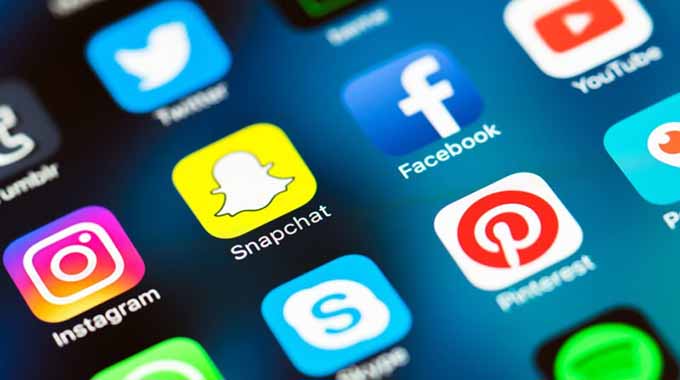
Fake news on social media platforms remains a problem and needs to be combated through getting people to understand that there are those out there who enjoy publishing lies, those out there who are somewhat touched in the head, and those out there who are just ignorant and want to appear knowledgeable.
It also needs to be combated by getting social media platforms to remove the garbage, a policy now being pressed hard by President Joseph Biden of the United States as well as lesser luminaries across the West who feel using rights of free speech to propagate dangerous lies is pushing the limits of constitutional freedoms.
In Zimbabwe, the latest irritation was a set of messages circulating that Zanu PF was lobbying for a ban on miniskirts and trousers for women, and stating that this “hot” news came from the party’s acting national political commissar Patrick Chinamasa, to try and give it a ring of authenticity.
The party’s Secretary for Information and Publicity Simon Kaya Moyo had to put out a statement to shoot it down, noting that first Zanu PF has been consistent on pushing women’s rights since the liberation war, and secondly wondering why a major political party would want to engage in the trivia of women’s dress codes.
He thought the original source was one of those almost unknown non-governmental organisations, and even if they were just an early grabber of someone else’s fiction it might make sense for them to try and get some public recognition by inventing something or giving air time to a someone else’s invented news.
In any case it must be harder for opposition figures and opposition-orientated figures to find something substantial to hammer the Government with, considering the success of the reform progress of the Second Republic, and they cannot really push their own successes in urban local government, since there are none.
We doubt if many, including those forwarding the messages, actually believe what they read or forwarded, since it was so patently false and, to be blunt, weird, but that does not mean that far more damaging material cannot circulate, and does circulate each day.
One good example comes from the US itself, which prides itself on free speech. Despite its impressive, in fact very impressive, vaccination programme the US is now well into a third Covid-19 wave with a one-week surge of 70 percent.
Last week President Biden accused Facebook of “killing people” by failing to curb the spread of misinformation on vaccines, a strong statement for a US President talking about an American company.
The main health problem in the US as the President’s chief health advisor Dr Anthony Fauci noted a day or two later was the reluctance of so many to accept the readily available vaccines.
He sees the wave, driven by the Delta variant, hammering the states and communities where vaccination rates are low, noting that 99,2 percent of American who died last month of Covid-19 were unvaccinated.
Other health officials note that 48 states now have rising infection rates, and the remaining two have stable rather than declining rates. And they have statistics with 99,5 percent of hospitalisations being the unvaccinated.
On Sunday US Surgeon-General Vivek Murthy, whose role is similar to that of Zimbabwe’s Permanent Secretary for Health and Child Care, the professional head of the public health structure, zeroed in on social media platforms allowing “poisoning information” to be transmitted and circulated.
He made it clear that in his opinion they had a responsibility to take effective action to chop out the lies and get out the truth.
What incenses many American policy makers was a recent study that 63 percent of all vaccine misinformation, and 73 percent of that on Facebook, came from just 12 people.
Some were from that tiny group of weird doctors who hate vaccines; one was a body builder, one a wellness blogger and one was Robert F. Kennedy Jnr, son of the assassinated senator many see as the brightest of the original Kennedy brothers although his son, regrettably, did not inherit his brains.
While under this onslaught the platforms have made some attempt to limit the access of the “dirty dozen” and remove some false content, critics note that 95 percent is left for the gullible to read. The platforms did not break their backs.
This is the sort of problem that social media can generate. Twelve people can kill hundreds of thousands at an extreme. Traditional media, even if they have an editorial agenda that many disagree with strongly, live or die by fact checking.
Editorial policies tend to rest on what is or is not published out of the millions of potential stories each day, not on peddling lies. But then traditional media can be sued for defamation if they lie.
We are obviously moving into a world where social media platforms, and those who use them to peddle falsehoods, need to be forced to take some responsibility for what is peddled. They can do this.
For example child pornography has largely been forced off all web sites and even gangs circulating it on social media messaging services are hit when national authorities pass on the addresses to the platforms and prosecutors seem quite happy to use emails and the like in evidence in trials.
Sometimes the major platforms act as though they were nation states, as we saw a couple of months ago when Australia tried to make Facebook, and others, pay royalties on news reports they or their subscribers pirated and published.
But right now, if the platforms want to avoid a growing wave of national legislation and other legal curbs, need to work out systems that can get lies removed, the right of reply entrenched, and those who use their platforms to peddle lies held to the same sort of account that others in the media have lived with and continue to live with.


 Online Reporter