admin
admin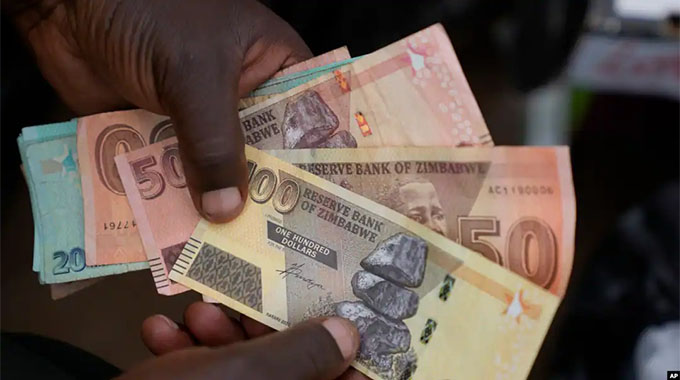
THE strengthening of the Zimbabwe dollar against the US dollar this week by almost nine percent was a direct result of importers and banks, stocking to meet the needs of their customers, not having enough local currency to buy the very modest sums of foreign currency on offer.
This is a sign that the measures taken to prevent the creation of local currency are working as are the measures taken to mop up spare local currency and to ensure that legitimate businesses are able to access their foreign currency needs through their banks, who use the interbank market and are able to stock up on the weekly wholesale auction.
The net result of a strengthening in the local currency was expected after we saw last week a very high level of stability. The next move must now be to monitor prices, as they should start falling in local currency terms.
It is expected that whatever the small day-to-day shifts in the interbank rate, the general trend will be a stronger local currency for a while.
There are moves by the less ethical suppliers to push up US dollar prices to compensate for falling local currency receipts, and we have already seen in the last couple of months some suppliers pushing up the US dollar price of their goods so they may well continue doing this to remain legal while making unfair profits.
It was this, plus the wrong guesses that exchange rates would continue seeing drastic weakening of the Zimbabwe dollar and so forward pricing as people tried to guess the exchange rate in a month’s time, that helped to drive up prices far more than the fundamentals suggested.
We will no doubt have the sturdily honest sections of the business community pushing down their local currency pricing in line with exchange rate falls, and we will need to watch and take effective action, officially and through consumer power, for those who refuse to keep faith with their customers and plot to profiteer.
In some ways consumers need to start, through their shopping choices and brand choices, to reward the honest and diligent and press hard those who feel that taking customers for a ride is acceptable.
The big indicator that the fall in the value of the US dollar this week was not a fluke was the fact that so few US dollars were sold from the pool made available for the two auctions by the Ministry of Finance and Economic Development.
From the US$5 million for the normal auction, just US$797 323,53 was allotted. This meant every one of the 23 bidders got what they wanted.
These bidders are importers, that is businesses, and their bids each week help set the exchange rate, along with the bids by bankers on the auction for wholesale funds for the interbank market that most importers and other bank customers now use.
The rules of a pure Dutch auction were followed, that is a fixed amount of money was set aside, US$5 million, and the bidders were allotted their foreign currency in order from the bidder who offered the highest price, which was $7 261,58 for US$1, all the way down until the auction allocation was exhausted, or as happened yesterday until the lowest bidder, who offered $6 620, was allotted their slice.
The other US$4,2 million was left unallotted because no one offered to buy it. This is the first time since the small weekly limits were announced in advance for the auction as part of the major reforms that bidders have not asked for more than what was available, and this first time produced a very large gap.
The 19 banks are allowed to bid for wholesale interbank funds, that is money allocated by the Finance Ministry for them to stock up on funds to sell to customers through the interbank market, now the normal way for those desiring foreign currency to buy.
Similar procedures are followed as to the auction, with the two auctions now held together, with this week at least US$25 million in the interbank auction pool; and in theory it would be more if the importers auction did not use its full allocation.
But only 12 banks put in bids, and between them they only wanted, or more probably could afford, US$10,107 million.
It is suspected that at least some of the seven banks who did not put in bids had overstocked, probably at the expensive end, last week.
Some of the 12 banks who did buy got very good deals. The bottom rate in the bank bidding was $5 500, which means that bank at least will have some very happy customers. The top bid of $7 155 means that at least one bank bought some quite expensive foreign currency, which might slow some of its business.
But the main factor is that in the wholesale auction, as well as the actual auction, the Finance Ministry had the money and put up the money, and the business sector and the banks did not have enough local currency to buy it.
This among other issues is what the reforms were meant to address, to ensure that local currency was not flooding markets.
One major set of changes was the transfer of the foreign debt to the Finance Ministry, the decision that the Finance Ministry would now buy the 25 percent of export earnings that exporters are obliged to sell to the authorities at the prevailing rate, and the decision that the Finance Ministry would in turn, from its extra foreign currency inflows, provide the money for the auction and the wholesale interbank auction.
The Reserve Bank, which used to do all this, never had the local currency required, so the dealing tended to increase the supply of local currency as more was created to buy in the surrendered export earnings than was withdrawn through forex sales.
The Finance Ministry has its regular inflows of tax revenue and all it has to do is move money back and forth between its accounts in local currency and foreign currency.
It cannot borrow or create or destroy any cash in any currency, with loans limited by Parliament to a small handful of items on the capital account, and then only those where there is a tied source of income that can liquidate the loan quickly. The old days ended five years ago.
This is why there is growing acceptance that we can preserve stability, with falling exchange rates for a while.
With no tap of new local currency, and the major market, the auction and whole sale interbank auction, run on a pure market basis, this time round the gains should be permanent.



 Online Reporter