Online Reporter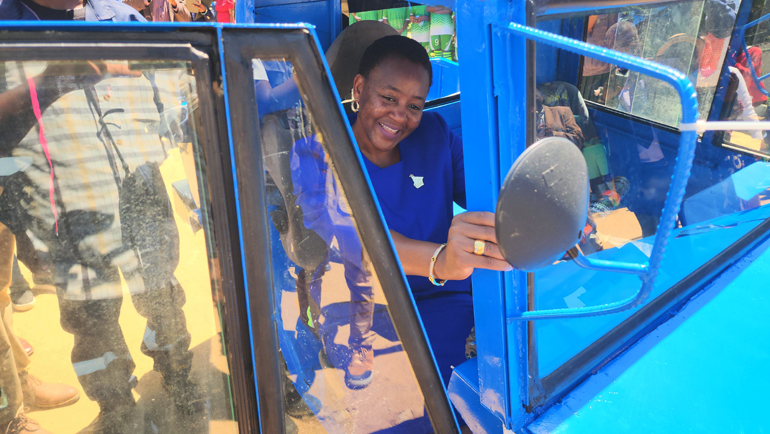
INNOVATION in schools is, not just a luxury, it is a necessity for the growth of communities and the empowerment of young minds.
The story of Tinotenda Mapipi, a former learner at Chibuwe High School in Chipinge, who managed to convert a motorcycle into a functional vehicle, is a striking example of why schools must nurture creativity and technical ingenuity. His achievement is, not only a testament to youthful imagination, but also a reminder that education should go beyond textbooks and examinations. It should be a platform where learners of diverse abilities can explore, experiment, and ultimately contribute to society in meaningful ways.
Tinotenda’s innovation demonstrates the untapped potential that lies within learners who may not necessarily excel in traditional academic subjects. Too often, schools prioritise examination results as the sole measure of success, sidelining learners whose strengths lie in practical and technical skills.
This narrow focus risks stifling creativity and discouraging learners who could otherwise thrive in hands-on disciplines. By supporting innovations like Tinotenda’s, schools can broaden their definition of success, ensuring that learners with technical talents are recognised and encouraged to pursue their dreams. After all, the world needs both engineers and inventors just as much as it needs doctors and lawyers.
Supporting innovation in schools requires deliberate investment in resources, mentorship, and infrastructure. Learners like Tinotenda often work with limited tools, improvising with what is available. Imagine the possibilities if schools provided well-equipped workshops, access to modern technology, and guidance from skilled mentors. Such support will, not only refine the learners’ ideas, but also prepare them for careers in engineering, mechanics, and entrepreneurship. Innovation thrives in environments where curiosity is nurtured, mistakes are seen as learning opportunities, and creativity is celebrated rather than suppressed. Schools must therefore create ecosystems that encourage experimentation, even when the outcomes are uncertain.
Equally important is the safeguarding of intellectual property. Tinotenda’s motorcycle-to-vehicle conversion is not just a school project; it is an invention with potential commercial value.
Without proper protection, such innovations risk being exploited by others, leaving the original creator without recognition or benefit. This is where patent rights come into play.
Schools, communities, and Government must educate learners about intellectual property laws and provide avenues for registering patents. By doing so, they ensure that young innovators retain ownership of their ideas and can benefit from them financially and professionally. Protecting patents also motivates learners to continue innovating, knowing that their work will not be stolen or undervalued.
The case of Tinotenda also highlights the need to rethink how we support learners who are less academically gifted, but technically inclined. Too often, these learners are dismissed as underachievers, when in reality they possess skills that are vital to society.
Technical innovation requires creativity, problem-solving, and resilience—qualities that cannot always be measured by exam scores.
Encouraging such learners to pursue their passions in mechanics, electronics, or design can open doors to industries where their talents are indispensable. Schools should therefore integrate technical education into their curricula, offering pathways that allow learners to specialise in practical skills while still receiving a holistic education.
Celebrating stories like Tinotenda’s can inspire other learners to believe in their abilities. When young people see their peers recognised for innovation, they are motivated to explore their own ideas, no matter how unconventional.
This creates a culture of innovation where learners are not afraid to think differently and challenge norms. Communities, too, benefit from such creativity, as local problems can be solved through home-grown solutions. Tinotenda’s invention, for instance, could inspire others to develop affordable transport solutions in rural areas, addressing real challenges faced by communities. The need to support innovations in schools cannot be overstated. Tinotenda Mapipi’s achievement at Chibuwe High School is a powerful reminder that brilliance comes in many forms, and schools must be prepared to nurture it.
By investing in resources, safeguarding patents, and encouraging technically gifted learners, we can unlock a wealth of creativity that benefits not only the learners themselves but also society at large. Education should not be about producing uniform results; it should be about cultivating diverse talents and empowering learners to shape the future.
Tinotenda’s story is proof that when innovation is supported, dreams can be transformed into reality, and ordinary schools can become breeding grounds for extraordinary ideas.