Online Reporter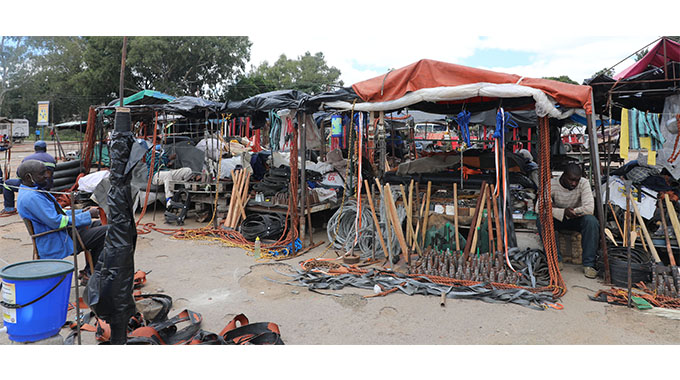
ALL economists strongly support the Government policy of regularising informal sectors, bringing them into the full light of day and supporting them, rather than trying to eliminate this huge contributor to the Zimbabwean economy.
Generally, the idea is to use the informal sector and the legalisation of each and every business within that sector, to make a major contribution to building the upper middle income economy we all want by 2030.
There is, again, reasonable agreement over just what needs to be done. Every business in Zimbabwe is supposed to be licenced by some authority, often a local authority for industrial, wholesale and retail businesses.
But a swathe of Government agencies licence mines and many transport operations and farmers are licenced and listed in several ways. In fact the tobacco industry, as in so many other respects, has shown both an example of effective licencing of micro and small businesses and the huge advantages that can then flow from the licencing.
The Tobacco Industry Marketing Board (TIMB) licences everyone in the industry, from the small informal farmer planting 0,5ha to the largest of the merchants contracting and buying tens of millions of kilogrammes.
A similar system was then adopted by the Ministry of Lands, Agriculture, Fisheries, Water and Rural Development to list all the smallholder farmers involved in one of the Presidential programmes that have finally given smallholders in communal lands and A1 resettlement schemes practical access to inputs and support.
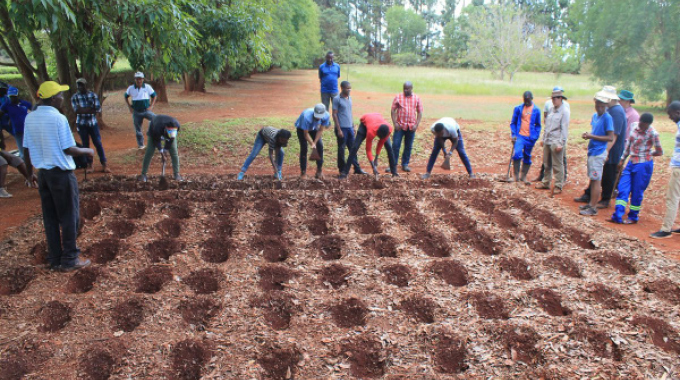
This might not be a formal licence, but every farmer accessing the programme has to be listed in a database, and this listing makes sure that an extension worker saw the farm, saw the farmer, has ticked off the training requirement, and has certified that any land preparation requirement, such as the digging of the planting holes and collection of mulches for Pfumvudza/Intwasa programmes, has been done.
Among the data will be the telephone numbers and basic banking details. This, in effect, formalised several hundred thousand in the informal sector, turning subsistence farmers who were just there, but unlisted into business people even if still on the bottom rung of the business ladder.
So successful was this farmer programme that few people now realise that most small scale farmers were once listed as being in the informal sector.
Similar programmes are now needed in the rest of the economy. We need to know the names, addresses and output of all artisanal miners.
We need to know basic details of those tens of thousands of practical men and women who make things, from furniture to fences and gates. The largest remaining group in the informal sector, now the farmers have been pulled out, must be those involved in retail trade and we know so little about them although they are essential to the smooth flow of goods and services and are ubiquitous across the country.
It is all very well declaring that all businesses must be licenced and that all business people must be registered for taxes, even if they income at present is too low to move them out of the zero tax bands.
But this costs money, to the micro, mini and small business and even more money to whoever is tasked with enforcement.
The Government recognised this additional requirement that compliance and enforcement both had to be very cheap, and that businesses would have advantages if they did comply.
So this week the Cabinet adopted a policy of strengthening the national digital payments systems, with the upgrade meaning that the micro businesses would be registered and so listed within the systems, basically at no cost, and that payment limits would be reset to ensure that all business transactions could be done within the payments systems.
India, which must have the largest informal sector in the world, has been pioneering systems that make it easy and cheap for these little businesses to be registered and listed so that the advantages of the huge combined total of business being done are retained, but added to the needs to progress further and offer support to these businesses.
India has had to move a vast distance, it being only really this century, for example, that it started registering the population and issuing every person with a unique ID number and card.
We are moving towards a single currency by 2030, as well as a more sophisticated and higher-value economy, and whatever measures are taken to have banknotes for small transactions, it would make all sorts of sense for most business transactions above paying bus fares or buying a takeaway to be done digitally.
That requires a highly efficient digital payments system that costs almost nothing to use, and any taxes being charged within it being an alternative to standard tax declarations and payments.
Licencing can now be enforced, even if it is a different sort of licensing from what was usual when everything had to be done on bits of paper at a counter.
For a lot of the informal sector a sort of automatic licencing would probably suffice, with the businesses only needing something more specific once they moved into areas where public health was paramount, such as with a takeaway, or where environmental issues started being a factor, such as with some of the mining and manufacturing businesses.