Online Reporter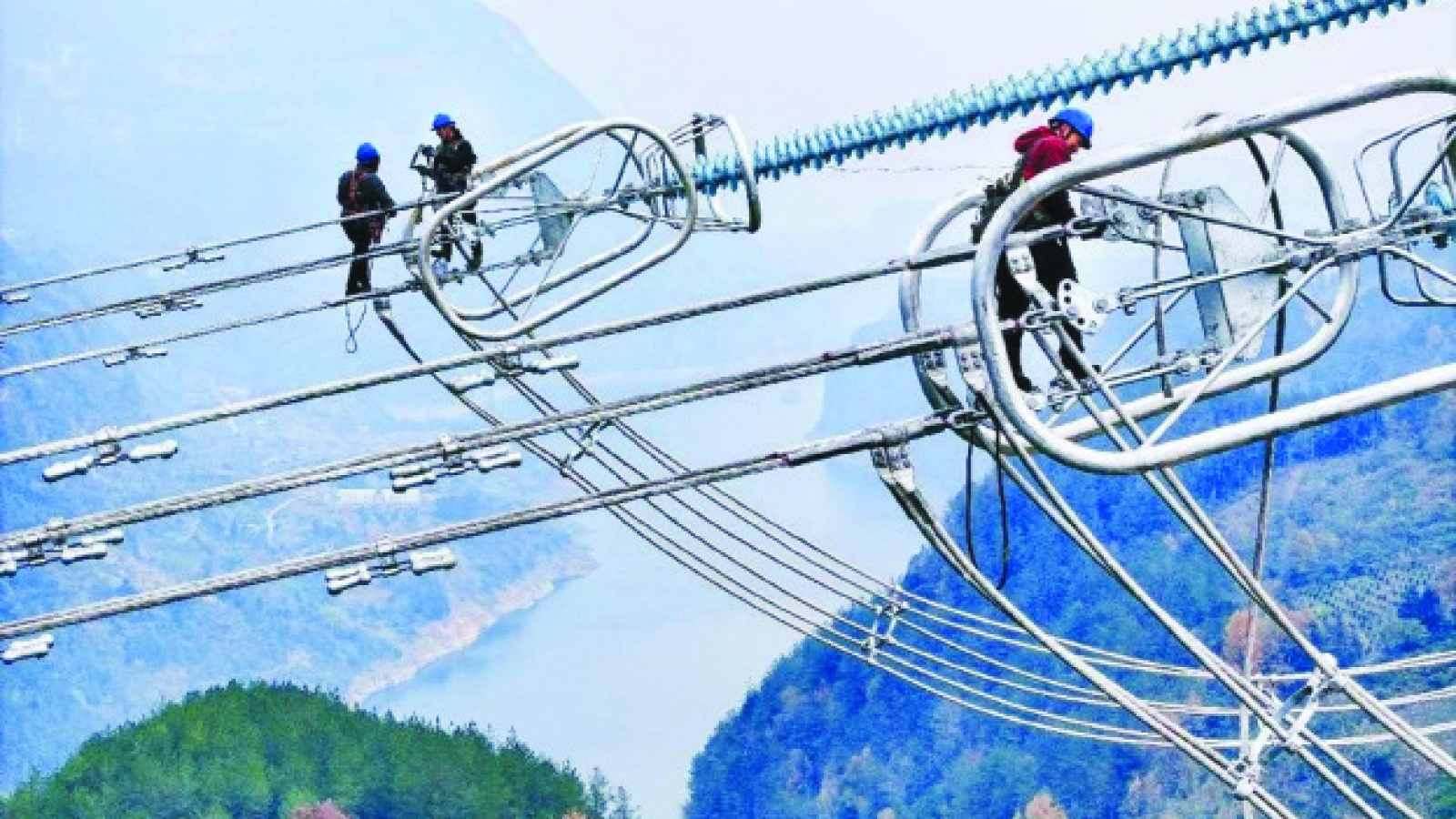
Kuda Bwititi
recently in Qinghai Province, China
ON the high-altitude expanse of the Qinghai-Xizang Plateau, often called the “Roof of the World,” a quiet revolution is underway that provides lessons for countries such as Zimbabwe.
Far from the industrial heartlands and megacities that typically define China’s economic narrative, Qinghai Province is leveraging its unique natural endowment to write a new chapter focused on ecological security, clean energy dominance and providing a tangible model for global climate action.
This vast province, whose 722 300 square kilometres is about twice the size of Zimbabwe’s total area of 390 760km², is more than just a scenic wonder.
It is the source of the mighty Yangtze, Yellow and Lancang (also known as Mekong) Rivers. Also, it is a living laboratory where national policies like China’s “ecological civilisation” and dual-carbon goals – peaking carbon emissions before 2030 and achieving carbon neutrality before 2060 – are being implemented at a monumental scale.
Qinghai’s story is not just about preserving its own pristine environment but how a region can transform its geographical challenges into its greatest strategic assets for the benefit of a warming planet.
The province’s role in China’s and Asia’s ecological framework cannot be overstated. Also known as the “Water Tower of China,” it is the origin of rivers that sustain millions of people downstream.
Its 4 050-metre average altitude and fragile alpine ecosystems make it vulnerable to climate change, yet this same vulnerability makes its protection an absolute imperative. Officials in Qinghai have positioned the province as a “powerful ecological regulation zone” and the “foundation of the ecological shield for China.”
This framing shifts the discourse from one of resource extraction to one of systemic preservation. The conscious decision to forgo widespread mining of its abundant gold and jade deposits, instead preserving them as natural treasures, signals a profound prioritisation of long-term ecological value over short-term economic gain.
This ethos forms the bedrock upon which its green energy ambitions are built. Hainan Hydro-Solar Complementary Project
The most compelling evidence of Qinghai’s transformative vision is found at the Hainan Hydro-Solar Complementary Photovoltaic Industrial Park.
This is not merely a cluster of solar panels that stretches for kilometres, but it is a masterclass in integrated, intelligent energy systems, solving the fundamental problem of renewable energy.
Solar power generation plummets at night and on cloudy days. Hydropower, while stable, can be seasonal. Through ingeniously combining the two, Qinghai has created a stable, clean energy baseload.
When the sun shines, solar power dominates and surplus electricity is used to pump water to higher reservoirs. When it dips, the stored water is released to generate hydroelectricity, ensuring a consistent, uninterrupted flow of power to the grid.
The scale of achievement is staggering, validated by Guinness World Records for the largest hydro-solar complementary power station (Longyangxia) and the largest photovoltaic park overall.
Since 2013, over 167 billion yuan (about US$24 billion) has been invested, achieving a cumulative clean energy output of hundreds of billions of kilowatt-hours.
But the innovation continues. The park leverages the “Internet+PV” model, employing real-time online testing, intelligent data analysis and a massive distributed camera cluster to optimise every watt of electricity produced.
The ecological co-benefits on the ground are equally ingenious. The strategy of “producing electricity on rooftops” and planting grass between panel arrays has transformed barren wasteland into photovoltaic pastures.
This approach reduces wind speed, minimises soil moisture evaporation, prevents desertification and provides grazing land for local livestock, a perfect example of what officials in Qinghai province term “eco-industrialisation and industrial ecologicalisation”.
This has created a triple-win for the environment, economic production and promoting local livelihoods.
Energy generated in remote Qinghai is of little use if it cannot power the demand centres thousands of kilometres away. This is where another world-first feat of engineering comes in: the Qing-Yu ±800 kV Ultra-High-Voltage Direct Current (UHVDC) transmission line.
As the world’s first transmission line dedicated to carrying 100 percent clean energy, it is the vital artery linking Qinghai’s renewable heart to populous provinces in China.
With an accumulated transmission of over 68 billion kWh, this line does more than keep lights on, as it prevents the burning of millions of tons of coal in eastern China, directly translating Qinghai’s blue skies into cleaner air nationwide and a significant reduction in the nation’s carbon footprint.
Conservation from the Geopark to the Lake
Qinghai’s green strategy extends far beyond energy. It is a holistic commitment to preserving its entire ecological and geological heritage. The recent designation of the Kanbula Global Geopark as a UNESCO Global Geopark in April 2025 underscores this. Kanbula is not just a landscape of stunning red peaks and forested valleys; it is a “geological textbook” preserving a 200-million-year-old record of the ancient Tethys Ocean.
This international recognition highlights a dedication to conserving knowledge and natural history for the global scientific community.
Similarly, the ongoing efforts at Qinghai Lake, China’s largest inland saltwater lake, demonstrate a focus on biodiversity.
The Qinghai Lake Biodiversity Conservation and Research Centre works tirelessly to protect the critically endangered Przewalski’s Gazelle, an endemic species whose survival is a barometer for the health of the entire alpine grassland ecosystem.
Even the provincial capital of Qinghai, Xining City, defies the typical image of an industrial hub. Crowned the “Cool City of China,” its air quality consistently ranks among the best of China’s provincial capitals, proving that economic development and high-quality living standards can coexist with a focus on being a “rear support” for national ecological security.
A model for Zimbabwe and Africa
Qinghai’s path offers critical lessons for the global fight against climate change. It demonstrates the necessity of integrated systems thinking.
The true breakthrough is not just in generating solar or hydro power, but in combining them and building the smart infrastructure to manage and transport it efficiently.
Further, it highlights the strategic value of long-term policy commitment. China’s national ecological and carbon goals provide the framework that enables a province like Qinghai to align its massive investments and innovations with a clear, long-range mission.
Also, Qinghai makes a powerful case that ecological preservation and economic development are not mutually exclusive.
The photovoltaic pastures, the eco-tourism around Qinghai Lake and Kanbula Geopark, and the high-tech industries built around renewable energy all point to a new economic model, one where the economy serves the ecology, which in turn sustains the economy.
Qinghai province, from its high-altitude perch, is doing more than just conserving its own environment.
It is actively engineering a sustainable future, proving that the tools to combat climate change – political will, technological innovation and a reverence for nature – are within grasp.
Its journey from a remote ecological shield to a powerhouse of green energy provides a viable, scalable blueprint for a cleaner, more sustainable world.
Zimbabwe can draw powerful lessons from Qinghai’s model by viewing its own vast natural resources as the foundation for a sustainable economy.
For example, investing in complementary renewable energy systems – like pairing solar with hydropower or wind can create a reliable, green grid for Zimbabwe.
Furthermore, embracing a philosophy of “eco-industrialisation,” where conservation and economic development are intrinsically linked, can unlock unique opportunities in eco-tourism, biodiversity protection and climate-resilient agriculture, turning ecological stewardship into a source of national prosperity and energy independence for Zimbabwe.