


 Online Reporter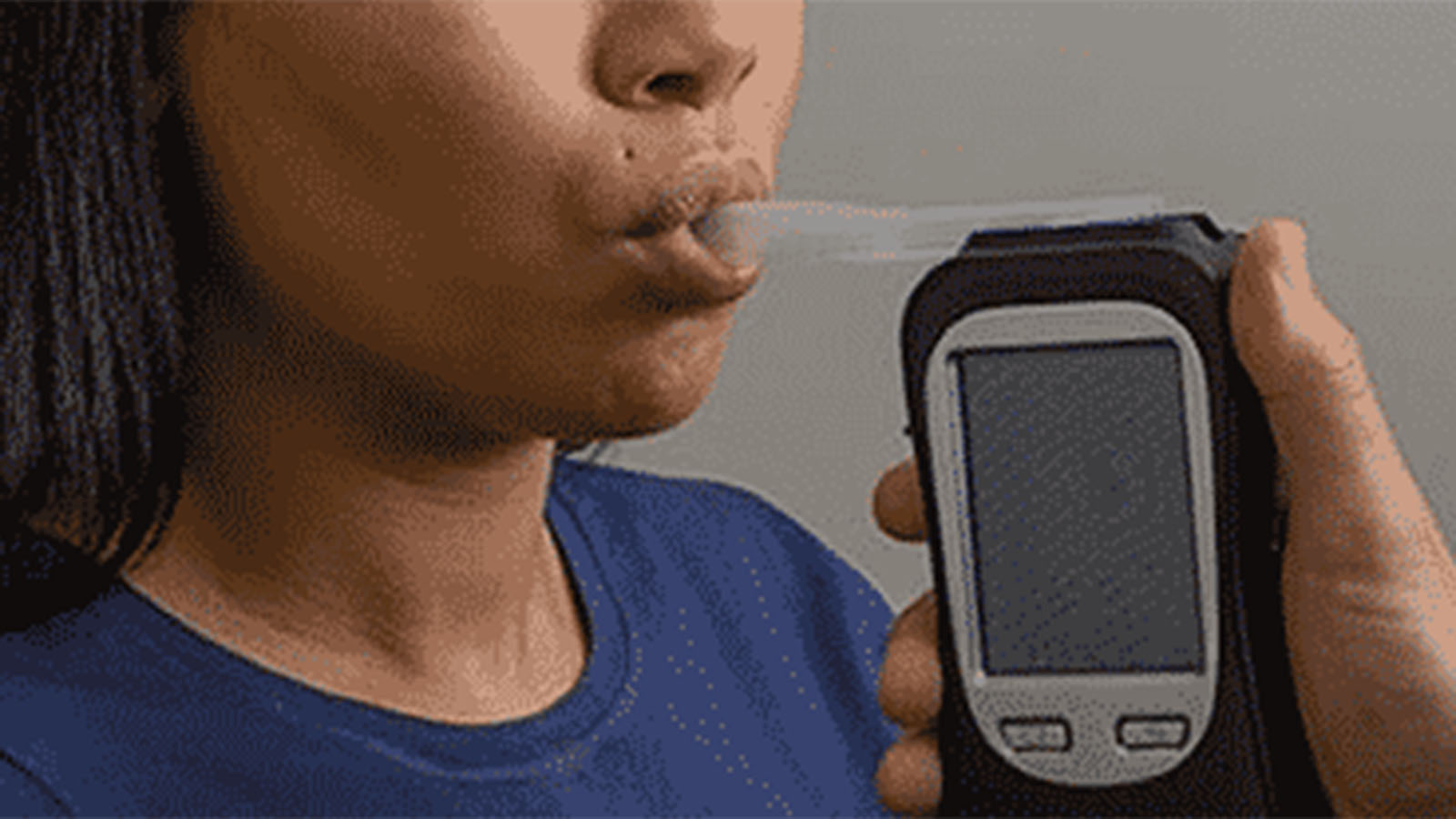
THE tragedy that recently befell soccer legend Alois Bunjira, who was involved in a head-on collision that claimed three lives, including his fiancé Brenda Zvinorova, gave a famous human face to the carnage on our roads.
The grim statistics of road accidents in Zimbabwe continue to make for harrowing reading.
Our highways, once symbols of connection and commerce, have become scenes of unbearable tragedy and loss.
Families are shattered, futures erased and a collective sense of anguish hangs over the nation with every new report of a fatal crash. While factors like poor road conditions and vehicle maintenance play a role, one insidious contributor has often evaded scrutiny: the menace of drug-impaired driving.
The Government’s planned move to introduce mandatory drug testing for drivers is, therefore, a crucial and long-overdue intervention.
However, for this policy to be more than just a symbolic gesture, it must be underpinned by a robust and unambiguous legal framework that closes dangerous loopholes and specifies stringent, categorical penalties.
The science is unequivocal.
Drugs — be it cannabis, cocaine, methamphetamine or prescription sedatives — profoundly impair the cognitive and motor functions essential for safe driving.
They slow reaction times, distort perception of speed and distance, cause drowsiness and lead to poor judgement and risk-taking behaviour.
A driver under the influence of drugs is a lethal weapon in motion, posing a catastrophic risk not only to themselves but to every passenger, pedestrian and other motorists sharing the road.
Using breathalysers and introducing saliva swabs at roadblocks will finally bring this hidden epidemic into the light, acting as a powerful deterrent and directly identifying one of the key catalysts of road carnage. The mere presence of testing, however, is not enough.
Deterrence is not achieved by the test itself, but by the certainty of swift and severe consequences that follow a positive result.
This is where Zimbabwe’s current legal framework reveals a critical flaw.
Our law, particularly the Road Traffic Act, does not adequately specify penalties for driving under the influence of different categories of drugs.
A one-size-fits-all approach is hopelessly inadequate.
Is the penalty for a driver impaired by a recreational stimulant like cocaine the same as for someone who has inadvertently taken an above-dose of a prescribed antihistamine? The law must reflect the varying degrees of risk and intent.
This legal vagueness is a prosecutor’s nightmare and a defence lawyer’s dream.
It invites lengthy court battles, technical challenges and inconsistent rulings, ultimately allowing offenders to slip through the cracks of the justice system.
For example, the Government recently had to promulgate Statutory Instrument 167 of 2024 to close a loophole where mutoriro (crystal methamphetamine) was not classified as a dangerous drug.
Without clear statutes that define limits for different substances and prescribe graduated penalties — ranging from heavy fines and licence suspension for lower-level offences to mandatory imprisonment for severe recidivism or impairment causing accidents — the entire testing regime risks becoming an expensive and unenforceable farce.
To build a system that truly works, we need only look to jurisdictions that treat drug-impaired driving with the seriousness it deserves.
In the United Kingdom, the law sets very strict drug driving limits for 17 illegal and prescription drugs.
A conviction results in a minimum 12-month driving ban, a criminal record, an unlimited fine and up to six months in prison.
Causing death by careless driving under the influence of drugs can lead to a life sentence. The key is the specificity: the law names the substances and their permitted thresholds, leaving little room for ambiguity.
Similarly tough rules can also be found in jurisdictions such as Australia and South Africa. Zimbabwe must learn from these examples.
Our proposed legislation must, therefore, clearly define and list illicit drugs with a zero-tolerance policy and others where trace amounts of prescription medication may be permitted if the driver can prove a legitimate prescription and was not impaired.
There is also need to legislate a penalty scale that considers the type of drug, level of impairment and whether it is a repeat offence. Penalties should start with hefty fines and mandatory driver education for minor first-time offences and escalate to lengthy licence bans, vehicle forfeiture and mandatory imprisonment for serious or repeated offences.
Any driver who causes an injury or fatal accident while under the influence of drugs must face the harshest penalties, including lengthy jail terms.
The law must recognise the gravity of the outcome. A tool is only as good as the hand that wields it. Without a watertight legal structure that closes loopholes and instils genuine fear of consequence, we will have merely added a new step to our roadblocks without adding a new layer of safety to our roads.
Let us not just test for drugs; let us legislate for justice and protect our people with the full, unflinching force of the law.
Our children’s lives depend on it.




Where are we as citizens and where are our legislators in this whole mix? The law must not consider the type of intoxication in order to determine the punishment. The law should simply severely punish anyone who dares go onto our roads under the influence period! Roads don’t create accidents, drivers do. Once a driver notices that the road is bad, he or she must take precautions when driving.