admin
admin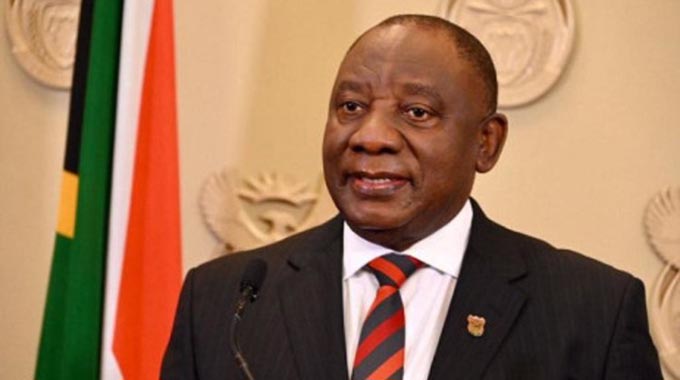
THE sanctions against Zimbabwe are, in practical terms, damaging to the whole population of Zimbabwe and to its neighbours, as President Cyril Ramaphosa of South Africa and President Hage Geingob of Namibia have made clear in their addresses to the United Nations General Assembly this week.
The fact that these two Presidents were willing to use some of the very limited time available for their addresses to bring Zimbabwean and Cuban, sanctions to the attention of the General Assembly shows that the effects are real and serious, not the “targeted” measures supporters of sanctions keep trying to argue.
The sanctions are generally financial, although there is an arms embargo, but that outside some spare parts for previously bought equipment had never really affected Zimbabwe, which first has a low demand for arms and secondly has suppliers for that low demand who do not seek political changes as part of the price.
The financial sanctions have two elements. First there are the sanctions against lists of named people and some companies. These are the ones that are claimed to be targeted. In actual fact they cause a lot of collateral damage since the banking regulators in the US and other countries that impose them go far beyond the targeted individuals and groups.
Banks and other financial institutions can get into a lot of trouble, and became liable for large fines, if some normal banking operation could include, even at a vague level, one of the targets.
In theory, and often in practice, if one of the targeted people is just a minor shareholder in some company that needs banking services, anyone providing those banking services could be hit by the regulator.
This has the obvious effect. A bank would need to go to some lengths to check whether it might be breaching the more dramatic interpretations of the sanctions law in its own country, and that would cost money.
Quite often the dealings with Zimbabwe are fairly small-scale, so it does not make sense to spend a lot of money on checks for a small operating profit. Why should a bank take the risk of losing money, when it can just say it will have nothing to do with the country?
This is one of the areas where neighbouring states are also affected, since business across the region is not confined to national silos, but tends to spread to many countries.
The second financial sanction affects Zimbabwe’s relationship with multi-national financial institutions. The American law on sanctions makes it clear that the US representatives on the International Monetary Fund, the World Bank and other similar if smaller institutions must vote against debt relief, rescheduling and new loans.
Other major shareholders did join the Americans although more of these are drifting away from that hardline position.
This has affected Zimbabwe seriously, and while some of the accumulated debt arrears arose from poor management in Zimbabwe, others arose from the impossibility of sorting the matter out in the way other countries can get help and come to agreements.
Zimbabwe at the moment is making a renewed attempt to cut the sort of deals it needs, and has expressed its willingness to follow the sort of ordinary conditions that often accompany such help.
The findings by human rights investigations, including those of the United Nations, shows that the Zimbabwean economy was damaged, and that growth rates were far lower than they should have been. This was intended from the beginning. The original drivers of sanctions, including the then US assistant secretary of state for Africa, Chester Crocker, made it clear that the idea was to make Zimbabweans suffer so they would change their Government, a rather horrific explanation.
The original sanctions were sparked off by the land reform in early 2000s. The main overhang from that period, the constitutional guarantee of compensation for improvements for the previous holders of the land, was addressed early in the Second Republic and eventually an agreement was reached.
Implementation has started, but is slow because the Zimbabwean Government does not have the sort of access to global financing that would normally accompany a land reform deal.
And it does not have access because of the sanctions. If those applying sanctions were concerned about the former land holders, they would lift sanctions so that the farmers could get their compensation very quickly.
The Government does not desire to have that constitutional debt on its books for ever.
The region has been affected by the slower growth and the damage of the Zimbabwean economy. There is a lot of regional economic integration already, and this is growing, and economic damage in one country affects the rest.
This is one reason why SADC works so hard to ensure that there is peace and stability throughout the region. And this explains the intervention by two neighbouring Presidents at the United Nations.
Admittedly the Second Republic has been mobilising capital from local sources, spending the second largest slice of tax income after salaries on infrastructure and attracting a growing number of investors into Zimbabwe. This has produced the higher regional growth rates.
Even when sanctions are removed, we would be wise to maintain the discipline that has seen us pushing ahead with our own money, and the sort of investment policies that have made Zimbabwe an attractive destination for a number of investors, but we would be able to also tap the sort of capital available for developing countries to accelerate the progress. It would not be either-or, but both.
The sanctions against Cuba were also designed to change the government after the revolution that threw out a very corrupt dictatorship backed by the American Mafia.
The US has never liked the revolutionary government that took over, but the present Cuban leader, President Miguel Diaz-Canel, is 63 and was born after the revolution so it seems overdue to normalise relations. Cuba is still there and 1960s rhetoric is grossly outdated.


 Online Reporter