Online Reporter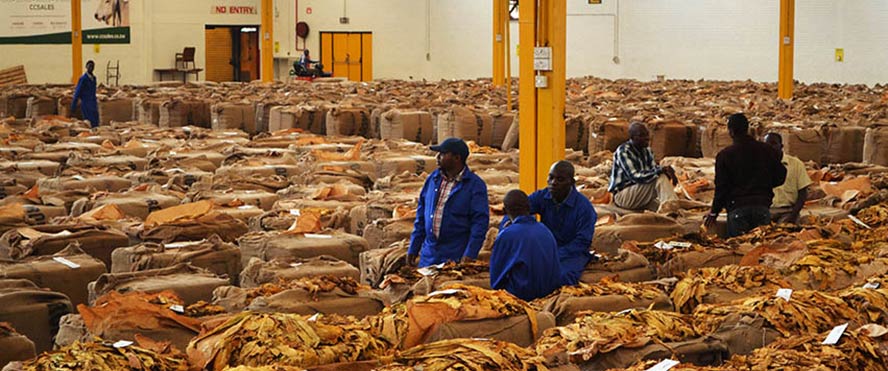
THE almost 109 000 active Zimbabwean tobacco farmers are now certain to deliver a record breaking crop of more than 300 million kg, earning the farmers well over US$1 billion and possibly as high as 330 million kg and have proved the productive efficiency of the new systems introduced after the land reform programme.
The largest crop produced before land reform early this century was 236,9 million kg in 2000 with the overwhelming bulk of that crop coming from just 2 000 large-scale plantation growers, funded with their own money or more usually via a bank loan and the entire crop sold at auction.
The present crops are not just larger, but provide decent incomes for a far larger group of Zimbabweans, spreading wealth as well as creating it.
The vision of an upper middle income society means that both creation and spread of wealth are required since those in that society must be middle income to make their country middle income.
Land reform required an entire rethink of the whole industry.
The starting point was the establishment of the Tobacco Industry and Marketing Board to oversee the whole industry, but as a regulator rather than a participant.
Everyone in the industry is known and regulated as a result. Internal research was maintained.
Every farmer wanting to grow tobacco, even on the smallest scale, must register with the TIMB, as must every buyer and every merchant. All seed has to be approved by the TIMB for sale.
This tight regulation ensures that everyone sticks to their contracts, and these have to be approved in advance.
The main system of funding changed. Banks had found it easy to fund the 2 000 giant growers, it being possible to send out an expert to each farmer applying for a loan and look over their hundreds of hectares of tobacco fields and examine their past production record, or at least the past record of that farm.
The new system, with the only practical and effective collateral being the actual crop, was built up using contracts.
Major merchants and buyers put up the inputs and were given the right to demand delivery from the farmers they financed, deducting the cost of inputs from the sale price just as the banks had done with their stop orders at the auction floors.
This required a whole lot of new rules to become a practical system, which the TIMB was able to put in place, along with a far closer co-operation between the Ministry of Lands, Agriculture, Fisheries, Water and Rural Development, the growers and the rest of the industry.
For a start, every grower has to provide, before being registered, certification from their local agriculture extension officer that they exist and have available land.
Besides coping with the newly settled farmers, the new system finally provided the sort of backing needed by the larger group of communal farmers, and several tens of thousands do hold land in the tobacco zone, had been missing for many decades, despite being the ones who were the descendants of the first tobacco growers in the 17th century.
The auction floors continue to exist, but they handle only around 5 percent of the crop, almost all coming from the larger farmers who are described as self-financed, that is they have their own money or are able to obtain individual bank loans.
The vast bulk of the crop, including a fair proportion from the larger farmers, is grown under contract, making the regulator absolutely essential to prevent cheating and gouging. But the auctions provide the pricing benchmarks.
It took a few years for the system to build up, with the first decade being a steep learning curve, but then production started rising reasonably quickly and in 2018 a major milestone was achieved, a crop of 252,6 million kg, exceeding the largest crop from before land reform and setting a new record.
There has been steady progress since then, with the odd blip like last year when severe drought brought the crop down to around 232 million kg, although by pre-land reform standards this would be a magnificent year.
Almost all the Zimbabwean crop is exported, and exported as leaf. Some value is added through strict grading and sorting and proper humidity controls and packing, but only around one percent is processed into tobacco products, largely for the local market but with a growing export market.
The major problem in exporting cigarettes, rolling tobacco and pipe tobacco is that most countries process their own, although importing leaf, and in many cases there are state monopolies or state-sanctioned monopolies.
There is also need for Zimbabwean farmers to widen their range of tobacco varieties to include the oriental varieties that major blends incorporate for flavour even when the flue-cured Virginia Zimbabwe excels in producing is the bulk of the cigarette.
Matabeleland South, not a traditional tobacco zone, is now producing these oriental tobaccos, and the specialist tobaccos for the water filtered hookah pipes now have a rising number of growers.
The implementation more fully of the African Continental Free Trade Area will help Zimbabwe break into more markets by removing non-tariff barriers, although it must be noted that most tobacco taxes are excise duties and will continue to be imposed by each country even under free trade.
But at least Zimbabwean cigarettes can go on sale.
The programme to grant title to resettled farmers does open the doors to bank finance, but there will still be the problem of how to check on each farmer when individual fields of small scale contract growing is likely to remain dominant, even if scaled back a bit.
The dramatic success of the tobacco industry in many ways provided the template for the Second Republic’s highly successful input schemes for other crops, with everything from Pfumvudza/Intwasa upwards using the successful methods pioneered in tobacco, from registration of farmers onwards.
The systems ensure that any cheating, such as side marketing, diversion of inputs or refusal to honour contracts, can be quickly detected and stopped. That in turn means that every cent of input finance can be accounted for, ends corruption and allows proper costing.
These Second Republic schemes have shown, like the new tobacco systems earlier, that small-scale producers are able to produce more on the same land as the old plantation owners before land reform so long as they have proper backing with advice, training and inputs.



 leeroy