admin
admin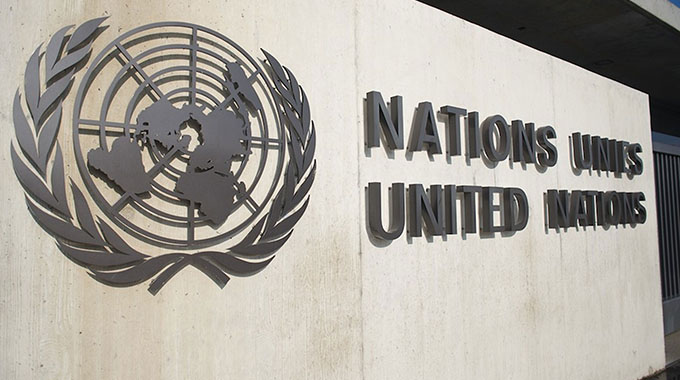
THE United Nations General Assembly, where almost every country in the world is a member, opens this year with more wars being fought in any one year since the UN was formed from the ashes of the last world war 80 years ago and with many other crises building up.
Secretary General Antonio Guterres, the one top-level world leader who must look at the entire globe without favouring any nation, outlined the dangers and stresses during the opening ceremony on Tuesday.
There are wars in Gaza, Lebanon, Sudan, Ukraine and other areas and in particular warfare with very high civilian casualties, far higher than those of combatants.
There is global warming and the accompanying climate change. There is the new threat, and the new opportunity, of artificial intelligence. The global financial institutions set up after the Second World War are simply unable to respond well to the new world and need to be fixed, or even rebuilt. Poverty, and especially poverty through inequality, is rising.
All these are known to almost everyone, and there are solutions for all, or at least the outline of solutions. But so much that needs to be done must be realised through all nations acting together and acting with a far higher level of good will than some display at the moment.
A small country like Zimbabwe does not have much influence in the world, but there are many small countries like us, and our Government and the governments of many of them would go along with what the Secretary General said with negligible differences of opinion. This is because in many ways we are not the main actors in creating the problems, although we are among those who suffer the most, especially in our case from climate change and the inadequate global financial institutions.
The one war in Africa, the latest civil war in Sudan between two different groups of armed forces, is largely a political conflict that spun out of control. Thousands have been killed, and some estimates are in the tens of thousands, and hundreds of thousands displaced.
There are emergencies in parts of other African countries but there we have openly elected governments with popular mandates and the African Union, regional groups and the UN are able to take effective action and these emergencies are dying down. This is the major difference and one reason why the AU is now so insistent on properly elected governments, so disputes in the end are decided by the people.
RELATED STORIES
The Middle East has been on top of the list or very high on the list of international emergencies for almost the entire life of the UN. Most countries, and Zimbabwe is part of this large majority, see the solution being a pair of internationally recognised sovereign states inside secure borders and the removal of all Israeli occupation forces. Israel and Palestine came very close to closing with this solution once and Israel needs to return to the deal.
The present Israeli policy of bombing civilian populations in Gaza and Lebanon has already been declared against international law and considering that almost all casualties are civilian deaths, this is the right legal decision. It is not a war but an attack on civilians as the prime target and Zimbabwe and most of the world condemn this and want the fighting to cease. Then the diplomats and the politicians need to work on the peace treaties.
Climate change is now assuming the greatest threat to the world and this is totally man-made, despite what some politicians, normally science deniers, in some countries and regrettably some major feeders of climate change, may say.
The solutions have been on the table for some years now, and the scientific advice has been becoming more detailed and more demanding. Conference after conference meet, make resolutions, often seeking a minimalist solution, and then seeing some countries not even accepting what they agreed to.
The solutions require not just all countries to accept the need for urgent action and fulfil their pledges, but also for adequate funds to be mobilised around the world, and a lot of that money has to come from the countries that pumped most of the greenhouse gases into the atmosphere in the first place.
Funds are needed for helping countries cope with change, the change that has already happened and is happening, regardless of what we do, and to help everyone switch to green energy and green industrial processes. There is nothing really difficult about the solution, but it does need a lot of money and a lot of effort.
Artificial intelligence is one of those forces for both good and evil. Some of the techniques can be a boon, such as helping provide decent medical advice in remote areas. Some can be dangerous and devastating, such as allowing powerful rich men even more power or spreading damage and falsehoods. But we can choose and we can create international agreements and standards.
The inadequate global financial system has been brought up many times before. It was largely created by the US and its Western allies as the Second World War ended and was part of a partial solution to what were problems then, partial since not all nations were involved and it was largely a US and Western European creation.
Some changes were made as the colonial empires were freed and other countries moved up the development and economic ladder, but the head of the World Bank is still always an American and the head of the International Monetary Fund always a European.
Zimbabwe is well aware of how political decisions by some major shareholders can affect access to this system.
The real sanctions over finance access were the serious ones.
Yet the world does actually need a responsive and functioning international financial system, one that is both adequate and reflective of the modern world, rather than the 1940s, and again given willingness, this could be sorted out, but it does need that willingness.


 Online Reporter