admin
admin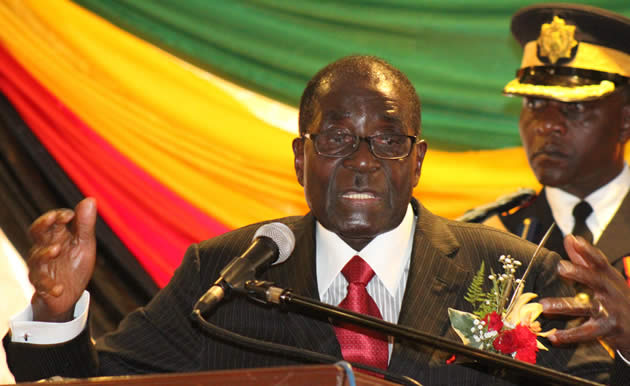
VALUE addition to three key sectors of the economy – mining, agriculture and the manufacturing sector – will underpin the successful implementation of the Zimbabwe Agenda for Sustainable Socio-Economic Transformation (ZimAsset), itself a driver of the country’s economy for the next five years.
It is therefore crucial that special attention is paid to these key areas going forward with the Government seized with ensuring that all bottlenecks are removed to get these sectors firing on all cylinders.
The manufacturing sector remains in crisis with capacity utilisation having declined from an average of 57% in 2011 to 44% in 2012. In the third quarter of 2013, it was pegged at 39%. This was attributed to structural and infrastructural bottlenecks such as erratic power supply, obsolete machinery and dilapidated infrastructure as well as lack of and high cost of capital, hence negatively affecting value addition and beneficiation as well as employment creation.
The Ministry of Industry and Commerce has a mammoth task on its hands and working with various arms of Government and other stakeholders, should find solutions to the challenges affecting industry.
The issue of obsolete machinery has seriously affected industry in Bulawayo to an extent that most firms in the city require cheap funds to retool and acquire modern machinery. Power shortages are also affecting their operations and this is compounded by dilapidated infrastructure. It is imperative that Government mobilises funds for these industries as a matter of urgency.
While, the mining sector continues to be a major foreign currency earner for the country and has potential to become the pillar for economic growth, there is a need for accelerated efforts to ensure value addition and beneficiation.
Zimbabwe is losing money through the export of minerals in their raw form and President Mugabe has lamented as much, saying our platinum and gold should be refined in this country and exported as finished products.
He said mining companies such as Zimplats should be compelled to build refineries in Zimbabwe. We concur.
The mining sector also continues to be constrained by energy and transport infrastructure challenges, depressed international mineral prices and shortage of utilities among other factors.
We feel the energy challenges are within our control.
Power shortages are affecting every sector of the economy and a long term solution is required. Government needs to speed up the expansion of the Kariba South hydro electric project and complete outstanding ones while refurbishing Hwange power station.
Smaller power stations should also be refurbished and operationalised to add power to the national grid. We can no longer rely on imports because the Southern African region is facing a power deficit. In agriculture, focus should be on increasing productivity to feed our manufacturing sector. Zimbabwean stores should be stocked with local products and this can only happen if our farms produce enough for the local market.
In this vein farmers should be supported with cheap financing, inputs and machinery. On infrastructure, it is crucial for the Government to expand and overhaul key national roads, rail and airports. We are glad some of this is already work in progress with Joshua Mqabuko Nkomo International Airport up and running and the refurbishment of the Plumtree-Mutare highway underway. But more needs to be done particularly on the resuscitation of the National Railways of Zimbabwe and Air Zimbabwe.
These are key to the revival of the nation’s industries and tourism sector.
ZimAsset envisages an economic growth rate of 3.4% in 2013 and 6.2% in 2014. It also posits that an upward growth trajectory to 9.9% by 2018 is possible all things being equal.
We feel it is possible to attain these targets as long as all stakeholders are working towards one common goal. We are also certain that value addition and beneficiation are the way to go for Zimbabwe and other developing countries.
The continuous export of primary products and raw materials to feed the industrial needs of the West should be stopped. We thus concur with President Mugabe’s call on African and Arab countries to resist the export of primary products and raw materials to the West and instead concentrate on increasing trade and investment among themselves.
Addressing the Third Arab-African Summit in Kuwait on Tuesday, President Mugabe said: “The unbalanced North/South cooperation, an extension of the colonial system, has demonstrated repeated failures, especially for developing countries, which only got ‘developed’ on the prescription and dictates of the West.
“The economic pattern, which our regions should resist, has been the continuous export of primary products and raw materials to feed the industrial needs of the West.
“It is my fervent hope that the Africa-Arab partnership can and should be utilised as an instrument to enhance trade and investment to the levels that reflect the strong cultural ties, our geographic proximity and the tremendous potential that exists within and between our two regions.
“That way, we will also be economically empowering our people.”



 Online Reporter