admin
admin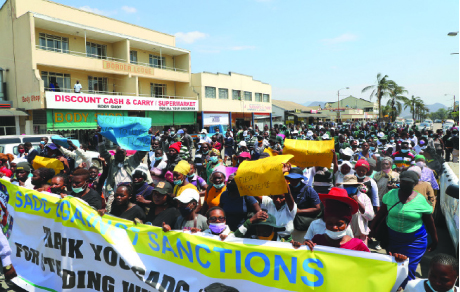
FOR 22 years now, Zimbabwe has been toiling to develop herself despite the albatross of sanctions tied around her neck.
This comes after the Unites States, the European Union and their allies imposed illegal sanctions on the southern African nation in response to her land reform programme in the Year 2000, which was designed to correct a colonial legacy and redistribute land from 4 500 white commercial farmers to 300 000 black farmers.
Therefore, one could say Zimbabwe’s punishment through the sanctions is a warning to other African countries who may want to rectify land imbalances within their respective territories.
But instead of alienating Zimbabwe, the sanctions have brought the country closer to her African peers and has sharpened her re-engagement policy with the rest of the world.
Every year since 2019, African leaders have been commemorating October 25 as Anti-Sanctions Day to amplify the call for the unconditional removal of the punitive measures on Zimbabwe.
While the Southern African Development Community (Sadc) grouping of 16 regional nations started the initiative, the occasion has since been adopted by the African Union (AU).
At the 78th session of the United Nations General Assembly in New York in September, African leaders joined President Mnangagwa to pile more pressure for the removal of the sanctions against Zimbabwe.
The illegal embargos have to go because they increase the perception of Zimbabwe as being in a high risk profile category, thereby diminishing the credibility of investment and investor confidence.
There is no doubt that the lifting of the sanctions will facilitate socio-economic recovery and enable Zimbabwe to meet its national and regional economic development plans as well as effectively manage its international obligations.
However, to counter the effects of the sanctions and take the sting off them, the Government of Zimbabwe has been making serious investments in agriculture, mining and infrastructure development, with the young people being the driving force.
The country’s agriculture sector is growing in leaps and bounds and the citizenry is now food secure owing to the Pfumvudza/Intwasa Programme, which is a climate-proof concept that leverages conservation farming techniques to make the most of small pieces of land.
Zimbabwe has also made significant progress in infrastructure development.
Investments in infrastructure are critical to advances in agriculture and fundamental to human development, including the delivery of health and education.
Infrastructure is considered a key component of the investment climate by enabling people to access markets, hence the great work being done on our roads across the country.
Infrastructure is also a key enabler of integration into regional markets to drive intra-African trade, thereby positioning Zimbabwe as a competitive player in world markets.
Zimbabwe is not going to rest on her laurels and allow her people to wallow in poverty as envisioned by the architects of the illegal sanctions.
Zimbabwe is going to do what she does best — fight for her citizenry’s food security, good health and well-being through the attainment of Vision 2030.



 Online Reporter