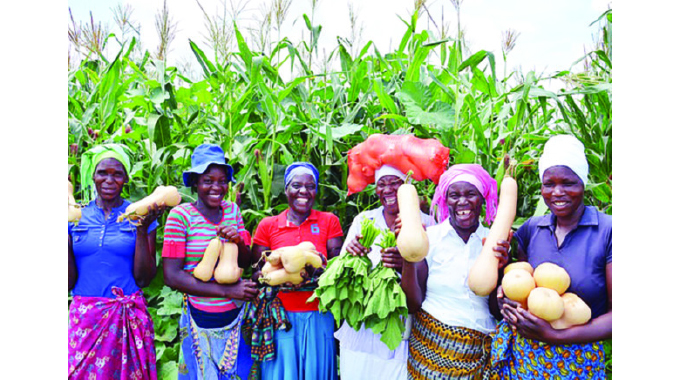
FARMERS are prepared to work hard, but need practical and localised back-up to generate the most value from that hard work so that they can be a full part of Zimbabwe moving towards ever-increasing prosperity.
The likelihood of lower rainfall this season during the latest El Nino means this practical support requires more than the generally successful programmes already put in place by the Second Republic that have done so much to start converting subsistence farmers into profitable smallholders.
The Government, through the Ministry of Agriculture, Mechanisation and Water Resources Development, has responded.
So far, 914 ward drought mitigation centres are operational across the 1 527 rural wards, so every village and every farmer is fairly close to a centre.
These centres each have one of those already successful village business units and a village board, so are already functional and operational.
This local involvement ensures the basic groundwork is in place and that there is a settled community looking after the centre for the additional facilities being brought in by the ministry.
A prime purpose of the centres is to offer rural livestock farmers a secure place for marketing their surplus stock with the sales being monitored to ensure that they bring respectable buyers and respectable farmers together.
Each centre will have a water supply for the community and for watering livestock, with spray races installed so the equivalent of dipping can be done. Feed troughs and a sort of mini-stockyard for marketing are included.
This is the sort of practical measure that gives small-scale livestock farmers the same sort of standing that only very large farms and giant ranches had in the days before land reform, when there was sufficient stock for sale on a sales day to bring in the best buyers.
Small-scale farmers can compete, but they need to group themselves to achieve the same scales.
A little over a third of the national cattle herd, almost 2,5 million head, are at risk from lower rainfall and many farmers will be wanting to cut back herd sizes to what they can safely feed and water.
This, from past experience, opens the door to exploitative buyers and middlemen moving with a bag of cash from village to village, doing their level best to keep prices down and their own unearned profits high.
That was possible when a farmer did not have other alternatives.
The new sales system will see all sales at the ward centre, with sales days fixed in advance and both farmers and buyers notified.
That means there will be competitive buying, and the facilities at the centres will mean that the cattle are in reasonable shape for sale.
It would probably be useful if a suitably authorised veterinary officer was on duty on each sales day, able to check the cattle and issue buyers who needed them the required movement orders.
That will help to attract more respectable buyers who while wanting to make a profit are not going to gouge or cheat the farmers.
As with many emergency measures, we think that the ward centres should become a permanent part of the rural marketing environment.
Having the community involvement from day one means that the facilities will be preserved.
Naturally this means that the organisation of the sales in a drought year has to be superb, but once that standard is met, many farmers will want to maintain the concept of centralised ward sales.
Among the many changes being made in commercialising the small-scale sectors of agriculture, moving livestock farmers from holders of cattle to producers of cattle for sale is an essential add-on and moving livestock farmers into the sort of greater security grain farmers already enjoy.
The Grain Marketing Board acts as a guaranteed buyer for all grain and oil seeds, paying a price announced before planting begins regardless of harvest sizes or when the crops are delivered.
That eliminates the problem of a glut, forcing down prices and of exploitive buyers taking cheap grain as they drive through villages.
In gluts, the GMB simply stocks up on long term reserves, the national strategic reserve, and so evens out the annual fluctuations in supply and demand.
The new centres and centralised ward buying and selling should become a permanent part of the operations of the smaller-scale farmers, keeping their transport costs down but ensuring that through a combined assignment of cattle for sale that they can attract the best buyers, prepared to pay proper prices, and so gain the full value for all that hard work they put into building up a decent herd.