admin
admin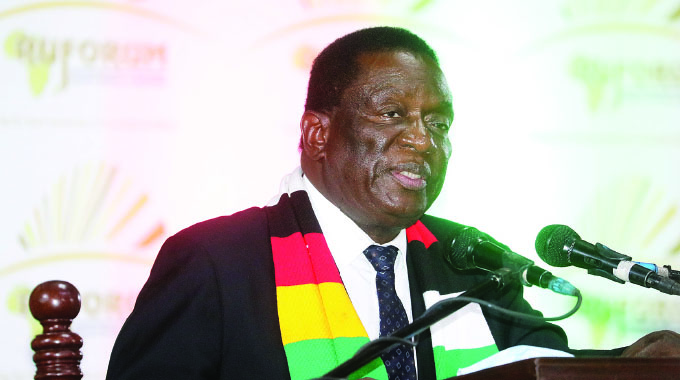
AS we move into 2023 we must continue looking forward as we build on the accomplishments of 2022 and the previous years that the Second Republic has been implementing its reforms, to ensure development and growth are continuous and sustainable.
But all these reforms and programmes simply make it possible for people, businesses and investors to create the actual wealth and the actual growth. These people and businesses are rarely conscious of fulfilling some careful economic strategy. When they go out to work and produce and trade they are doing this because they want a better life for themselves and their families.
But that is exactly what the gross domestic product of a nation is, all the millions of bits and pieces each one of us does added together.
It is not some abstraction, but rather a very practical measure of what we all did and are doing. So when there is economic growth it means that between us, on average, we all managed to do a bit more and that immediately benefits each one of us.
We all need to contribute to common services and helping the most vulnerable, so we pay taxes and we are all taxpayers, even if only through consumption taxes. But we still keep most of what we make from the sweat of our face, and when we make a bit more then we win, and the country wins since it is also getting richer.
So President Mnangagwa’s stress on the breadwinners, the millions who go out everyday to earn their living, brings economic growth down to where it belongs, the total of what all we do rather than some impersonal force or a number in a textbook.
When someone grows more, digs up more minerals, makes more things in a factory, provides more people with better services, they are not thinking about the total, they are thinking about themselves, and when they can do more work for more money, they again think about what this means for themselves and their families, rather than thinking about the gross national product.
This recognition of what a national economy is, and what economic growth means, allows the President and his Government to then do their job properly, to make it easier for people to earn more, produce more and sell more.
The result, what they could well be judged on, might be reflected in the total, but the real gain is with ever more families becoming ever more prosperous.
Our national vision, which we all share, is Vision2030, to be an upper middle-income country by 2030, seven years from now as another year passes. But President Mnangagwa couples that vision with the other half of what is required, leaving no one and no place behind. This is important since an upper middle-income country needs an upper middle-income population.
When all households are upper middle-income, the country is upper middle-income. Again it is not a number, or something abstract, but the combined total of what we all are and do as individuals and families.
At independence we inherited a grossly unequal society, with the benefits of the economy flowing into a very small number of hands.
A lot of the early reforms were to create equality of opportunity, when race stopped mattering and to a large extent it stopped mattering what your parents did. What became far more important was what you did and how you did it. That was a major shift and produced many benefits, some real some more theoretical.
What President Mnangagwa and the Second Republic have been stressing is to open opportunities in a practical sense, making sure that no one and no place is left behind.
A good example is the land reform of just over 20 years ago. That did correct a serious historical injustice, one committed by a few hundred men testing out a pair of new inventions, the bolt-action rifle with removable magazines and the Maxim machine gun.
But land reform by itself largely just gave equality of opportunity. It created a necessary condition for a major drive to the prosperity of so many rural households but more was required.
Here the Second Republic has been providing the practical addition, the range of programmes so that those with land, a large rural majority now, can use that land to grow food and make money.
Those programmes work. When we announce we are self-sufficient in grain, both summer grains and winter wheat, we are adding together the efforts of millions of farmers who have each grown something, and been paid for what they have sold.
Each farmer goes out to grow what they can, and their individual aims are to improve the lives of their families. Their combined total also benefits and feeds the country, but their individual aims are family-orientated, as the President acknowledges.
Industrial policies need some direct Government support, largely a willingness to buy all supplies locally, but more importantly need that pro-business and pro-investment environment that has become a hallmark of modern Zimbabwe.
If you put together the resources and the fruits of those resources, and then open up the business world and make it easy to move into the next stage, you can rely on business people to do their bit.
They, like the farmers, are not so much growing Zimbabwe as making their own living, but as with farming their total effort makes a new nation.
Mining growth is largely putting together our natural resources and our investors, with the pro-investor policies being a major push factor. In 2017 output was US$2,7 billion.
In the year that has just ended we probably hit close on US$8 billion, three times as much. This year, with existing mines expanding and new mines, especially the lithium mines, coming on stream, we expect US$12 billion.
The numbers are dramatic, but we need to remember what they mean. Minerals do not just leap out of the ground, process themselves and fly on magic carpets to buyers.
Ever more Zimbabweans have to dig them out of the ground, have to run processing plants, have to load them into trucks, and have to drive them to market.
Investors provide machinery to get the most out of the effort, but in the end we are back to the person, the breadwinner, the person who does the work and as they gain more skills can maximise their output and so earn more.
So this is what national development and economic growth mean. More people earning more money, producing more, developing more skills, seeking to use more opportunities to do more valuable work. But when we put all those individual efforts together, we are producing an exciting country, and one where that growing total opens other opportunities for even more Zimbabweans.
Our country is the sum of all us, and of all our efforts and all our hopes and all our dreams. Without us there is no country, just a name on a map.



 Online Reporter