Online Reporter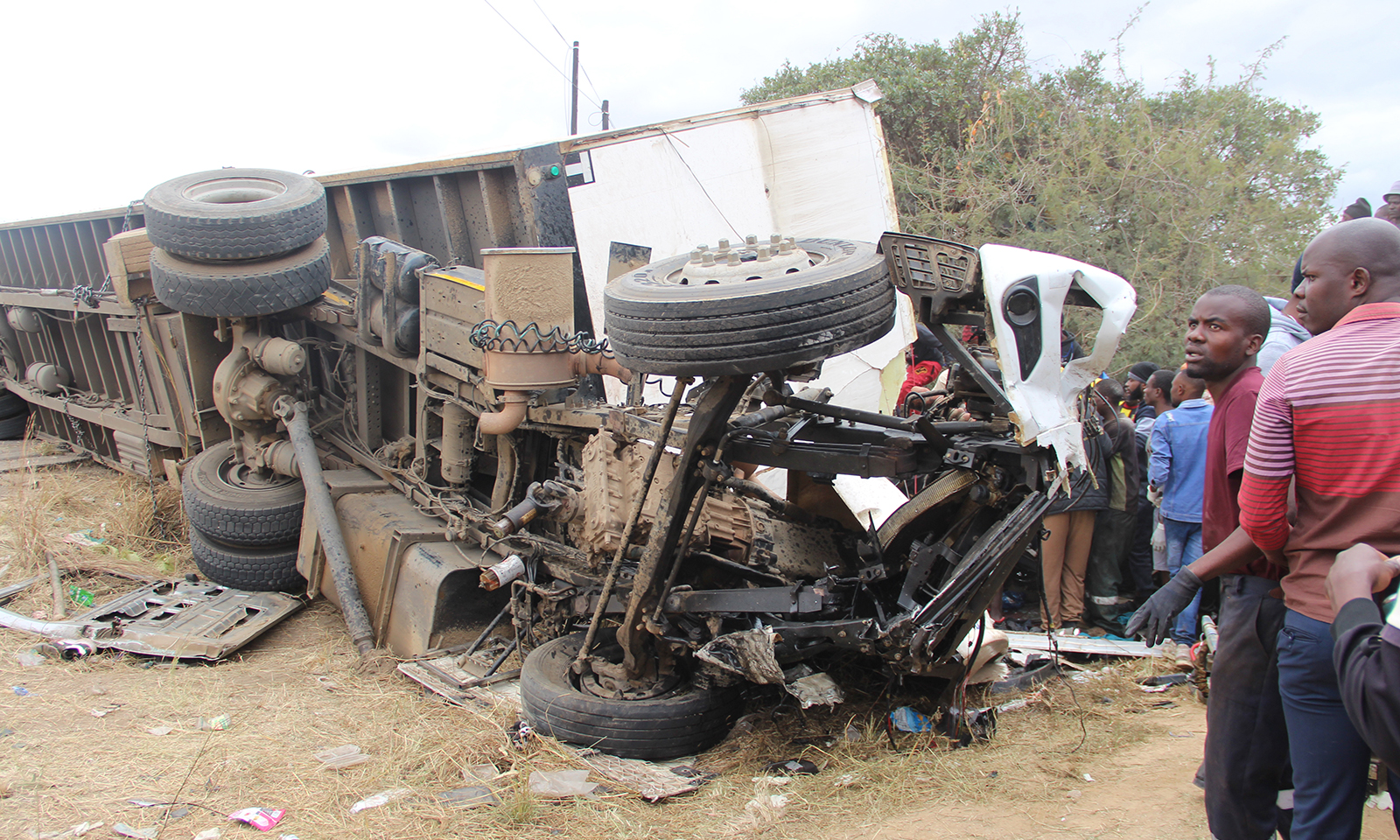
THE pattern has become all too familiar.
It starts with a siren and ends with silence, then the screaming headlines follow — “Five dead in Gokwe crash”, “Thirty injured in Harare pile-up,” “Two schoolchildren killed on way to class”, “Nation plunged into mourning as horror crash claims 17”.
Outrage naturally follows.
With the passage of time, we are lulled into complacency, but before the ink is dry, the next tragedy rolls in again.
It seems we are now trapped into this perpetual cycle of tragedy on our roads.
Zimbabwe’s roads are bleeding, and most often from the careless behaviour of those behind the wheel.
It is time we faced the truth: Our driving culture is reckless, dangerous and in desperate need of a reality check.
Ironically, the more we raise awareness, the more accidents, deaths and injuries we experience on our roads.
Recent statistics from the Zimbabwe Republic Police are quite sobering and unforgiving.
As we report elsewhere, from January to June this year, 28 159 road traffic accidents were recorded, up from 25 968 during the same period a year ago.
That represents a rise of 2 191 crashes.
What is, however, more concerning is the concomitant increase in fatal crashes from 784 to 870, as well as road deaths from 1 037 to 1 088.
As we have always said, behind each number is a shattered family, a funeral procession and a story cut short.
And the last three months to June this year were the worst across all major indicators — road traffic accidents, fatal crashes, death and injuries.
Instead of getting better, it is getting worse.
All those who use our roads regularly know where the problem lies: Our driving culture is more than bad.
It is tragic.
Driving in Zimbabwe has become less like a transport function and more like auditioning for a stunt role in a post-apocalyptic action movie.
Speeding is fashionable, overtaking is impulsive and indicating before a turn is viewed as a betrayal of surprise.
Drivers seem to believe they are immune to gravity, physics and common sense.
So, the problem does not lie in the roads, but the road users.
The real villain is the culture behind the wheel; drivers who treat the highway like a racetrack; kombi operators who mistake red traffic lights for optional advice.
Naturally, the change we need is psychological.
We need a new national mindset around road use.
Driving should be less about ego and more about empathy.
Imagine a Zimbabwe where speed limits are respected like sacred vows, seatbelts are not just decorations but daily armour, honking is replaced with patience and drivers take breaks before fatigue turns the steering wheel into a weapon.
This is the new culture that we need, but it begins with individuals, a collective push and a public awakening.
As Dr Martin Luther King Jr once said, “Nothing in the world is more dangerous than sincere ignorance and conscientious stupidity.”
Let us not be consciously stupid behind the wheel.
However, now is the time to act to bring the mischief on our roads to an end.
President Mnangagwa could not have been any clearer last week when he said: “The time has come to raise the stakes against guilty parties. The cost of bad behaviour on our roads must simply outweigh whatever bizarre benefits those responsible believe they gain from reckless driving. My directive is for all Government institutions involved in traffic enforcement, along with our courts, to align on this matter so that this seemingly endless, yet avoidable, bloody spiral on our roads is brought to an immediate end.”
This means the authorities must step up.
In our own small way, on Friday, we, as The Sunday Mail, in conjunction with the Traffic Safety Council of Zimbabwe, will be holding a safe driving campaign in the capital ahead of the Heroes Day and Defence Forces Day.
Every Zimbabwean life is precious.
Every road fatality is a scar on our national conscience.
When we ignore it, we normalise it.
When we drive recklessly, we declare others’ lives optional.
Let us remember: The road is not just tar and signage — it is trust; trust between strangers, bound by lanes and courtesy.
If we cannot honour that trust, then we are not ready to drive.
So, let us steer towards sanity, brake for empathy, indicate our willingness to be better; not just with our hands — but with our hearts.