

 Online Reporter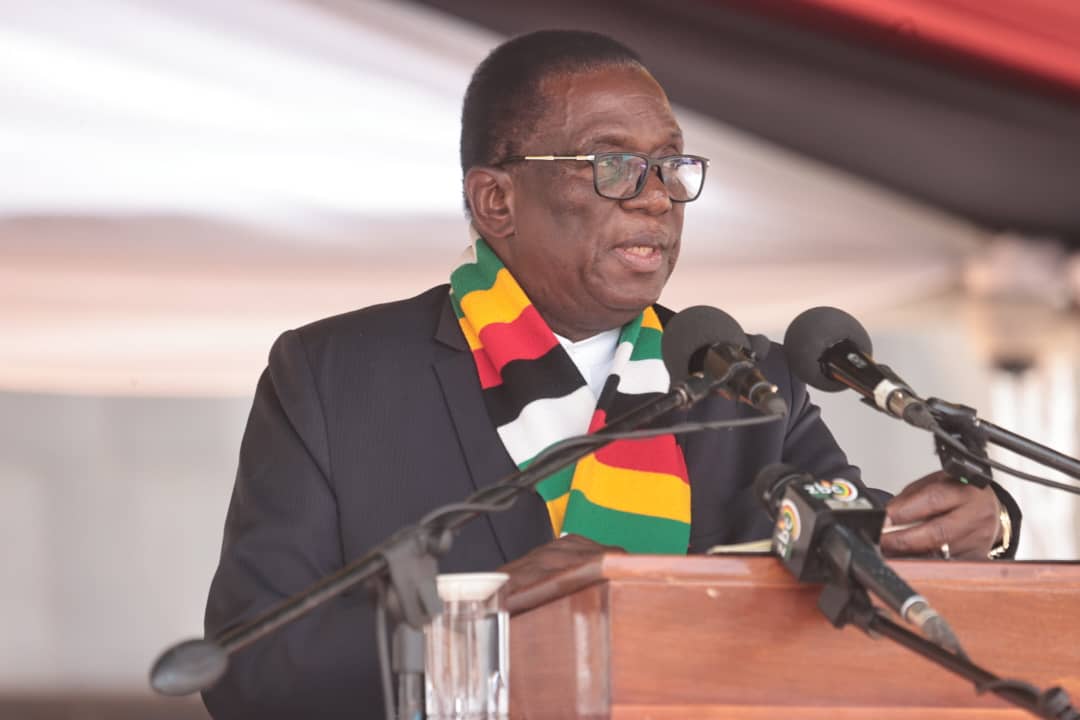
SINCE taking over, President Mnangagwa has combined the formal annual addresses he is obliged to make to Parliament, one giving the State of the Nation so everyone understands what has been done and what needs to be done, and the other outlining the legislative programme for Parliament so that our laws reflect our modern needs.
The two are linked, since we need to know what we have been doing across the whole economic and social spheres, recording our many successes as swell as analysing where we need to improve, before we get down to the nitty gritty of detailed legal changes that will drive our future successes more reliably.
The achievements of the Second Republic are fairly well known but need updating and often need stressing, especially as Zimbabwe is now moving to the top of a number of economic lists when it comes to growth, soundness in economic affairs and desirability as a partner in many activities.
As President Mnangagwa noted very strongly, despite the sanctions still being applied, we have accelerated our economic growth to 6,6 percent this year, one of the highest rates in Africa and the world, and have been pushing these high growth rates for much of the Second Republic, with only bad droughts and Covid-19 slowing down our expansion.
Remaining totally committed to agricultural expansion, both to drive the national economy and to move millions of Zimbabweans out of poverty into a far more prosperous future, the Government has maintained and expanded and upgraded the support given farmers.
Even livestock, which needs several years to measure improvements since cattle have to breed and drop calves, is now showing the results of several programmes, the national herd now reaching 5.7 million.
Milk production, which sunk to levels that required large imports of dairy products such as cheese, has been rising sharply by an incredible 50 percent from 76,7 million litres near the beginning of the Second Republic in 2019 to 115 million litres last year. We are moving into new territory, of seeking new markets in Zimbabwe and preparing some quality exports outside the country. This is where some specialised applications are needed to find something a bit different so we can win the higher value export markets.
Irrigation has now moved to the top table for development, with already almost 50 percent growth in the Second Republic and targets of more than tripling the land that can be irrigated. Government programmes are looking at winning irrigation expansion right across the farmer networks, including for smallscale farmers.
Title deeds and the ability of the GMB to buy and store grain are now also high priority.
Mining has always been important, and has reached the stage where a fair amount to legal changes are required to make sure that all miners, large and small, can press ahead with negligible disruption to others, and that the rapidly expanding mining sector can be properly controlled and managed.
Manufacturing, a bit of a poor relation in recent decades, has seen 15,3 percent growth in the past 12 months, a huge jump especially as much this growth is in businesses that can compete on quality and price in free markets, rather than the tight protectionism needed for the earlier industrial revolutions. This new-style growth means that industry can advance on merit.
The President noted that the Government is now delivering on reviews of licences, permits, levies and fees as well as the multiple regulatory requirements across all sectors to enhance the country’s ease of doing business, reduction of costs and the competitiveness of the local industry.
Tourism is putting Zimbabwe at the top of other lists, with the country now seen as the ‘Best Must-Visit Destination in the World’ by Forbes Magazine. This will again need the legislation upgraded so the growth can continue and include more, without any denigration that puts off visitors.
Besides fixing up Zesa to cope with the rising electricity demand several independent power producers, captive power producers, commercial and industrial players have been licenced to connect to the national grid, with rural electrification using far more solar to make sure no one is left behind.
Infrastructure, including not just roads but also the fuel pipelines and other links, is keeping pace with the expansion and converting inadequate roads into the sort of highways we need, including our own inputs into modern development like the Trabablas Interchange in southern Harare.
Zimbabwe hit the top of some economic and fiscal lists in the past for inflation and other ills.
We are now back at the top, but this time because of our incredible achievements. Few would put Zimbabwe a few years ago at the top of the World Bank list for making significant progress in foreign currency reserve accumulation. But there we are as we reap the benefits of a tight and well-run fiscal and monetary climate.
Despite the tight budgeting we have maintained social programmes, such as rapidly improving public health systems and developing our skills, and we need to be reminded, formally in Parliament, of our successes so we build on them.



