admin
admin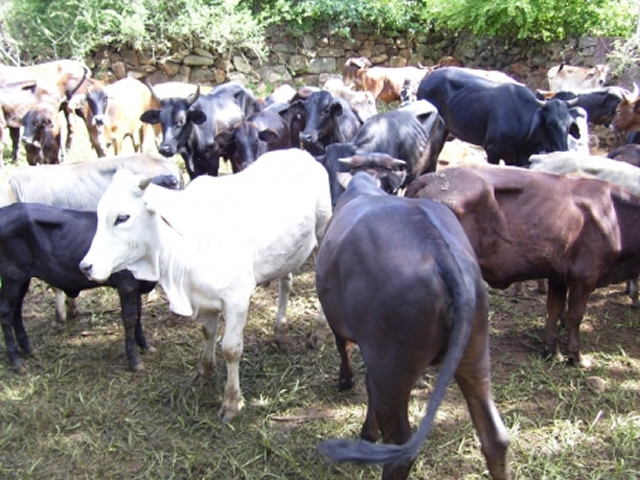
 The government and farmers, particularly livestock producers in the southern provinces, were already fretting over poor harvests and the resulting food deficit and the health prospects of cattle amid a protracted dry spell.
Farmers who had grown maize gave up hope around February as their crop had wilted. Bulawayo City Council engineers had also started checking the water levels at the local authority’s dams. They had already projected a new round of austerity measures in water use beginning January next year. Bulawayo residents, aware of the inconveniences water shedding caused between 2012 and 2013, were deeply concerned.
Vultures were already circling in the cloudless sky of Matabeleland South, Matabeleland North, Masvingo, southern Midlands and Manicaland, waiting to buy farmers’ distressed cattle for a song.
But from last week, the country has been receiving a surprise downpour. Admittedly, much of the maize and even some hardier crops are already lost because of the three-month dry spell that started around late December until the ongoing countrywide torrent. Yes, a little of the drought-tolerant sorghum, millet and rapoko might be salvaged, as will a very, very late maize crop but the bulk of the crops were scorched.
We state with a good degree of certainty that while crop harvests have been massively curtailed and a drought declared, livestock would be saved as the falling rains should dramatically replenish pastures.
We have an interest in rainfall because Zimbabwe’s economy is agro-based and our agriculture is primarily rain-fed.
When the sector suffers the effects of drought as has been the case this year, the economy is affected. Food shortage will occur and the government would need to spend scarce resources importing maize to feed the hungry. This expenditure would be too big to bear for a challenged economy such as ours.
Conversely, when the sector records a bumper harvest as was the case last season, the economy would be boosted and rural livelihoods enhanced. Food security would be guaranteed.
During the 2014/15 season, farmers had planted various crops on two million hectares but initial forecasts said 342,000 ha had been confirmed lost three weeks ago, with fears that as much as 500,000 ha could be the final loss.
From depressing projections that had been given three weeks ago, the food supply and livestock situation should be better now.
That makes us happy, a bit. While we have lost some crops, farmers in Matabeleland region, Masvingo, and southern Midlands and Manicaland are pleased that at least their livestock would have water to drink. We wait for Bulawayo City Council to give us the latest water security projection, but we think it would not be as dire as initially estimated.
In terms of maize supply, the government had moved with commendable speed well ahead of time when it lifted the ban on commercial importation of the staple. Vice-President Emmerson Mnangagwa recently assured the people that those who did not harvest much and are poor will not starve as the government was mobilising food for them.
After the easing of the ban, the Grain Millers Association of Zimbabwe initiated plans to import 600,000 tonnes of maize from Zambia. This will complement the slightly less than one million tonnes of maize that are likely to be harvested this year and go some way in meeting the 1,8 million tonnes the country needs for its consumption needs.
GMAZ chair, Tafadzwa Musarara recently said:
“The imports from Zambia have already started coming in at $240 per tonne and these imports will be intensified around September after we mop up locally. So far government has not said anything about the total import requirement, hence our initial figure of 600,000 tonnes.”
We expect the importation of food to continue despite the prevailing wet spell.
Zimbabwe is not in this alone as neighbours; South Africa, Mozambique, Malawi, Namibia, and Democratic Republic of Congo had poor agricultural seasons. South Africa, for example, has forecasted a 32 percent decline in its 2015 harvest due to low rainfall. Regarding Malawi and Mozambique, the food deficit resulted from flooding as well as prolonged dry spells.
We are pleased though that the high temperatures have been broken and our dams could fill up, pastures and some crops revived. Full dams would help a great deal for irrigation purposes. Healthy cattle are the pride of every farmer. Therefore, the impact of drought on the economy is unlikely to be too big.
We thank God that the dire prognosis of widespread food shortage and high food prices, cattle deaths, lack of drinking water and adverse impact on the economy might not come to pass as initially thought.



 Online Reporter