admin
admin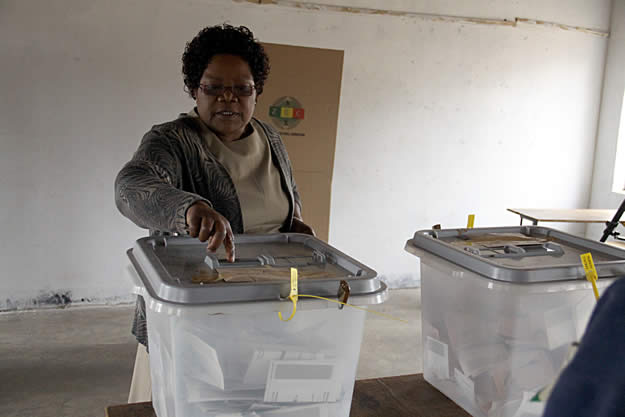

SINCE the attainment of independence in 1980, Zimbabwe has made significant strides in ensuring gender parity in politics, the economy and on the social platform. Three decades ago, most spheres were largely a preserve of men, with women mostly confined to their homes and their voices on issues political were muted. But the landscape has changed incrementally, more so on the political front where women’s voices are increasingly finding audience.
Although the achievements still fall short of those prescribed by the Sadc Gender Protocol and the Beijing Plan of Action, Zimbabwe has made considerable inroads and is still counting.
The appointment of Vice President Joice Mujuru in 2005, was in itself a major leap forward in terms of the emancipation of women. In fact, in 1980, President Mugabe created a women’s ministry whose primary role was to leverage women in all facets of the country.
Up to now, the women’s portfolio remains actively engaged in fostering women’s issues.
It is against this background that we celebrate the growing number of women that have entered the political arena, particularly in the just-ended harmonised elections.
The Eighth Parliament, whose members were sworn into office on Tuesday, has 85 women out of 270 legislators while the Senate has 39 out of 89. The National Assembly numbers were beefed up by the 60 seats reserved for women according to the new Constitution of Zimbabwe.
Although the numbers still fall short of the 50-50 representation by 2015 goal, the Government needs to be applauded for its efforts in this regard. Zimbabwe is in fact one of the countries in the region that has assented to most gender protocols ahead of many on the continent.
The jovial mood exhibited at the Women in Politics Support Unit meeting in Harare, on Wednesday, told a story of women who feel empowered and are part of the decision-making and policy formulation process.
And the message was loud and clear, their appointments to influential positions is not mere affirmative action but these are women that have power to influence and help turn the tide for our country. The zeal with which they pledged to serve the nation can only bring great results for our country.
Zimbabwe needs to harness all the energy at its disposal to ensure growth and development. Women have a critical role to play in this matrix. The advantage also being that women have an intuitive ability to multi-task.
That they are wives, mothers, and sisters and so on does not necessarily compromise their effectiveness on the grand stage. It’s a God-given ability we can never take away from the fairer sex. We have no doubt they will exploit this attribute to the benefit of the nation at large.
It is in this regard that we implore the women Parliamentarians to give their best in representing their constituencies and help shape and formulate policies that will take the country forward.
We will need to hear their voices in Parliament. We will expect them to debate issues intelligently and five years from now, we will want to look back and say these women did their country proud.
We discourage the pull her down syndrome that often afflicts women in their rise up the ladder. Instead they must work together in harmony as a progressive lot. There should be no room for pettiness or sulking as they discharge of their duties in and outside Parliament.
We anticipate that a sizeable number will clinch ministerial positions in the impeding cabinet announcements.
The words by outgoing Minister of Women’s Affairs, Gender and Community Development Dr Olivia Muchena that women should be role models and that they should demonstrate their prowess to the electorate are quite instructive.
Provisions in the new Constitution are quite elaborate and supportive of women. This should help leverage their position in society and in Zimbabwe at large.
We must, however, hasten to say that the elevation of women does not necessarily mean that men become subordinate as is sometimes widely peddled. That perception has not space in this country. In fact, creating more space for women is a smart partnership and prosper thy neighbour principle that fosters development.
Both men and women have enough space to work in concert. Zimbabwe is richer with such partners operating at full throttle.
The successes scored in politics should be replicated in the economic front where women have also been making inroads over the past few decades. The economy is confronted by challenged that demand that everyone participates to the best of their ability.
We need to celebrate our women and walk hand-in-glove as we march towards a more prosperous Zimbabwe.



 Online Reporter