admin
admin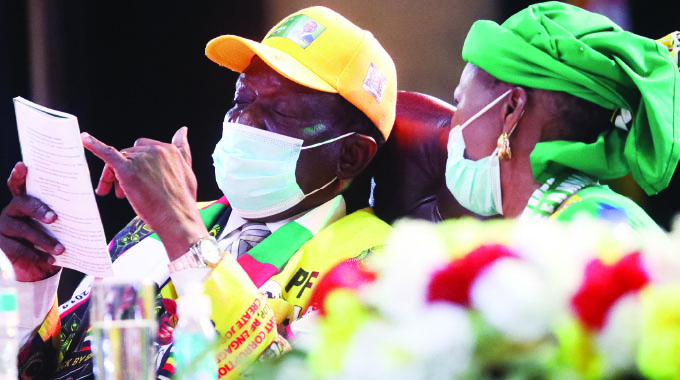
IN his address winding up the 7th Zanu-PF National People’s Congress, re-elected party leader President Mnangagwa made some critical and telling points.
The most important was that the party was not about who occupied leadership or other positions, from the Presidency down, or even who the party nominated to contest elections.
These people were just the conduits for transforming the desires of the people into reality.
This seems obvious, until you look at opposition parties that seem to exist purely to create such a leadership, when there are no members, just the group that proclaims its positions for all time.
The concept that the leadership, and for that matter the party policies, although these are one step further along being the result of transforming what the people want and need into something that can be used in action, are not the be all and end all, and are obviously replaceable.
In fact President Mnangagwa made it clear that the party would continue to be rejuvenated, and while he himself was re-elected to the top post, this is for his second and final five years at the helm.
The second point is related. The people are the source of everything. The party itself is simply the tool the people use to help them organise themselves and have their wishes carried out.
This concept still comes naturally to the party that fought and won the liberation war, for during that war if the combatants were not backed totally by the people, they were dead.
The Rhodesians picked up on that point early on, and with tempting rewards tried to persuade people to turn on the fighters, and then with individual and then communal punishments of ever increasing severity tried to terrify the people to drop their support.
The fact that the liberation armies won is testament that the people did not take the money and were willing to suffer appalling hardship and ever mounting casualties, simply because the fighters were doing what the people wanted, to bring freedom.
So we come to the third point, and the theme of the congress. Just what do the people want? Well they want prosperity, they want things to work, they want the basic social services such as health and education.
In other words they want functional national and local government and they want those layers of government to be doing what is needed.
It goes a bit further. Even with economic growth, you can have growth that sees all the extra wealth ending up in a small number of hands.
For example, we talk about national self-sufficiency in food. That can be done.
Land reform was obviously something that the people did want, but land reform without a lot of other reforms was just a potential; it gave the people half of that they needed, the physical land, but without a proper programme of practical inputs, credit and markets, the other half, it was just something that could be used, not something that was used.
Where Zanu PF makes the difference is the implementation of the other half of the national growth policy, that growth needs to be spread, with opportunities opened up for everyone, and “no place and no person left behind”.
Even when we talk about mining and industrialisation, there are two aspects. One is that quite a bit of both can be done by families and small units, and all this needs to be legalised with proper backing. But even when we go for the major investments into giant concerns, we can spread the benefits widely by ensuring that decent jobs are created, a lot of decent jobs, and that proper labour rules and salary scales can be negotiated within each sector.
A new giant industry has three principle costs: the investment costs of the machinery and technology, the raw materials, and a lot of those are supplied by other Zimbabweans in return for money, and the staff costs, paying for the skills required to operate the equipment and convert the raw materials into something people will buy.
So well over two thirds of the costs are gains for a lot of Zimbabweans.
So when Zanu PF talks about prosperity it is talking about moving the whole population out of poverty and giving everyone the opportunity to move out of poverty.
We do have some quite rich people, and we take steps that they at least pay their taxes, and we have a modest number of upper-middle income people, but they are still far from being the majority.
The plan is that group grows very fast, and when it is a significant majority, then we are an upper-middle income country.
This requires mobilisation of resources and opening of opportunities by people who know what they are doing, and this is appears to be the main test that President Mnangagwa applies as he fills party and Government vacancies: he wants two criteria met, people who both know and who can act.
A major test is the massive changeover in agriculture since the start of the Second Republic. This year three million households are expected to be part of the Pfumvudza/Intwasa programme, basically almost the entire rural population.
The big thing about that programme is not so much that it is growing most of our food, which it is, and a lot of our raw materials, which it is, but that it is moving those millions of people out of total poverty into an area where they are making money, and can so start figuring out how to make more.
And when you have that sort of market of primary producers making money, then a lot of other people can start making money by making and selling the things those families want to buy. This is very simple economics when it comes to growing an economy rapidly.
But all these sort of economic programmes can only work when those putting them in place have the backing of the people, and the people are only going to give their backing when they see the programmes work.
This is what Zanu PF has been doing, especially in recent years, as it moves away from the talk and stresses the “doing”.
President Mnangagwa knows this, which is the main reason he never lectures and goes very easy on the talk. Most of his short speeches are about what has been done, and is being done, and that is what impresses people.



 Online Reporter