Online Reporter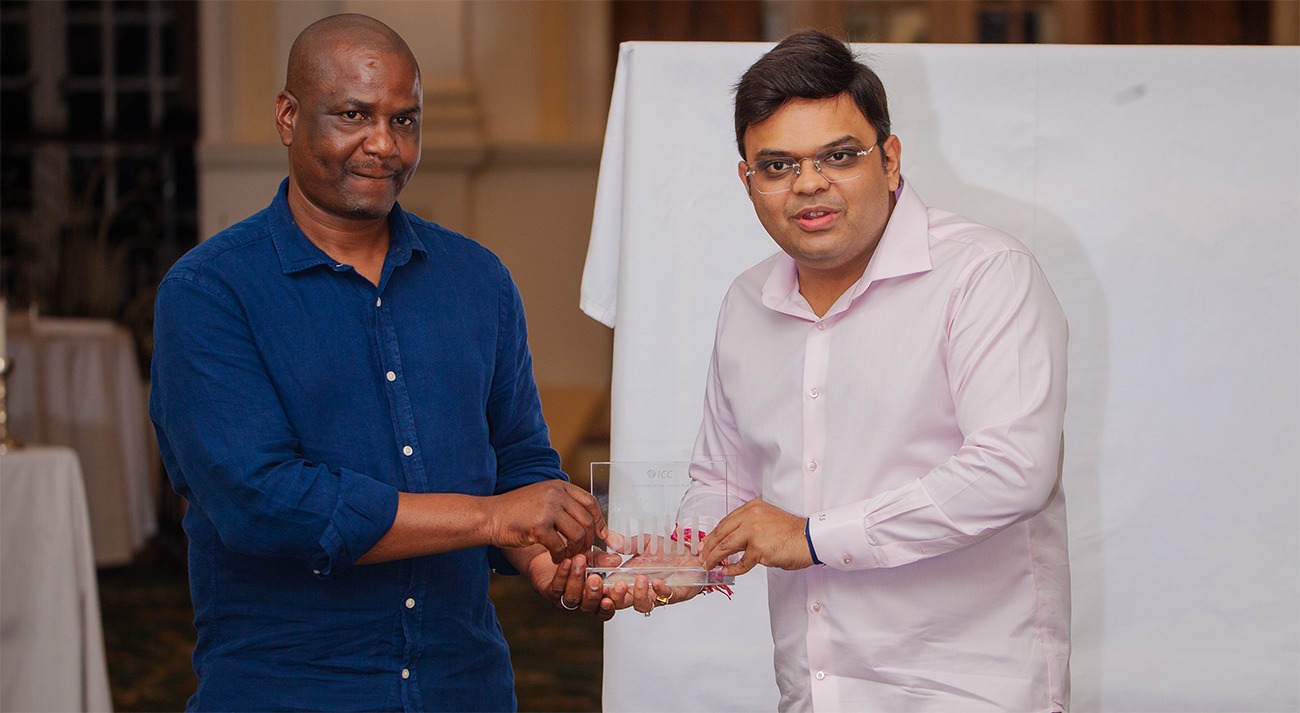
THERE was a time when Zimbabwe would have celebrated simply having Australia here.
The world champions, a benchmark of international cricket and the team every aspiring cricket nation wants to measure itself against.
Australia are in Zimbabwe and they are not the game’s only heavyweights in town.
At almost the same time, Zimbabwe’s women are hosting South Africa, another powerhouse of the international game.
And, as if to underline how much Zimbabwe’s cricketing fortunes are changing, the country’s presence in the corridors of world cricket has just received another remarkable boost.
Zimbabwe Cricket (ZC) chairman Tavengwa Mukuhlani has been appointed Deputy Chairperson of the International Cricket Council, becoming the first Zimbabwean to hold the influential position.
His appointment comes at a particularly significant time, with Zimbabwe preparing to co-host the 2027 ICC Men’s Cricket World Cup alongside South Africa and Namibia.
That is no small development. It is a milestone and a glimpse of the cricketing nation Zimbabwe is trying to build.
The scorecards will tell us who won and who lost. But the real significance of this cricketing window lies beyond the scoreboard. It is about Zimbabwe being trusted to host the world’s best.
It is about Zimbabweans increasingly occupying meaningful positions in the administration of the global game; our players being given the opportunity to test themselves against the highest standards; our women getting meaningful international cricket against one of the continental and global giants.
And it is about laying another brick in the foundation of the 2027 ICC Men’s Cricket World Cup.
For a country preparing to co-host that tournament, this is precisely the sort of international engagement that should be welcomed, celebrated and, importantly, used.
Australia do not need an introduction. They are the standard against which much of world cricket measures itself. Their arrival gives Zimbabwe’s players an opportunity to test themselves against the best in the business.
But it also gives ZC something equally valuable: exposure to the standards, intensity and professionalism that come with hosting a team of Australia’s stature.
And while the attention naturally gravitates towards the men’s world champions, there is another milestone taking place alongside them that deserves equal recognition. Zimbabwe’s women are hosting South Africa. That matters.
The Women’s game cannot be treated as an accessory to the men’s if Zimbabwe are serious about building a complete cricketing nation.
The presence of South Africa’s women alongside Australia’s men’s team provides ZC with an extraordinary opportunity to expose their players, coaches and administrators to two of the strongest cricketing cultures in the world at the same time. This is growth.
It is also a sign of how far the Mukuhlani leadership, which includes managing director Givemore Makoni, have travelled. There was a time when the country’s cricket was battling simply to remain connected to the international game.
The difficult years surrounding the ICC’s suspension of ZC and the subsequent international isolation left deep scars.
But to their credit ZC have moved some distance since those dark days. The Chevrons are once again regularly engaging quality opposition. International cricket is being played beyond the traditional centres.
Infrastructure is being upgraded. Zimbabwe is attracting the world’s best teams and Zimbabweans are increasingly contributing to the governance of the global game.
The appointment of Mukuhlani, who is also the chair of the African Cricket Association, is another indication that Zimbabwe is being taken seriously within international cricket.
The ICC has specifically pointed to his leadership experience and understanding of the region as valuable as the global game prepares for the 2027 World Cup and seeks to strengthen cricket across Africa.
And Zimbabwe is preparing not merely to participate in the 2027 World Cup, but to co-host it.
Hosting a World Cup is an enormous privilege, competing at one is an entirely different proposition. Zimbabwe should want both.
The ambition for 2027 cannot be to have beautifully prepared venues, efficient logistics and a successful tournament while the host nation watches the serious business from the sidelines.
Zimbabwe must be ready to compete and preparation does not begin in 2027. It is happening now.
Every international fixture provides another opportunity to measure the Chevrons. Quality opponents provide another examination of the playing group.
Women’s internationals provide strong building blocks for a stronger Lady Chevrons.
Every young player who gets exposed to international cricket gets a glimpse of the standard required to reach the next level.
That is why the arrival of Australia should be viewed through a wider lens. These are not simply fixtures to be won or lost. They are examinations and learning opportunities.
They are confidence-building exercises which are part of the preparation for a much bigger assignment.
There is a temptation, particularly in sport, to measure progress exclusively through results.
Results matter and nobody should pretend otherwise. But sustainable sporting growth is rarely visible on the scoreboard alone.
It is seen in the quality of preparation, the number of players coming through, the strength of domestic competitions, the quality of coaching, the development of women’s cricket, infrastructure available to young players, the ability to attract the world’s best teams and in the calibre of Zimbabweans contributing to the administration of the global game.
This is where the current cricketing calendar becomes particularly encouraging.
Australia, South Africa and the ICC have all made bold statements on this country. The three developments happening at this stage of Zimbabwe’s cricketing journey make the statement even louder.
That should not be taken for granted. It should be built upon, because 2027 is coming and the Chevrons must be ready to face the best, to compete and to make home advantage count.
They must be ready to ensure that when the cricketing world looks towards Zimbabwe in 2027, it does not see merely a host. It sees a contender.
There was a time when Zimbabwe celebrated simply being allowed into the room. The ambition now must be to belong at the table.
So yes, let us celebrate the world champions. Let us fill the grounds, enjoy the cricket and measure ourselves against the best.
But let us also understand what is happening beyond the scoreboard. ZC are getting the opportunity to learn, grow, influence and prepare. And when the first ball of the 2027 World Cup is eventually bowled, Zimbabwe should not merely be proud to have helped host the world’s best.
It should be ready to challenge them.