admin
admin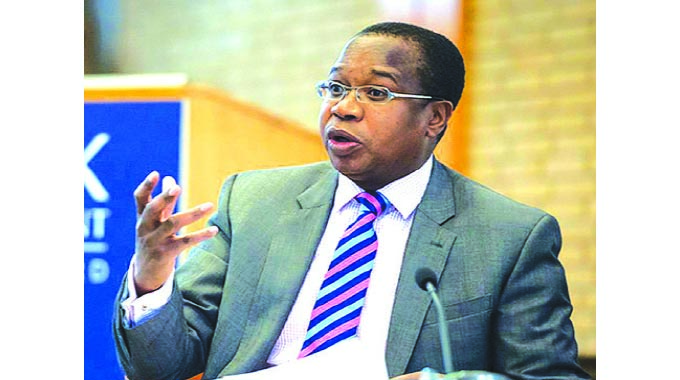
UNDER the Second Republic, Government is coping well with the major logistical and social effort to ensure that the large number of rural families needing supplies of grain and the extra vulnerable urban families needing cash to buy mealie meal get their grain and money without overstraining the economy.
This does not mean it is going to be easy, but it does mean that the Government can fulfil its duty and responsibility to make sure no one goes hungry as Zimbabwe faces and copes with the worst drought for decades.
A lot of that coping also relies on some very sensible measures already taken, both in the financial sphere and in ensuring that the national supplies will be adequate.
This week, the Minister of Finance, Economic Development and Investment Promotion, Professor Mthuli Ncube, noted that while his National Budget will be carrying a lot of the burden, he is not totally reliant on his tax income.
Zimbabwe has an extra US$32 million from Sovereign Insurance, after insuring 27 districts against drought, to add to the pool. And now the insurance has proved so providential he wishes to insure more districts in future. The premiums seem worth it.
At the same time, we have carried reports of some development partners and UN agencies that have been able to partially back the Government in some areas, not taking over as Zimbabwe is far from being a basket case, but willing to supplement what the Government is already doing and will continue doing.
This again shows that when you run a decent State financial set up, and prepared to use a lot of your own money and maintain accurate accounts, others will chip in.
In the first three months of distributing drought relief supplies in rural areas, a total of 63 000 tonnes have been handed over to the affected households.
This was the easiest three months as some families still had grain stored from last year, and while harvests were low, and in some areas wiped out, there is still a large batch of farmers who managed to harvest something.
Emergency food aid will now have to be stepped up and in the end just over 6 million rural people are expected to need support, and on the full ration of 8,5kg per person that will mean a little over 50 000 tonnes a month. But the grain is in stock, and the Government itself will not have to import.
There were carryover stocks of more than 400 000 tonnes, and commercial farms with supplementary irrigation managed to bring in a reasonable harvest and should be delivering another 210 000 tonnes of grain to the Grain Marketing Board.
The Government has reserved the full GMB stockpile for drought mitigation and so there is enough to handle that programme until the next harvest comes in, with a modest buffer.
Having the food already in the country for the grain assistance is one less burden for the Finance Ministry, and eases the logistical problems, which are large. The Zimbabwe Defence Forces have already announced that they are ready to help out with the transportation of the grain to those who need it.
Zimbabwe will have to import grain, but the Government has moved that burden to the private sector.
Millers have some grain from directly contracted farmers, and are probably thinking about increasing that source of supply in future seasons, but will need to import the bulk of their requirements.
But they are not too worried that they can cope. They have already made arrangements to import up to 1,3 million tonnes of grain, mainly for mealie meal and stock feeds.
This week’s Cabinet summary of the position showed that the Government is confident that the private sector is coping and will cope. The far better relations between the public and private sectors once again bear fruit and the nation works together for national goals.
There had been some concern that the millers might push up the price of mealie meal, but this should not happen. For a start there is now a stable local currency, the ZiG, so edging up prices in advance to handle high inflation between milling and payment is not required.
Secondly, under a very sensible policy led by the Ministry of Lands, Agriculture, Fisheries, Water and Rural Development, Zimbabwean farmers have been for a, while paid a modest premium over world prices, the comparison being made on the landed cost in Zimbabwe of imports, which includes the extra transport costs on top of world prices.
Very sensibly, the prices paid to local farmers are based on these landed costs, so they can handle the irrigation and other special charges that other farmers might escape.
That policy is why there were reserves of grain in stock, and why Zimbabwe is now producing large surpluses of wheat, allowing the agro-industrial sector to start making and marketing new products beyond just flour for bread and cakes.
But that policy should mean that the imported grain the millers are buying this year will not, once it is landed in Zimbabwe, be any more expensive than what they have been paying the GMB or their farmers.
Considering that around 1,7 million vulnerable urban people will be paid allowances to buy mealie meal, that is important when it comes to the budget. The millers will through their normal commercial channels be supplying retailers with the mealie meal for sale, and the Government is looking at making sure everyone who needs support can buy a 10kg bag for each person each month.
We cannot pretend that the drought was not a major problem, which is why President Mnangagwa declared it a state of disaster.
But with the sort of resilience, innovation and national cooperation we have built up under the Second Republic, this most serious of droughts is not only something we can handle as an emergency, but we are already devoting more resources to building up our systems and irrigation so that we can handle future drought in an almost routine fashion.
Once again, as we discovered with Covid-19, we can go beyond emergency programmes and emerge as a stronger and better prepared country by simply getting things right and working together.



 Online Reporter