Online Reporter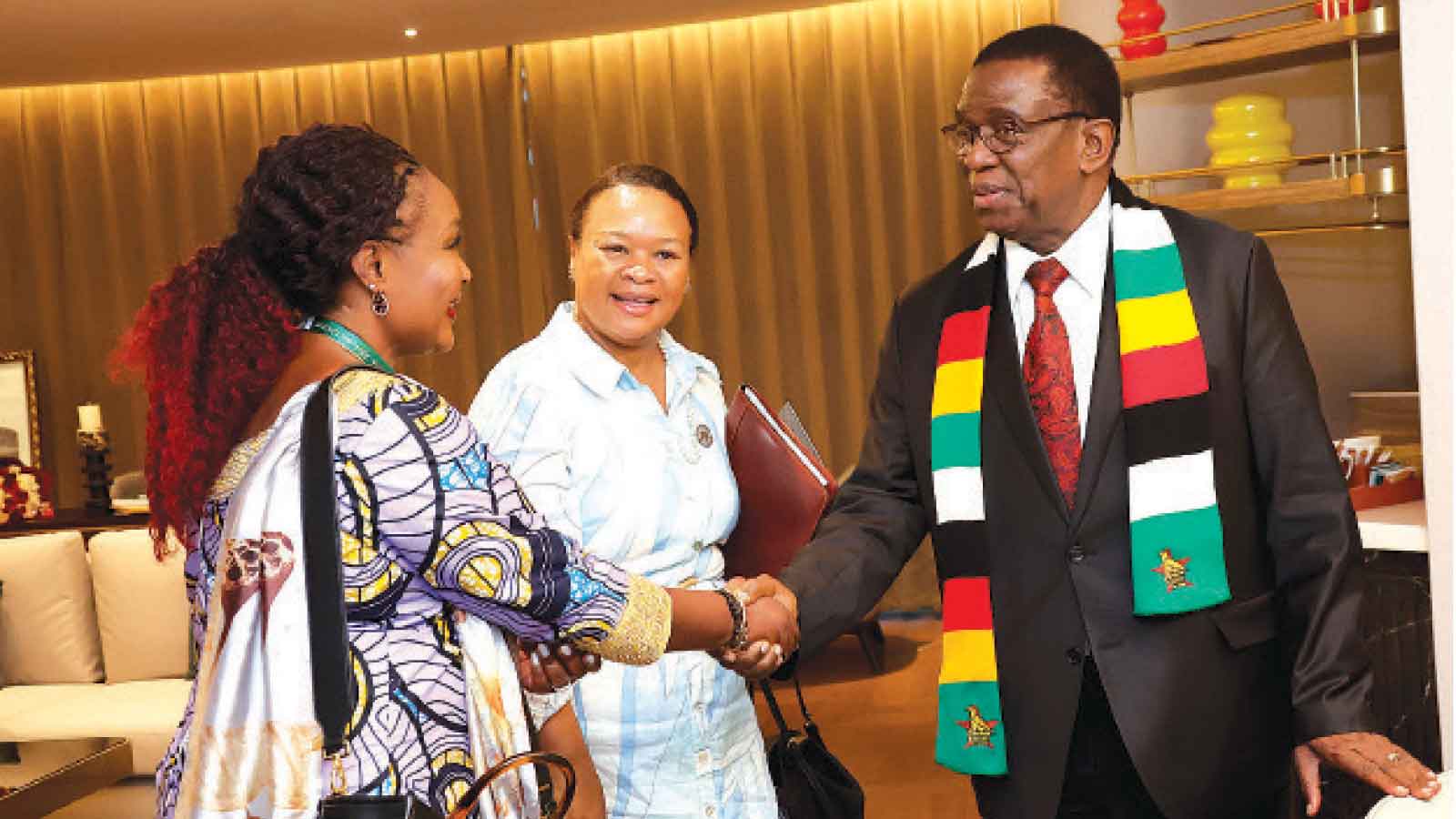
IN the corridors of the African Union (AU) Summit in Addis Ababa, President Mnangagwa delivered a message that resonated with both defiance and determination.
While once again apprising continental leaders of the debilitating impact of illegal Western sanctions, his tone was not one of a victim, but of a visionary focused on solutions.
The strongest theme emerging from Zimbabwe’s engagement at the summit is not the problem of the past, but the promise of the future — specifically, the promise held within the African Peer Review Mechanism (APRM).
Zimbabwe’s participation in the APRM, solidified by a targeted review of its economic governance in November last year, is far more than a diplomatic check-box.
It is a strategic tool that, if embraced with the same vigour as the “Nyika inovakwa nevene vayo” (a country is built by its own people) philosophy, will be instrumental in steering the nation towards its goal of becoming an empowered, prosperous and highly industrialised upper middle-income society by 2030. The recent targeted review provides a crucial blueprint.
As President Mnangagwa acknowledged, it offers “detailed recommendations” that Zimbabwe is committed to implementing.
For a nation that has weathered two decades of economic headwinds largely due to external coercive measures, the APRM process offers a credible, homegrown path to strengthen the very pillars of the economy that sanctions sought to weaken.
Firstly, the mechanism is a powerful catalyst for strengthening institutional frameworks. The review process scrutinises the design, coordination and implementation of economic policies.
The Second Republic has already made notable strides, with sectoral strategies in mining and education (such as the Heritage-Based Education 5.0) dovetailing with national development plans.
The APRM now provides an external validation and a peer-based advisory system to ensure these frameworks are not only robust but also resilient.
By institutionalising best practices in fiscal discipline and public sector accountability, as enshrined in the Constitution, Zimbabwe is building a governance architecture that can withstand external shocks and attract genuine investment.
Secondly, the mechanism directly addresses the need for enhanced accountability.
One of the most damaging narratives used to justify sanctions has been the allegation of poor governance.
The APRM, through its peer-review process, dismantles this narrative by substituting subjective criticism with objective analysis.
President Mnangagwa highlighted far-reaching reforms, such as the integrated financial management information system and the enactment of legislation to combat money laundering.
The fact that Zimbabwe now ranks third in Sub-Saharan Africa on the Open Budget Survey is testament to this progress.
The APRM report now serves as a baseline against which the Government can be held accountable — not by hostile foreign capitals, but by its own citizens and fellow African nations.
This mutual accountability fosters trust, social cohesion and ensures that the “whole-of-government, whole-of-society” approach translates into tangible outcomes for ordinary Zimbabweans.
Furthermore, the APRM is instrumental in aligning national strategies with continental and global standards. President Mnangagwa rightly noted that Zimbabwe is compliant with 37 of the 40 Financial Action Task Force recommendations.
This alignment is critical for reintegrating into the international financial system and accessing capital markets.
The review helps identify gaps — as the President noted, areas requiring “further improvement”— and provides a framework to address them using African expertise.
It is a bridge connecting Zimbabwe’s ambitious national development agenda to the broader goals of the AU’s Agenda 2063.
Most importantly, the APRM embodies the principle of “African solutions to African problems”. As APRM CEO Ambassador Marie-Antoinette Rose Quatre aptly stated, Zimbabwe, despite its challenges with sanctions, serves as a “case study of African solutions to African problems”.
A team of African experts traversed all the 10 provinces, engaging with communities to compile a report reflecting the country’s reality.
This is not a Western-imposed structural adjustment programme; it is a voluntary, peer-based mechanism rooted in African solidarity.
It allows Zimbabwe to tell its own story, diagnose its own challenges and craft its own remedies.
As we look towards 2030, the journey will require discipline and dedication.
The APMR report will highlight gaps in economic governance that need urgent attention. But with the political will demonstrated by the Second Republic, these gaps are not stumbling blocks; they are stepping stones.
By embracing this homegrown mechanism, Zimbabwe is proving that its destiny is in its own hands.
The solidarity from the Southern African Development Community (SADC) and the AU is a wind at our backs, but the engine of reform and development is built right here, by the owners of the country.
The APRM is the manual for that engine, ensuring that Zimbabwe not only runs but races toward a prosperous future.