admin
admin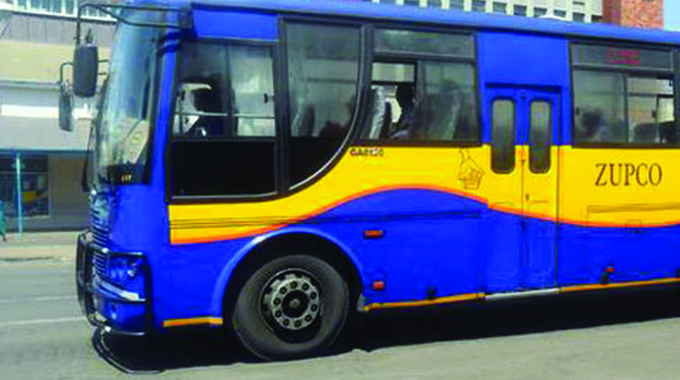
The Government has imported 86 new buses since April with an additional 47 expected in the country in the next few weeks as measures to resuscitate Zupco intensify.
When the latest order is delivered, Zupco’s fleet of new buses would have grown to 133 in only four months. The first batch of 39 that was commissioned in April is already in service. The second one, of 47, was inaugurated by President Mnangagwa on Wednesday and should follow into service shortly. These, together with hundreds of other privately-owned vehicles that have been mobilised to operate under the Zupco banner mean there is a substantial number of buses that are operating in mainly urban areas to alleviate the challenges the commuting public has been grappling with.
The Government, noting the frequent fare increases by urban public transporters and the inefficiency of their service, took a decision in January this year to reintroduce Zupco. Three hundred buses have been ordered — 200 from South Africa and 100 from China — to provide a cheaper alternative mode of transport for the commuting public. An additional 500 will be bought from Belarus under a deal that was struck by President Mnangagwa during his State visit to that country in January.
As a stopgap measure, Zupco had, by June this year, signed up 212 buses from the private sector to help the company ply its urban routes.
Commissioning the new units on Wednesday, President Mnangagwa said:
“My Government will continue to prioritise comprehensive urban public transport systems to increase convenience, reliability and comfort with the commuting public.
“In order to improve the transport service as I have said today, we are releasing 47 buses and the distribution will be announced by Zupco. In addition to these 47 that are being released today, we have another 47 already paid for and are at the border. A big number are still to be shipped from China.
“As I mentioned, the last time we launched the first batch of new buses that as they come in I will have them released, so this is the second consignment of buses which have arrived. Some are still at the port and some are still at the border but because of the challenges being faced by our population, both urban and rural, in particular the working population, we have decided to release the buses whenever they arrive so that we ameliorate the challenges of transport system.”
He said the procurement of the buses was part of a broader Government initiative to come up with a more modern and reliable urban public transport system.
“My administration in its effort to provide a safe and reliable urban transport system has facilitated the introduction of an urban mass transport system through Zupco in partnership with private operators, some of whom are here.
“As a Government, we have a vision of developing an integrated and multi-model urban transport system which shall include trains, trams and buses plying rural, intercity, cross border and intra city journeys,” he said.
Judging by the long queues that have become a permanent feature at all designated termini over the past seven months, commuters have resoundingly welcomed the return of Zupco. They are guaranteed of a reliable service. They are happy that no one is harassing them into and off the buses, as what happens in commuter omnibuses where touts are in charge.
Commuters are also spending less on transport than they would if Zupco was not there. They are paying just $1 for a one-way trip yet on kombis the charge is $2. A ticketing system that enables commuters to buy tickets in bulk has been an added advantage.
Given that transport costs together with accommodation and food constitute the bulk of the expenses an urban family incurs particularly at this time when the economy is facing challenges, Zupco could not have returned at a better time.
The financial benefit arising from Zupco’s return is not just enjoyed by those who are using its buses. Their presence has assisted in keeping kombi fares in check as the operators, fearful that far higher fares would push more commuters to Zupco, are charging reasonably. Without Zupco, kombi fares could have been as high as $4 per trip.
The commuting public wants to enjoy these and more benefits. For that to happen they want the Government to intensify the procurement of more buses to cover every urban route.
As the Government continues to fine-tune the re-introduction of the mass public transporter led by Zupco, we are optimistic that additional investment would be put not only in procurement of more buses, but also in the building of secure, accessible and modern termini. As was the case during its heydays, Zupco must, as soon as possible, draw up operating time tables which it would have to stick to. When that is done, commuters are better able to effectively schedule their travels.
We, however, must not forget rural areas. Many long distance routes in the countryside are served by private bus companies while shorter ones are now served by kombis and the ubiquitous, accident-prone Honda Fit. Order must be restored there as well and travellers must have a wider choice. They must pay competitive fares too. The return of Zupco to those areas will help a great deal as has been the case in towns and cities over the past seven months.


 Online Reporter