admin
admin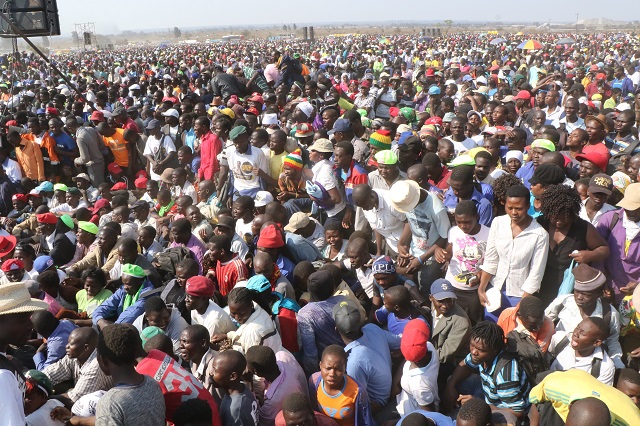

IDEOLOGY is the lens through which a person sees the world. Within sociology, ideology is broadly understood as referring to the world-view a person has that is the sum total of their culture, values, beliefs, assumptions, common sense, and expectations for themselves and of others. Ideology gives an identity within society, within groups, and in relation to other people. It shapes our thoughts, actions, interactions, and what happens in our lives and in society at large. It is a very important concept within sociology and a core aspect of what sociologists study because it plays a fundamental and powerful role in shaping social life, how society, as a whole, is organised, and how it functions. Ideology is directly related to the social structure, economic system of production, and political structure. It both emerges out of these things and shapes them (Cole, 2017).
From the general understanding of ideology, which in some way shapes how a set of people does things, including thinking (coming up with ideas) or doing things, it can be argued that political ideology embodies how a particular political entity views the world, its culture of doing things, beliefs, values, assumptions and also broadly influences its policies and plans of action. Theorists like Karl Max go on to say that the ideology of the elite is then forced down on the less powerful, but that is not the point of discussion today.
In his speech at the Presidential Youth Interface Rally in Gweru on Friday, President Mugabe implored the youths to stick to the Zanu-PF ideology, learn the history of the party and the struggle of independence. That was a pertinent plea since the youths are expected to take the party forward and carry on the legacy of the founding fathers of the liberation struggle. It will therefore be dangerous to have youths who are not grounded on the party ideology as they will certainly lose direction. We want to reiterate the plea by the President, and urge youths to take lessons from the walk by President Mugabe and other founding fathers of the liberation struggle like the Vice-President Dr Joshua Nkomo and many other stalwarts of the liberation in Africa.
Writing in the Literature Rethink column in this newspaper sometime last year, Richard Mahomva summed up what President Mugabe is or stands for, giving a worthy lesson to the young and old alike.
“Mugabe is now every African who is opposed to the British and North American plunder and exploitation . . . So, Mugabe here is not the person of Robert Mugabe. Rather it is that powerful, elemental African memory going back to the first Nehanda and even to the ancient Egyptians and Ethiopians who are now reclaiming Africa in history as the cradle of humankind . . . The Zimbabwe opposition and their British, European and North American sponsors have exposed themselves as forces opposed to Mugabe as Pan-African memory, Mugabe as the reclaimer of African space, Mugabe as the African power of remembering the African legacy and African heritage which slavery, apartheid and imperialism thought they had dismembered for good . . . It is not accidental that both the opposition to Mugabe and its sponsors sought to denigrate African liberation history as outmoded and undemocratic traditions.”
Explaining ideology as represented by President Mugabe he wrote; “This is what is popularly embraced in Zanu-PF as the ‘gwara remusungano’ which can be linked to the Zanla song, Kune nzira dzemasoja. This clearly articulates the one-way ideological fashion of Zanu-PF under the principle grounded leadership of President Mugabe.”


 Online Reporter