

 Online Reporter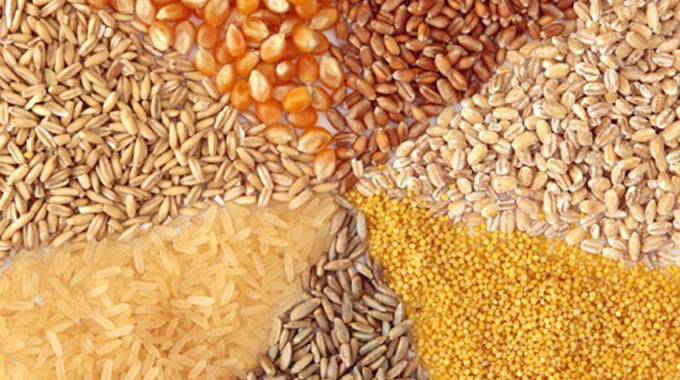
WITH climate change hitting Zimbabwe by producing more erratic rainfall and higher risks of drought, one of the more effective countermeasures will be returning to a far greater degree to the traditional and indigenous grains, the sorghums and most millets, as part of our national diet.
This is why it is so important, as the University of Zimbabwe and others have realised, to push research into these crops and catch up on years of both near neglect and often the wrong kind of research when we are looking at grain that people, rather than livestock, will enjoy eating.
Research into these crops has lagged well behind studies by public and private bodies into maize, a grain indigenous to and domesticated in Central America where the climate had enough similarities to that of much of Africa that the crop could spread from 16th and 17th century trading posts on the coast into the interior.
But it was not until the 20th century when the results of a lot of American research became available and new varieties were generated in colonial Zimbabwe, did it start superseding the traditional grains as a staple diet.
Right up until the 1920s, traditional grains dominated the diet of almost all Zimbabweans, with maize being more of a vegetable crop eaten as roast green mealies, still an exceptionally popular snack food in the country, although most of the modern crop is turned into milled maize flour that forms the basis of much modern sadza.
Maize overtook traditional grains in this country during the second quarter of the last century as research produced ever higher yields and the simpler milling and cooking needed made it a far more convenient base for sadza, accentuated as commercial millers produced new products such as first roller meal and then the highly refined flours.
The double cooking with a pounding stage needed for traditional grain sadzas, along with the need for stronger and tougher milling machines if a plain flour was to be produced, gradually saw over several decades, traditional grains become a second-best substitute for maize if it was not available.
The maize research pushing up yields soon meant that so long as a maize crop could be produced, the yields would be significantly higher than a traditional grain crop, again making it more popular.
And there was the problem that commercial colonial farmers saw traditional grains more as stock feed than human food, so the research, except in the one specific case of traditional beer, ignored taste and instead concentrated on yields.
This was seen in the “beer wars” of the third quarter of the last century. As modern industrial brewing of traditional beer accelerated, the biggest producers were Bulawayo City Council and Harare (then called Salisbury) City Council, building on their alcohol monopoly in their high density suburbs, and a new independent producer that grew into Chibuku Breweries that eventually amalgamated with the main clear-beer brewer.
Under a far more enlightened administration, Bulawayo produced a decent beer — Ingwebu. “Salisbury” did not really care and used whatever sorghum was available and produced a very substandard Rufaro product, opening the door for Chibuku.
That brewer went further than anyone, hiring some of the first black Zimbabweans with tertiary education in agriculture and technical subjects to hunt down the best varieties of sorghum, basically talking to the rural women who brewed what everyone considered to be really superior beer and finding out what they used as feed stock.
By the 1970s Rufaro sales were right down and large-scale smuggling into the high density suburbs was alleged. Eventually Rufaro gave in, handed its brewery over to Chibuku, converted itself into a pure marketing unit and then sold the desired product packaged as Rufaro. Within a couple of years the sales were right up and the profits and cash flows were good enough to build Rufaro Stadium.
Delta, Zimbabwe’s main brewer of both traditional and clear beers, to this day contracts farmers to grow the precise sorghum variety it wants, and for which it supplies the seed.
But the main point is that Chibuku, and to a large degree Bulawayo, delved into traditional knowledge to find their varieties for their single products. That sort of approach is now needed for the far greater range of traditional grains required for a greatly expanded range of food grains, so that people cook these traditional grains because they taste good, rather than because there is not enough maize.
Sorghum and finger millets were domesticated in sub-Saharan Africa several thousand years ago and spread across the continent with iron-age agriculture, arriving in Zimbabwe more than 2 000 years ago. So they had a long time to become perfectly adapted to our climatic and soil conditions and thousands of varieties emerged, rather than the handful of commercial varieties now available.
Research was not haphazard during these 20 centuries. Communities obviously chose the seed when planting for the next season from the plants that grew best in their villages, had the highest yields and produced the tastiest grain. So over time there would have been development of ever more desirable varieties.
A lot of that 20 centuries of accumulated knowledge has unfortunately been lost. But there is still an opportunity for research workers to move into the more remote rural areas where maize came last and track down elderly people who can remember what their mothers and grandmothers grew and processed and see if they can find some of that special seed.
While modern research on boosting yields and drought resistance must continue and be accelerated, and the latest UZ research is doing this, it would seem useful to expand the genetic inputs from the most desirable really traditional varieties. We could also look at research from arid Botswana and Namibia, where the traditional grains are far more widely used, and see what we can learn and what varieties could be adapted.
Everyone agrees that traditional grains, for climatic and health reasons, should form a decent fraction of the average modern Zimbabwean diet, as they did a century ago, but still having maize and wheat. But that return must be driven because the traditional grains are desirable, with modern processing making them far more convenient for a modern kitchen, rather than because we need to adapt to climate change. Positive value will be the real driver of change with traditional grains becoming a first choice because they are best.



