Online Reporter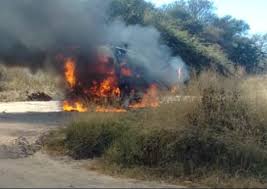
THE tragic kombi fire that claimed the lives of seven pupils has left us all heartbroken and searching for answers.
While accidents can happen unexpectedly, the details emerging from this horrific incident point to something far more troubling.
They raise serious questions about negligence, recklessness and a culture of ignoring safety regulations until disaster strikes. Authorities say there were 23 children packed into the kombi at the time of the accident.
Even more alarming is the revelation that a 10-litre fuel container was being carried inside the passenger compartment. These facts cannot be ignored because they clearly contributed significantly to the scale of the tragedy. Children are among the most vulnerable passengers on our roads.
Parents entrust transport operators with the safety of their sons and daughters every day. That trust carries a huge responsibility. When a vehicle is overloaded with young passengers, the risks increase dramatically.
In an emergency situation, overcrowding makes evacuation difficult and can turn a survivable incident into a fatal one.The presence of a fuel container inside a vehicle carrying children is equally disturbing.
Fuel is highly flammable and transporting it in the same compartment as passengers creates obvious dangers.
In the event of a collision, electrical fault or mechanical problem, fuel can quickly ignite and spread flames with devastating speed. The question many people are asking is simple: why was such a container allowed inside a kombi transporting schoolchildren?
This tragedy should force authorities and transport operators to re-examine safety standards.
For too long, many people have become accustomed to seeing overloaded commuter vehicles on our roads. Some operators prioritise profit over passenger safety, squeezing as many people as possible into vehicles in order to maximise earnings.
While this practice may have become common, it does not make it acceptable.The loss of seven young lives is a painful reminder that safety regulations exist for a reason.
Capacity limits are not arbitrary figures written on paper.
They are designed to protect passengers. Likewise, rules governing the transportation of dangerous substances such as fuel are intended to prevent exactly the kind of catastrophe that has now occurred.
Accountability is essential. Investigators must establish precisely what happened and whether any laws were broken. If negligence played a role, those responsible must face the consequences.
Justice cannot bring back the children who lost their lives, but it can send a strong message that safety violations will not be tolerated. At the same time, this tragedy should serve as a wake-up call for everyone involved in public and private transport.
Vehicle owners must ensure that safety comes before convenience or profit. Drivers must refuse to overload their vehicles.
Schools and parents should demand higher standards from transport providers. Regulatory authorities must strengthen inspections and enforcement to ensure that dangerous practices are identified before lives are lost.
If stronger safety measures, stricter enforcement and greater accountability emerge from this painful loss, perhaps future lives can be saved.



 Bongani Ndlovu