

 Peter Tanyanyiwa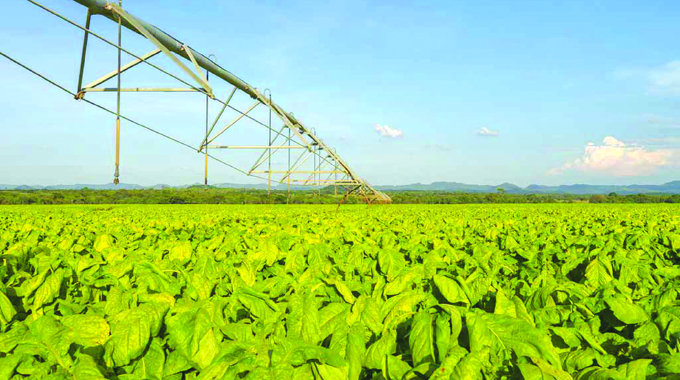
ZIMBABWE’S tobacco farmers have produced and sold just over 350 million kilogrammes this year, a dramatic increase on the old record set in 2023 and have been paid around US$1,165 billion among them.
Such is the organisation within the industry that everything works smoothly, with the Tobacco Industry Marketing Board (TIMB) keeping very effective order as a tough, but fair regulator, thus allowing the bulk of the crop to be grown under contract from the merchants, although the auction sales are now picking up to almost 20 million kg, almost 6 percent of the crop.
Almost all that 250 million kg of tobacco will be exported, as local smokers only get through a little over one percent of the crop.
The tobacco merchants add a fair amount of value, several hundred million dollars, before they dispatch the crop to their foreign buyers.
Initial processing normally involves some very precise grading, getting the moisture content just right and often removing stalk. This means the factory buying the product knows exactly what they are getting and has quality guarantees. The merchants also have to space out the exports. While farmers sell almost all the crop within around three or four months, the container loads are sent out 12 months of the year.
Some of the tobacco is further processed to what is called rag, the finally cut leaf that can go straight into a cigarette-making machine and some is converted all the way to cigarettes in Zimbabwe for export markets as well as home consumption.
But the overwhelming bulk of exports are just the initially processed leaf and this has been the case ever since exports began in early colonial times despite the odd attempt to create Zimbabwean brands of cigarettes and pipe tobacco for world markets.
It is a major policy goal in Zimbabwe, both in the Government and the large private sector built around tobacco, to push the value addition and do more of the processing and eventual manufacture within Zimbabwe.
This makes economic sense since by the time a cigarette is smoked somewhere the value, before any taxes, has risen five-fold.
But there are complications to this. For a start almost all Zimbabwean tobacco is the lighter and brighter varieties of flue-cured Virginia, the ultimate filler tobacco although some cigarette brands use such tobacco entirely within their recipe.
This variety of leaf can be sold in just about any market and since it forms the bulk of the final cigarette products was a good choice for specialisation.
But if we are to move up the value chain we almost certainly will need some other varieties, principally for blending although there are special types of cigarette and almost all tobacco in cigars and pipe mixtures is not flue cured, but rather air cured, sun cured or fire cured. Many blends also include modest percentages of darker flue-cured tobaccos as well as the air cured oriental tobaccos.
These additions are included largely for flavour, onto the flue-cured Virginia base, and consequently have to fit tighter flavour profiles.
There is a little bit of diversification of Zimbabwean tobacco. A growing group of farmers have added the shisha leaf, a thinner and more concentrated variety that is still flue cured.
This particular variety has driven the resurgence in hookah water pipes in several areas of the world and while the buyers have precise standards Zimbabwean farmers have been meeting these. Curiously, while only a little of the specially processed hookah tobacco is sold in Zimbabwe, the processed form is imported, even if the leaf was originally from Zimbabwe.
In recent years there has been some oriental leaf grown, largely through the efforts of an old-time enthusiast in Matabeleland South who has recruited some of his neighbours and people in the vicinity to give it a go, and the success of this group of farmers is now seen in the regular delivery of such leaf every year.
Another group of growers in Manicaland, neighbours in and around the Burma Valley, are now trying out the varieties and complex growing and air-curing needed for decent-quality cigar wrappers, opening another opportunity for not just enhanced exports of tobacco leaf, but also for local manufacture.
There used to be a number of farmers who provided the then handful of local tobacconists with the variety of raw leaf, normally air cured and fire cured, they needed for their pipe tobaccos, but that part of the industry appears to have vanished and the very few pipe smokers still around have to rely on imported blends, which seems a bit odd.
Efforts to produce and sell roll-your-own tobacco in Zimbabwe, and there were once several varieties, have also largely gone into abeyance although there are a couple of enthusiasts keeping the idea alive, but not for mass markets.
Those seeking to add value before export are looking at rag tobacco, the finely cut leaf that is poured into the blending tanks that feed the cigarette making machines, but which can also be used to build a roll-your-own industry, as well as manufactured cigarettes.
Final cigarettes will be harder to export, since most countries have their own tightly regulated manufacturing even if they do not grow a gram of tobacco, but that can be overcome, especially as the African Continental Free Trade Area gets into gear.
Taxes of tobacco are normally excise duties, rather than tariffs, so free trade retains these, but at least the Zimbabwean maker will be in the same boat as the local manufacturer as non-tariff barriers are reduced.
For Zimbabwe to break into major markets we will probably have to be able to create specific Zimbabwean blends, hence the need for increasing the ranges of tobacco we grow. Most global brands produce in a lot of countries, so to compete with manufactured products we will need to have something unique and special.
All this is possible, but we need the Zimbabwean tobacco industry to move from vague statements of intent to some serious thinking about potential markets and potential products and this will mean we need to involve manufacturers, merchants and farmers in the thinking and then the planning.



 Online Reporter