admin
admin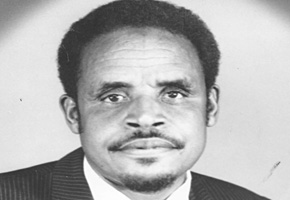
However, in many cases these are used simply because one is expected to use them in glamourising a departed comrade; ritualistic compliments to see a person off and appease observers. In fact, some people piled with such superlatives would be the opposite —arrogant, chicken-hearted, greedy, wavering and apathetic.
But when these are assigned on figures like former Zanu-PF Politburo member, Cde Edson Ncube, who died in Bulawayo on Sunday, they indeed are fitting. A portrait of a national hero, Cde Ncube led a simple and quiet existence in the background, barely known to many but revered by those who were close to him and knew the man. He lived in a modest home in working-class Mpopoma, not in better neighbourhoods one would expect people of his political standing and history. That, of course, does not diminish his role in the making of Zimbabwe, because expensive tastes and ostentatious lifestyles are not marks of heroism.
During the liberation struggle, Cde Ncube did not “enjoy” (if this is the right term) the “safety” of operating from Zambia or Mozambique, but operated within the country, behind enemy lines, as it were. With the viciousness with which Rhodesian authorities handled their opponents, particularly those working from within the country for an end to colonial rule and privilege, Cde Ncube’s was a very dangerous undertaking whose punishment was routinely death. One had to be brave, and clever to perform the tasks of recruiting cadres from within the country as Cde Ncube did in the 1970s. Many who were brave but unfortunate to be identified by colonial authorities were incinerated in their homes. But because he was brave, and fortunate Cde Ncube successfully fought the war from within and lived 32 years in independent Zimbabwe. Still that was not without reprisals; he served about six-and-a half years in colonial jails for his activism.
In 1965, Cde Ncube was arrested for resisting the Unilateral Declaration of Independence and sentenced to 18 months in prison. In 1969, he was arrested again for rising against the referendum for a republic by the Rhodesian Front. He was held at the notorious Khami Prison for three years. For recruiting youths and sending them abroad to wage the war and for dealing with freedom fighters, Cde Ncube was once again detained, now at Marandellas Prison (Marondera) from 1977 to 1979.
Cde Ncube, who was a widower, was born in 1938 in Tsholotsho District. He attended Matshudula School for his Standard One to Three before going to Luveve School in Bulawayo for his Standard Four to Six.
He did Ordinary Level through private studies and also learnt at Hope Fountain Mission from 1956 to 1958. Cde Ncube worked as a schoolmaster from 1959 to 1969 before joining the Boka Group where he worked as a sales representative.
He joined the African National Congress in 1959 and later the National Democratic Party, Zapu and the People’s Caretaker Council and was also the chairman of the Progressive and Development Association, a wing of Zapu from 1962 to 1966.
He held various posts in the pro-independence formations of the early 1970s such as being youth leader of the ANC in Matabeleland North and later its publicity secretary around 1974. In the early 1980s, he was chairman of the Mpopoma/Matshobana Residents’ Association and around 1981, he was Zapu provincial chairman for Matabeleland.
Also, he was co-chairman of the Matabeleland North Integration Task Force of PF-Zapu and Zanu-PF after the signing of the Unity Accord. In 1989, he was elected Zanu-PF Central Committee member and was later appointed the deputy national secretary for commissariat and culture, a position he held up to 1998.
He was elected MP for Mpopoma constituency in 1990 until 1995. From December 1998 to June 2000, Cde Ncube was Zanu-PF provincial chairman for Bulawayo. His executive was dissolved a few months after the June 2000 parliamentary elections after the party expressed dismay at its poor performance in that poll. In 2001, he served in the interim committee of Bulawayo Province until the elections in 2004 when he was elected Central Committee member of Zanu-PF for Bulawayo. At the time of his death, he was Deputy Secretary for Administration in the party’s Politburo.
The National Heroes’ Acre is meant for people like him. Cde Ncube’s immediate boss in the Politburo, Cde Didymus Mutasa, said 46 out of 62 Politburo members consulted agreed that he be declared a national hero.
“We acted quickly on receiving information from Bulawayo and had a round robin and consulted all members of the Politburo,” said Cde Mutasa.
“All members of the Presidium said ‘yes.’ Forty-one Politburo members also said ‘yes’ while two members were out of the country and 14 were not reachable. Thus 46 members of the Politburo said ‘yes’ out of 62 members. He will be buried at the National Heroes Acre on Friday (today) morning. He was an outstanding person in Bulawayo particularly in Zapu where he held a number of positions. He also got involved in the integration of Zapu and Zanu-PF.”
In his message of condolences, President Mugabe, said:
“It was only recently that I shared lighthearted moments with him, but little did I realise that it was going to be our last such encounter with one whom I have known way back during the nascent days of the nationalist politics and one who would become a very active member of the nationalist movement.
“When it appeared obvious that the enemy was not responsive to our political demands, Cde Ncube was one of those who were instrumental in mounting the struggle for national independence through his active involvement in the recruitment of our youths to join the armed struggle in Zambia under the banner of Zimbabwe People’s Liberation Army,” said President Mugabe.
This, he said, earned him actions of persistent recrimination by colonial administrators who incarcerated him intermittently in their various detention camps until the ceasefire period in late 1979. President Mugabe said in post-independence Zimbabwe, Cde Ncube was elected Zapu provincial chairman for Matabeleland and later played a crucial role in the process of implementing the Unity Accord between PF-Zapu and Zanu-PF as co-chairperson of the Matabeleland North Integrated Task Force.
“Zanu-PF has thus lost a strong cadre and hero of the independence struggle who served his party and country with exceptional loyalty and distinction in various stations of life. He leaves behind an uncontestable legacy of dedication and everlasting commitment to the liberation of this country as well as to the defence of its independence and sovereignty,” said President Mugabe.
During the integration process, Cde Ncube worked with the likes of Cde Fred Waniwa. He was PF-Zapu chairman for Matabeleland North, while Cde Waniwa was Zanu-PF provincial chairman for the same province.
Cde Ncube indeed had a long history and has been consistent in his quest for total independence for blacks. For instance in February 1974 when he was publicity secretary for the ANC as the party was in settlement talks with the Rhodesian government, Cde Ncube stressed the sanctity of the one-man-one-vote principle and independence.
“The ANC does not want a settlement,” he told ANC supporters at a rally at McDonald Hall in Mzilikazi, “but to govern the country.”
He was consistent on this line throughout his life.
Cde Ncube was one of the key drivers of the fast-track land redistribution programme in its formative months. As chairman of Zanu-PF in 2000, he was scathing in his condemnation of white land ownership. At some point, he attacked the infamous Supreme Court ruling of November 2000 that ordered the Government to stop the fast-track resettlement programme.
“Some of the judges need to be restructured if they continue to go against the majority of Zimbabweans on land,” he blasted.
“If this continues, we will be forced to invade and occupy more farms in Matabeleland. Where were these judges when the liberation war was being fought? There is no going back on the land issue.”
Cde Ncube, who died of anaemia at Mpilo Central Hospital aged 74, is survived by five children and three grandchildren.


 Online Reporter