admin
admin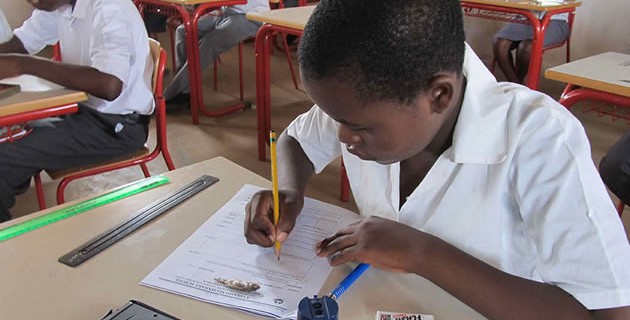
The Grade Seven public examination distils seven years of primary education, eight if the child has been through the growing number of Grade Zero classes, into four numbers based on a single set of examinations.
As such, the exam has its uses, but those four numbers cannot tell a secondary school head very much about how the examinees will perform at higher levels, nor what sort of person they are, nor whether they are a good thinker who had a bad day, nor if they are simply lucky with exams, but are otherwise not very much to write home about.
Secondary schools just get those four numbers, they do not even see the original scripts.
As a result most non-Government schools have put in place their own entrance tests for Form One and usually seek further information about their prospective pupils, including copies of school reports and sometimes family details. They like to be able to assess these prospects more fully than just gaze at four numbers.
That said, there have been abuses of the entrance tests, especially when 10 times as many youngsters as there are places are invited and test fees are charged. There has been suspicion that some schools use these tests to raise funds. So to solve the problem and ensure fairness, the Ministry of Primary and Secondary Education has banned the entrance tests.
But banning the tests is not the solution to the abuses. Monitoring them and ensuring that parents are not exploited, would be something different.
The vast majority of high schools in Zimbabwe are Government schools, run by the Ministry of Primary and Secondary Education. All Zimbabwean children who have completed primary school have a right to a day place at their nearest Government secondary school or, if it is full, at the next nearest.
There are some fully-boarding Government schools and a handful of others who for various reasons are allowed to cast their net wider, but generally a Government school head does not choose who enters that school; they select themselves.
For these heads, the four Grade Seven numbers are a useful guide to deciding which set a new pupil starts in, but that is about all they are used for and the pupil is not condemned to his or her starting set. Movements take place frequently, sometimes each term.
Non-Government schools do select who they take. Often they have more applicants than places .They claim to offer more and certainly charge more. Educationalists can argue, as they do, over whether the extra costs are worthwhile, but the principle that parents have the right to choose how they spend their money overrides that debate.
And the schools want to choose pupils who they believe will benefit the most from what that school offers. So they want to know a lot more about their applicants than the four numbers. Just looking at the scripts of the entrance tests can tell a head a great deal about what sort of boy or girl the applicant is and tells far more than how good the applicant is at a brief examination. Such heads often agonise over how they fill their classes; they do want their places to be little more than a lottery based on four numbers.
But just as the ministry demands non-Government schools go through a consultative and approval process when setting fees, so it should monitor and regulate Form One entrance testing. Schools, for example, should pre-select applications so that only twice, or at worse, three times as many applicants as there are places write the test.
Test fees should either be abolished, or set at very low levels. And if further monitoring is required the schools should be asked to submit tables showing how well all applicants, successful and unsuccessful, did at Grade Seven and serious anomalies followed up.
Since the ministry hardly uses the examination for its own schools, using geography in the main, it should not demand that non-Government schools must use only the Grade Seven examination. It should allow flexibility in these cases. In other words removing potential abuses of entrance tests should not result in the banning of these tests.



 Online Reporter