

 daniel chigunwe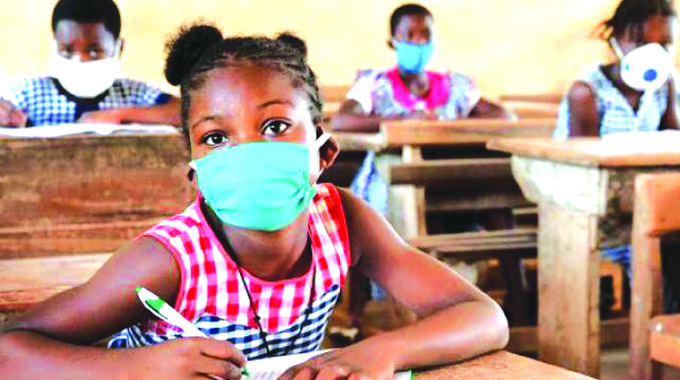
Latwell Nyangu Youth Interactive Writer
Last Monday, the world commemorated International Education Day which is meant to transform the learning culture to power education for future.
This marks the fourth year of celebration and the day ran under the theme ‘Changing Course, Transforming Education. It was proclaimed in 2018 by the United Nations General Assembly (UNGA) and is propounded by the United Nations Educational, Scientific and Cultural Organization (UNESCO).
Despite a set back due to Covid-19 era, there is always time to transform learning to power Education for future generation.
Education offers children a ladder out of poverty and a path to a promising future.
Without inclusive and equitable quality education and lifelong opportunities for all, countries will not succeed in achieving gender equality and breaking the cycle of poverty that is leaving millions of children, youth and adults behind.
In their statement, during the commemorations, UNICEF and UNESCO called for concerted efforts on learning during the Covid-19 era.
“We are appealing to the key actors responsible for the learning and futures of children living across the Eastern and Southern Africa region.
“Even during the pre-pandemic period, a vast majority of African children were experiencing a widespread learning crisis, with Covid-19 only serving to exacerbate the situation.
“With concerted vaccination and treatment efforts, we will defeat this pandemic. But the learning loss it has caused will certainly stay with us for much longer.”
Added the statement:
“To Governments, school gates must always be the last to close, and first to open. By now evidence in all our countries
“ has shown that when schools close, children not only lose out on their learning progress, but also the safety of the school ground, interactions with friends, a route to healthcare, and, too often, their only nutritious meal of the day.
“Many governments across the region have made admirable efforts to keep schools safely open via strong Ministry of Health and Education collaboration and community partnerships.
As it was detailed in UNESCO’s global Futures of Education report, transforming the future requires an urgent re-balancing or relationships with each other, with nature as well as with technology that permeates our lives, bearing breakthrough opportunities while raising serious concerns for equity, inclusion and democratic participation.
Education remains a platform to showcase important transformations to realise everyone’s fundamental right to education.
According to UNESCO, education builds a more sustainable, inclusive and peaceful futures. It will generate debate around how to strengthen education as a public endeavour and common good, how to steer the digital transformation, support teachers, safeguard the planet and unlock the potential in every person to contribute to collective well-being and our shared home.
Education is a human right as enshrined in article 26 of the Universal Declaration of Human Rights. The declaration calls for free and compulsory elementary education. The Convention on the Rights of the Child, adopted in 1989, goes further to stipulate that countries shall make higher education accessible to all.
Education is key to sustainable development and this is in line with the 2030 Agenda for Sustainable Development Goals adopted in September 2015.
The international community recognised that education is essential for the success of all 17 of its goals. Sustainable Development Goal 4, in particular, aims to “ensure inclusive and equitable quality education and promote lifelong learning opportunities for all” by 2030.
Despite challenges affecting the targets most countries are still hopeful that most of the grey areas would have been covered.
According to UNESCO, about 258 million children and adolescents around the world do not have the opportunity to enter or complete school; 617 million children and adolescents cannot read and do basic math; less than 40% of girls in sub-Saharan Africa complete lower secondary school and some four million children and youth refugees are out of school. Their right to education is being violated and it is unacceptable.
Learners at the basic level have also benefited from national distance learning programmes via different programmes which was helping to bridge the equity gaps.


 Online Reporter