Online Reporter
Lovemore Chikova
Development Dialogue
There is a development revolution taking place in Zimbabwe that cannot always be measured by the kilometres of roads constructed, the number of dams commissioned, the mines opened or the houses built.
Behind the development efforts being led by President Mnangagwa is a less visible infrastructure — the infrastructure of knowledge.

It is found in classrooms where children acquire foundational skills, universities where researchers investigate national problems, laboratories where scientists test new ideas and innovation hubs where prototypes are developed.
Artisans are acquiring practical skills in technical colleges and knowledge is ultimately being converted into products and services in factories.
This is why the relationship between education, innovation, research and development has become increasingly important in Zimbabwe’s development conversation.
Under President Mnangagwa’s Second Republic, these four areas have been deliberately connected through a development philosophy that seeks to move the country from an economy that largely consumes imported knowledge, technology and products towards one that increasingly develops, produces and commercialises its own solutions.
The policy architecture for this thrust has included the Heritage-Based Education 5.0 philosophy, the National Development Strategy 1 (NDS1) National Development Strategy 2 and Vision 2030.
NDS2, launched in November 2025 and running up to 2030, is explicitly designed to consolidate the gains of NDS1, while addressing unfinished business on the road towards Zimbabwe’s Vision 2030 aspiration of an empowered and prosperous upper-middle-income society.
The significance of this approach is that education is no longer being considered only in terms of producing graduates.
The questions being increasingly asked are: What can the graduate create? What problem can the scientist solve? What product can emerge from the laboratory?
What enterprise can grow from a university innovation hub? And how can all of this contribute to industrialisation, employment creation, exports and improved living standards?
That is where the four pillars of this discussion meet – education supplies the human capital, research generates knowledge, innovation transforms knowledge into solutions and development is the broader national outcome.
Zimbabwe’s experience in recent years provides several examples of this chain beginning to take shape.
Education
The development conversation begins in the classroom.
No national development strategy can be sustained without people with the skills required to implement it.
Roads require engineers and technicians, hospitals require doctors, nurses, pharmacists and laboratory scientists, while mines require geologists, metallurgists and engineers.
Agriculture requires agronomists, veterinary specialists, irrigation experts and technicians and industry requires artisans, designers, scientists and managers.
The Second Republic’s education strategy has increasingly emphasised the relationship between learning and production.
This is particularly visible in the adoption of Education 5.0 in higher and tertiary education, a philosophy that moves beyond the traditional functions of teaching and learning by adding research, community service, innovation and industrialisation.
The Ministry of Higher and Tertiary Education, Innovation, Science and Technology Development describes its mission as developing knowledgeable and skilled human capital through higher and tertiary Education 5.0, science and technology development, with the production of quality goods and services as an explicit objective.
In 2021, the Government enacted the Centre for Education, Innovation, Research and Development as an anchor for innovation, industrialisation and economic growth.
The centre bridges public and private sectors to advance heritage-based innovation, promote research and technology development, foster academia-industry partnerships and create sustainable techno-jobs for Zimbabwe’s future.
The organisation aims to provide an enabling ecosystem for innovation and industrialisation through well-coordinated, targeted and collaborative research and expedite the national industrialisation agenda through Science and Technology Development by 2030.
The important change is philosophical, as education is being connected to the national economy.
A student studying agriculture, for example, should not graduate with knowledge of agricultural theory alone.

The Education 5.0 model seeks to create an environment in which that knowledge can be applied to actual production.
The same principle applies to engineering, medicine, information technology, manufacturing, mining and other disciplines.
The idea is particularly relevant to Zimbabwe because the country has traditionally faced the challenge of converting its relatively strong human capital base into greater domestic productive capacity.
President Mnangagwa’s response has been to make universities and polytechnics increasingly active participants in industrialisation.
This has involved strengthening STEM education, reforming qualifications towards industry needs, expanding practical learning and developing innovation and industrial facilities within higher and tertiary institutions.
Innovation
If education supplies knowledge and skills, innovation is the mechanism through which those skills can begin solving real problems.
This is perhaps one of the most visible changes introduced by Education 5.0.
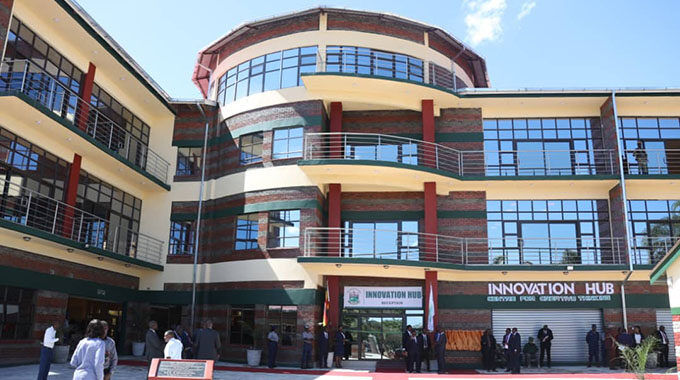
The Second Republic’s approach has encouraged universities and polytechnics to establish innovation hubs and industrial parks where students, academics and researchers can develop prototypes, protect intellectual property and pursue commercialisation.
NDS1 provided the foundation for this institutional architecture.
The NDS2 document records that state universities established and operationalised innovation hubs and agro- and bio-economy industrial parks, with the intention of connecting academic research to practical products, services and industrial value chains.
All the country’s State universities provided a useful example, as they have been supporting innovators in developing prototypes and commercialising products through innovation hubs.
This is precisely the type of connection required if education is to contribute directly to development – a university should not be an island separated from industry.
According to the NDS1 review, innovation hubs and industrial parks produced commercialisation initiatives across sectors, with 182 intellectual properties reportedly commercialised during NDS1.
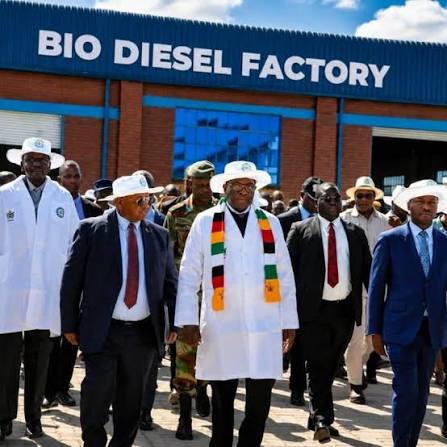
Examples cited included biodiesel production in Mutoko and wine production in Mwenezi.
These examples are significant because they illustrate a movement from idea to prototype to product and that is the essence of innovation-led development.
A university researcher developing a new agricultural product, a polytechnic student designing a machine, a scientist improving mineral-processing technology or an entrepreneur adapting digital technology to local conditions are all participating in the same development process.
NDS2 goes further by placing emphasis on partnerships between innovation hubs, industrial parks and the small and medium enterprises sector.
The strategy specifically identifies grassroots innovation as an area requiring greater attention and proposes partnerships involving diaspora expertise and resources.
This is important because innovation cannot remain confined to university campuses, it must eventually reach farms, factories, mines, communities and markets.
The commercialisation question is becomes central because an invention sitting permanently on a laboratory shelf is research output.
An invention that becomes a product, creates employment, substitutes an import, earns foreign currency or improves public services becomes part of the development process.
Research
Innovation cannot thrive without research.
Research is where a country investigates its problems, understands its resources, tests solutions and generates new knowledge.
For Zimbabwe, this has particular importance because many of the country’s development challenges require locally relevant solutions.
Agriculture must respond to Zimbabwe’s climate and soils, mining research must take account of the country’s mineral deposits and health research must respond to local disease patterns.
Water research must respond to the country’s hydrology, while engineering research must respond to local infrastructure and industrial requirements.
This is why the development of research capacity is an important component of the Education 5.0 architecture.
Zimbabwe does not simply need more academic papers, it needs research that addresses national priorities, which the Second Republic has been implementing.
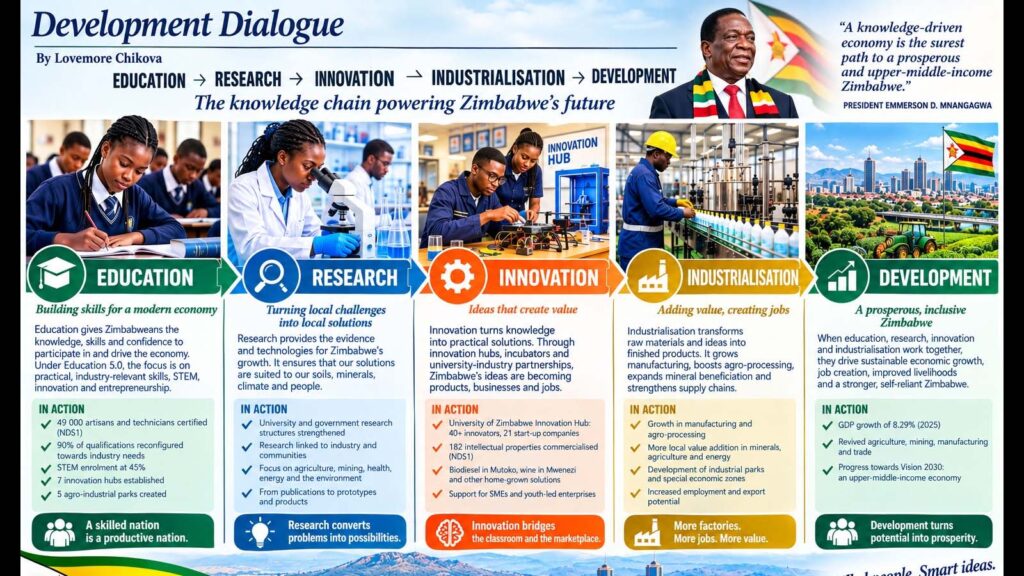
The University of Zimbabwe’s Research and Innovation Directorate, for example, has been established to help translate research and innovation outputs into prototypes, products and services and to strengthen links between the university and industry.
That model demonstrates how research can be integrated into the wider development chain.
The researcher investigates a problem, the university protects the intellectual property, the innovation hub develops the prototype, industry provides the production capacity, the market provides the demand and Government creates the policy environment.
The result is potentially a locally generated product or service.
This is also where Zimbabwe’s natural-resource base presents a major opportunity, with the country possessing significant deposits of lithium, platinum-group metals, gold, chrome and other minerals.
The development challenge is not merely extracting these resources, but increasing the amount of value captured inside Zimbabwe.
Research and innovation, therefore, have a role to play in mineral beneficiation, processing technologies, geological knowledge, environmental management and the development of downstream industries.
The same principle applies to agriculture.
A country that exports raw agricultural products captures less value than one that has the scientific knowledge and industrial capacity to process those products into finished goods.
This is why agro-industrial parks linked to universities are significant because they provide a bridge between agricultural knowledge, research, production, processing and commercialisation.
Development
Ultimately, education, innovation and research have to converge in development because this is where the impact becomes visible in people’s lives and in the productive economy.
The Second Republic’s broader development strategy has sought to connect these knowledge systems to industrialisation, infrastructure development, agricultural transformation, mining, energy, digitalisation and employment creation.
The country’s economic performance provides one measure of the broader environment in which these initiatives are taking place.
ZIMSTAT reported that Zimbabwe’s GDP at constant 2025 prices increased by 8,29 percent in 2025, with manufacturing, mining and quarrying, agriculture, wholesale and retail trade among the largest contributors.
Agriculture recorded the highest growth among industries at 27.9 percent.
The more interesting question is how knowledge is being connected to productive sectors.
Take agriculture, for example.
The Second Republic’s development agenda increasingly emphasises value addition and beneficiation rather than the simple production of raw commodities.
That requires agricultural scientists, engineers, technicians, entrepreneurs and researchers.
It requires universities to produce the necessary skills, innovation hubs to develop technologies, research institutions to improve productivity and industrial facilities to convert agricultural products into higher-value goods.
The same chain exists in mining.
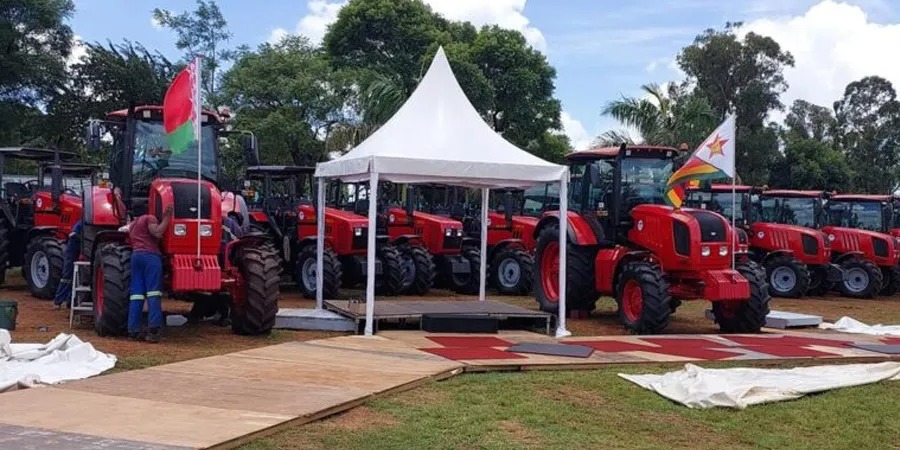
Zimbabwe’s mineral wealth can generate greater developmental returns when local knowledge, technology, processing and manufacturing capacity are added to extraction.
The same is true in manufacturing.
A country cannot industrialise sustainably if it depends almost entirely on imported machinery, imported technical expertise and imported technologies.
Building domestic capability, therefore, becomes a development strategy in its own right.
The next stage for Zimbabwe is not simply to build more innovation hubs – it is to make the existing ones productive.
The story of Zimbabwe’s development under the Second Republic can, therefore, be read through more than roads, dams, airports, mines, power projects and industrial plants.
There is another story unfolding in classrooms, laboratories, universities, polytechnics and innovation hubs.
It is the story of a country attempting to strengthen the connection between what it knows, what it can invent, what it can produce and how it develops.
In this case, education provides the foundation, research expands the knowledge base, innovation turns knowledge into practical solutions and development provides the national destination.
The significance of this model lies in its making human capital a productive national asset rather than treating education as an end in itself.
Lovemore Chikova is the Deputy Editor of The Sunday Mail with interests in development, strategic communication and the media.



 leeroy