Online Reporter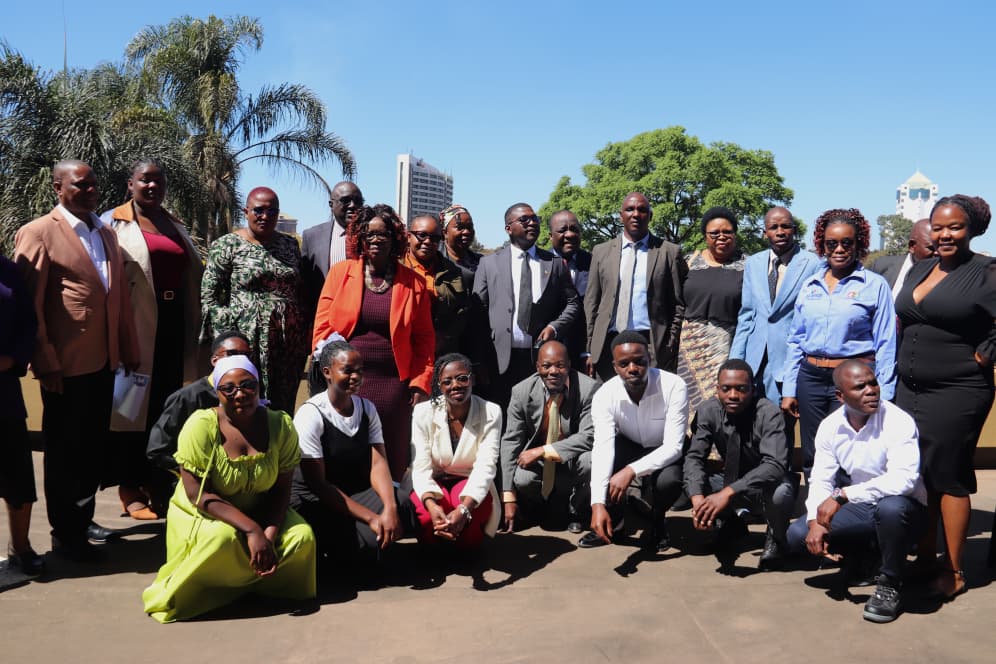
Muchaneta Chimuka
The Government, working with civil society organisations such as Teach for Zimbabwe (TFZ) through the Kuyenda Collective, recently convened an Education Systems Mapping Workshop in Harare to discuss challenges affecting rural education and identify practical solutions.
The workshop brought together stakeholders from Government, Parliament, civil society and rural communities to develop solution-based interventions aimed at improving education outcomes in underserved areas.
The Kuyenda Collective is a transnational initiative operating across Zimbabwe, Malawi, Mozambique and Tanzania under the Education Out Loud programme, supported by the Global Partnership for Education and managed by Oxfam IBIS.
It seeks to strengthen meaningful participation by rural students in education policy and decision-making processes.
Held under the theme “Knowledge for the Future,” the workshop brought together Rural Youth Champions from Binga, Chiredzi and Mutoko, as well as representatives from the Ministry of Primary and Secondary Education, the Parliamentary Portfolio Committee on Primary and Secondary Education, the Ministry of Labour and Social Welfare, civil society organisations and other education stakeholders.
Director for Secondary Education in the Ministry of Primary and Secondary Education, Dr Patrick Ngandini, said the gathering marked an important milestone in a process that had progressed from gathering evidence at community level to district engagement, national dialogue and wider regional and international education platforms.
He said the continued engagement of rural communities was critical in ensuring that education policies and interventions responded to the realities faced by learners in underserved areas.
“The workshop demonstrated how evidence generated by rural young people can travel through different levels of the education system and contribute to conversations about policy, financing, accountability and resource allocation,” he said.
He said rural schools are affected by various challenges that include poor internet connectivity in some hard-to-reach areas and poor infrastructure, among others.
“In Zimbabwe, this process has generated a growing body of evidence. Between 2024 and 2026, the RYCs collected data from 163 schools across Binga, Chiredzi and Mutoko: 22 schools in 2024, 74 in 2025 and 67 in 2026,” he said.
“The successive rounds of monitoring have helped build evidence around issues including education financing, infrastructure and basic services, gender equity and retention, Education Management Information Systems (EMIS) and civic governance.”
He said the workshop allows rural communities to contribute knowledge about the education system and provides young people with evidence they can take into spaces where decisions about that system are made.
“That progression matters because the challenges identified by young people may be experienced locally, but they often raise much broader questions,” he said.
“A school struggling with teacher shortages, a learner travelling long distances to access education, inadequate infrastructure, or barriers affecting girls and learners with disabilities can all point to questions about how education systems plan, finance, allocate resources and respond to different forms of need.”
Masvingo South Legislator Tanatsiwa Mukomberi, who represented the chairperson of the Parliamentary Portfolio Committee on Primary and Secondary Education, said that across Zimbabwe, learners have various experiences with education depending on their geographical locations.
“The location where the child lives can influence their education either positively or negatively, the distance they travel to school, the availability of teachers and learning materials, the quality of infrastructure, access to digital technologies and the support available to learners facing additional barriers. These disparities are particularly important when considering the rural-urban divide,” he said.