

 Online Reporter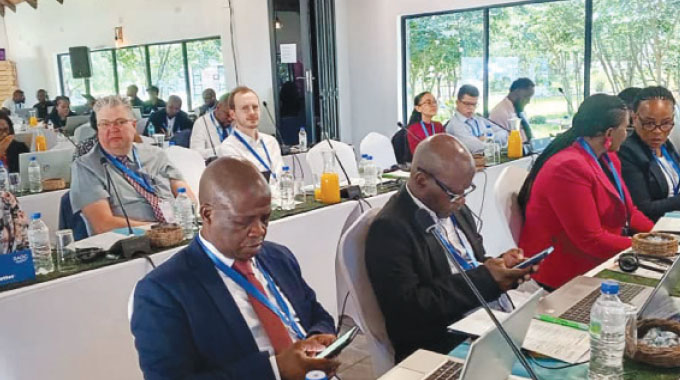
Leonard Ncube
ZIMBABWE and the rest of the SADC region must prioritise technical and vocational skills development to equip citizens with skills suitable for modern labour market demands, a senior Government official has said.
Officiating at the Meeting of SADC Ministers of Employment and Labour and Social Partners in Victoria Falls yesterday, Public Service, Labour and Social Welfare permanent secretary Mr Simon Masanga, who is the Chair of the SADC Employment and Labour Sector Senior Officials, said employment remains at the core of the region’s sustainable development and industrialisation.
“Skills development must be a priority starting from primary education to tertiary institutions. Our region must invest in technical and vocational education and training (TVET) to equip the workplace with skills that match labour market demands,” he said.
“Moreover, with the shift towards digital economies, we must ensure that our workforce is prepared for the future of work. Strengthening linkages between education systems and labour market needs becomes vital in this regard.”
Mr Masanga highlighted the need to reflect on how employment and labour policies can contribute to SADC’s vision.
He said the region faces numerous challenges including high levels of informal employment, limited access to decent work and a skills gap that hinders productivity.
Informal employment, which accounts for a significant share of economic activity in many SADC countries presents both opportunities and challenges.
Mr Masanga said on the one hand, this provides livelihoods for millions and on the other hand, it often lacks social protection, fair wages and good working conditions.
He said it was imperative to formalise the informal economy, which, according to the International Labour Organisation (ILO), is around 85,8 percent in Africa.
The region is also witnessing a growing youth population, which is about 35 percent hence the growing aspirations and an increasing need for decent jobs.
“Addressing informality through appropriate policies and strategies is important for promoting decent work, reducing poverty and achieving sustainable development.
“In addition, the integration of small to medium enterprises (SMEs) into the formal economy is particularly important, given their role as engines of job creation and innovation in our region,” said Mr Masanga.
“In light of these realities, this meeting is not merely a formality, but a critical platform for us to collectively strategise and find solutions. Climate change is increasingly affecting employment patterns, especially in sectors such as agriculture, mining and tourism.
“We must, therefore, adopt resilient labour market policies that can withstand such shocks, ensuring that social protection measures are in place to support workers during crises.”
Mr Masanga said in the face of all challenges there is a need for collaboration and co-operation in finding lasting solutions that help deal with the socio-economic challenges.
Among the solutions is the tripartite dialogue, which remains a cornerstone to addressing these multifaceted challenges in the world of work.
The meeting is also discussing labour migration, which is a key feature of employment in the SADC region. Mr Masanga said the growth of migrant workers in the region has increased immensely over the years.
In 2008 there were 3,1 million migrants, and the number increased to 8,1 million in 2017, making a 160,9 percent increase.
Mr Masanga said if managed effectively, labour migration can contribute to the economic development of both sending and receiving countries by addressing labour shortages, transfer of skills and boosting diaspora remittances.
“However, it is vital to ensure that migrant workers’ rights are protected and that they have access to decent work opportunities. Strengthening co-operation, among member states to develop and implement sound labour migration policies will foster regional integration and shared prosperity,” he said.
The meeting of officials will feed into the ministers’ meeting on Friday.


