daniel chigunwe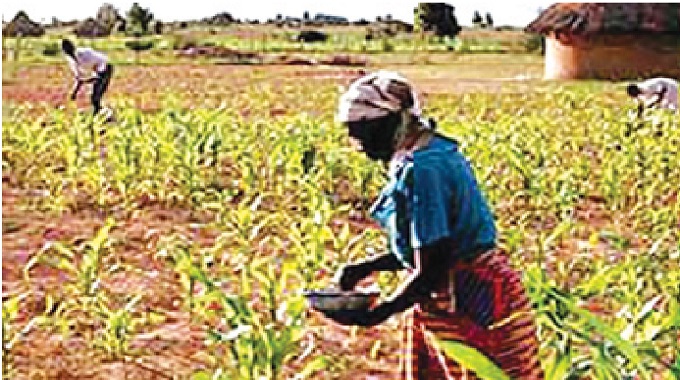
Simon Guvava
Introduction
Zimbabwe is home to roughly 14 million people and boasts a strong rural sector that has traditionally formed the backbone of the economy through agricultural activities. However, climate change poses a significant threat, particularly to Zimbabwe’s agricultural sector.
This phenomenon, often referred to as “Climate Change,” has been linked to a rise in natural disasters, including Cyclone IDAI in 2019, erratic rainfall patterns like the ongoing drought in many rural areas (most notably where most farmers reside), and unseasonal heatwaves and droughts in other parts of the country.
Faced with these challenges, farmers have called for assistance. The Government, in response, has implemented initiatives like the “pfumvudza strategy” to combat climate change and secure a solution for farmers and the entire agricultural sector.
As these efforts directly impact food security, the well-being of ordinary citizens who rely on agricultural outputs for their daily survival cannot be overlooked.
This essay will assess the impacts of climate change and the proposed initiatives to reveal the current state of affairs regarding climate change in Zimbabwe.
Climate Change Causing Limitations in the Agricultural Sector in Zimbabwe
Once known as the “breadbasket of Southern Africa,” Zimbabwe has watched its agricultural title and legacy decline over the past decades.
This vulnerability stems from the fact that 80 percent of the country’s agricultural production relies on rain. Unfortunately, climate change has brought increasingly arid conditions, severely limiting agricultural output.
Rainfall patterns have shifted significantly across Zimbabwe’s five main agro-ecological zones. Regions traditionally receiving higher rainfall are now experiencing deterioration, with a concerning trend observed from zone one (highest rainfall) to zone five (lowest rainfall).
Studies by Unganai and Murwira (2010) project a decline in dryland farming yields by 20 percent to 50 percent by 2050.
Furthermore, erratic rainfall patterns are a cause for alarm. Matebeleland South, for example, experiences an average of only 250mm to 500mm of rain annually, highlighting the unreliability of precipitation.
The devastating effects of the 2015-2016 El Niño phenomenon serve as a stark reminder.
Reduced rainfall levels during this period directly crippled agricultural output and impacted farmers significantly.
Further research confirms the devastating impact of climate change on Zimbabwe’s agricultural sector.
Take, for example, Matabeleland South province. Once a thriving producer of livestock and small grains since the 1970s, the region now struggles with minimal agricultural progress.
Areas like Mangwe, Matobo, and Gwanda witness widespread disruptions to traditional farming systems, particularly extensive cattle ranching, due to erratic weather patterns.
Studies indicate that farmers face unpredictable rainfall and flooding, leading to rapid environmental degradation.
This vulnerability is not limited to Matabeleland South. Smallholder farmers in communal lands across the Southwest, with limited access to irrigation and infrastructure, are especially susceptible to climate change’s wrath. These communities lack the resources to adapt or recover from extreme weather events.
The human cost of climate change is stark. Cyclone Idai in 2019 claimed an estimated 634 lives.
However, its impact went far beyond the immediate death toll. The cyclone devastated the livelihoods of nearly 270 000 people in Chimanimani, Chipinge, Nyanga, and Zaka, destroying schools, homes, hospitals, and other critical infrastructure.
The storm also wiped out an estimated 780 000 hectares of agricultural crops, leaving families with no means to support themselves.
These losses exacerbate existing poverty. With 72 percent of Zimbabwe’s population living in chronic poverty, according to Gwinyai Chibaira, CRS Agricultural Livelihoods Project Manager, these events push families deeper into hardship. Statistics reveal that many families struggle to survive on less than $1,25 a day.
Initiatives that have been put forward to Combat Climate Change in Zimbabwe
In response to climate change, Zimbabwe has implemented various initiatives. These include nationwide clean-up campaigns, tree planting days, and the “planting of seeds of resilience” programme, which has provided 221,949 people with drought-resistant cereal crops like sorghum and pearl millet to boost agricultural productivity.
Additionally, the “pfumvudza strategy” offers technical support and resources to farmers, aiming to enhance their ability to overcome climate challenges and achieve higher yields.
Furthermore, Zimbabwe actively participates in international efforts to combat climate change.
By adopting Sustainable Development Goal 13 (SDG 13) and aligning with the African Union’s Agenda 2063, the nation demonstrates its commitment to building a “Prosperous Africa” based on sustainable development principles.
These efforts recognize the urgency of addressing climate change, as evidenced by the devastating impacts of Cyclone Idai in 2019.
The Paris Agreement provides a global framework for tackling this challenge. Signatories, including Zimbabwe, aim to limit global temperature rise to below 2 degrees Celsius.
Achieving this target requires significant emissions reductions: global emissions must be halved by 2030 and reach net-zero by 2050.
To limit warming to an even more ambitious target of 1.5 degrees Celsius, cuts must begin immediately and reach nearly half by 2030.
Zimbabwe’s participation in these initiatives demonstrates its commitment to combating climate change and protecting its agricultural sector from its harmful effects.
Zimbabwe demonstrates its commitment to environmental protection through its legal framework. The 2013 Constitution, specifically Section 73, enshrines the right to a clean environment.
This provision serves as a call to action for protecting and sustaining the country’s natural heritage. Encouraging the use of eco-friendly products is one effective way to achieve this goal.
Furthermore, the government’s revised Nationally Determined Contributions (NDCs) underscore its determination to combat climate change.
These NDCs represent Zimbabwe’s self-defined national climate targets under the Paris Agreement. Notably, the revised target aims for a significant reduction in per capita emissions – a 40 percent decrease across all sectors by 2030. This ambitious goal represents an increase from the initial target of 33 percent.
For those unfamiliar, NDCs are national climate pledges submitted by countries under the Paris Agreement. These pledges outline each country’s specific actions to contribute to the global goal of limiting global warming to 1.5°C.
They encompass efforts to reduce emissions, adapt to the impacts of climate change, and secure necessary financial resources to support these initiatives.
NDCs typically detail both emission reduction strategies and adaptation measures, along with any support the country needs or will provide to address climate change.
In line with these national commitments, Zimbabwe’s National Climate Policy focuses on establishing the legal structures needed to regulate businesses in climate-related matters and guide them in reducing greenhouse gas emissions. Additionally, the policy prioritises adaptation strategies for rural communities and the agricultural sector.
Conclusion
Climate change poses a significant threat to Zimbabwe’s population, particularly those struggling to survive.
As highlighted in this essay, the agricultural sector and its associated farmers are severely impacted by climate variability, leading to a significant decline in agricultural output.
However, the initiatives outlined above demonstrate the government’s proactive approach to tackling climate change, both in the present and for the future.
These efforts aim to mitigate the long-term crippling effects of climate change on Zimbabwe’s agricultural sector.
This article is the winning essay written by Simon Guvava under the Climate Reality Essay Competition held by the Global Shapers Harare Hub



 Online Reporter