admin
admin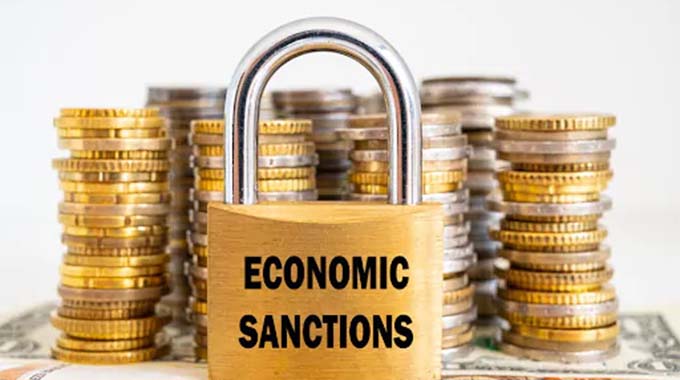
Bernard Gwarada, Correspondent
Economic sanctions is a tool often used by policymakers to influence change in a targeted country with regards to how it conducts its affairs both internally and externally.
There has been a lot of debate regarding the effectiveness of sanctions as a tool of change with some claiming that it produces intended results while others claim the opposite.
Judging from media reports, it would appear that over the years the frequency of sanctions as a tool against a targeted country has increased and the trend is likely to continue.
Some view sanctions as a weapon used by powerful states which have arrogated to themselves the right to be the moral policemen of the world, especially to countries like Zimbabwe.
This article will dwell on the following: ethical complexities of economic sanctions, overview of Zimbabwe economic sanctions, its consequences and survival strategies under sanctions.
Ethical complexities of economic sanctions
A question arises regarding the ethical nature of sanctions. This issue arises because sanctions often hurt innocent citizens of a country more than they hurt the targeted.
In a number of countries such as Iran, Russia and Venezuela the ordinary people are the ones who bear the brunt of sanctions.
Sanctions can therefore limit economic opportunities for an ordinary person. Currently in Europe, the majority are suffering as the household energy costs have doubled as a result of sanctions against Russia.
In Venezuela sanctions have had severe consequences which include contributing to the steep decline of its economy resulting in severe shortage of basic goods and services. In the Democratic Republic of the Congo, South Sudan, Syria, and Yemen, sanctions have added to the deterioration of the socio-economic situation in the respective countries.
It may be noted that, the suffering of the people whose countries are under sanctions became heightened during the worldwide Covid-19 pandemic.
The suffering of ordinary people as result of sanctions was brought under the spotlight in Iraq to the extent that the sanction centres decided to review their approach so that they could come up with measures that are considered “morally responsible”. Proponents of sanctions espouse the view that sanctions are non-violent and therefore a better alternative to war as a policy tool of change.
Overview of sanctions on Zimbabwe
Sanctions imposed on Zimbabwe by the West in 2001 and 2002 were in reaction to its land reform programme.
Along the way, these sanctions have been reviewed.
For example, most of the EU sanctions were lifted in 2014 in line with the agenda of the sanction centres.
In March this year, American president Biden revoked the US-Zimbabwe sanctions programme. This meant unblocking of individuals and companies which had been sanctioned, leaving a few who include members of the Presidium, senior Government officials and several business persons. However, the United Nations, African Union, and other regional and international organisations have over the years strongly challenged the legality and legitimacy of the sanctions against Zimbabwe.
Consequences of sanctions on Zimbabwe
Research suggest that sanctions do not always achieve their intended objectives. This is a hotly contested area, nevertheless the attendant costs of sanctions are easier to document.
As pointed out earlier, sanctions have unintended consequences that leave ordinary people suffering even more.
While it may be difficult to pinpoint only one variable in the causation chain, it is plausible to urge that sanctions have played a role in the deteriorating socio-economic situation of Zimbabwe.
Studies have shown that sanctions contributed to the weakening of socio-economic system of the country.
For instance, closure of companies and relocation has led to increased unemployment, which in turn has led to rising levels of poverty.
Access to social services have also been impacted negatively by sanctions against Zimbabwe.
Zimbabwe Human Rights Commission is of the view that children born and raised in a sanctioned environment are more susceptible to the effects as a result of the disruption to humanitarian operations.
For example, Denmark and Sweden’s humanitarian activities were undermined by EU sanctions which appealed to member states not to make funds available to the Government (Council Common Position, 2002/145/CFSP).
The opportunities this aid provides for livelihood in Zimbabwe was compromised.
According to Vice President Constantino Chiwenga, the country lost more than US$150bn because of sanctions imposed by the European Union and the United States.
In the same vein, prominent economist Eddie Cross, citing experts stated that banks were losing an estimate of US$1bn annually in higher bank charges because of sanctions.
It can be noted that most of Zimbabwean banks have tried and failed to have relationships with international financial institutions “correspondent banks” because of sanctions.
From the above, the magnitude of the impact of sanctions on the economic front of Zimbabwe is clear.
Research has shown that in a deteriorating or malfunctioning economy, corrupt practices tend to be on the rise due to economic distortions.
These distortions arise as a result of sanctions.
In support of this notion, former Finance Minister Patrick Chinamasa stated that “sanctions and corruption are twin evils”.
According to some scholars, Zimbabwe has failed to meet the agreed SADC targets such as sustainable budget deficits, minimal public debt and equitable current account balances as a result of sanctions.
Because of the weak economic situation in Zimbabwe, contributed to by sanctions, neighbouring countries such as Botswana and South Africa are benefiting from cheap Zimbabwean migrant labour.
By the same token, Zimbabwe has lost skilled personnel to countries within and outside the region.
In August 2024, media was awash with reports that Lithuania is holding onto a shipment of 17 fire engines bought from Belarus by Zimbabwe. The reason for the seizure of the vehicles is that they were manufactured by a Belarusian company which is on EU sanctions.
It therefore can be noted that economic sanctions can negatively affect economic growth, undermine trading and negatively impact on the welfare of the people.
Survival strategies under sanctions
Zimbabwe has had to come up with strategies to lessen the impact of sanctions such as the introduction of a multicurrency regime to stabilise the economy.
Over the years there have been efforts to seek re-engagement with the West. Zimbabwe has also had to look to the East for lines of credit and other supporting economic initiatives.
Sanctions, in most cases, affect the ordinary person who is caught in between and has much to lose when the stringent economic measures are put in place.
Better economic research will assist policymakers in their decisions regarding the issue of whether or not to impose sanctions on a country.
Bernard Gwarada is a business consultant and a Doctoral Research Candidate focusing on Entrepreneurial Innovation at Binary University.
He is an alumnus of University of Pretoria and University of Leicester. He writes in his own capacity.
Feedback: +263712430591 or email: [email protected]



 Online Reporter