Chronicle Editor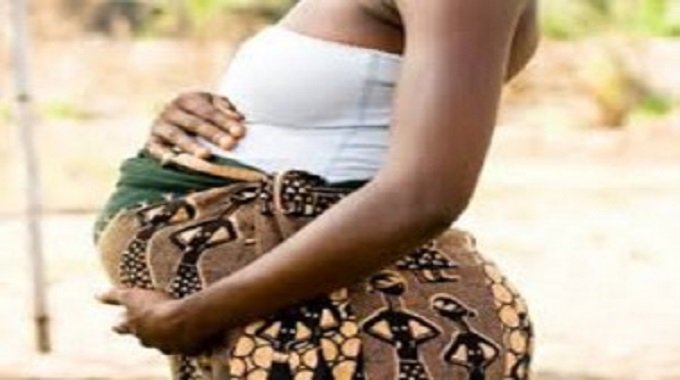
Leonard Ncube , [email protected]
SCHOOLS open for the third term tomorrow and parents, especially in rural areas outside Victoria Falls, are concerned that some girls may not return to school after either falling pregnant or getting married.
Cases of teenage pregnancies are reportedly on the rise in communities within Chief Mvuthu, Chief Shana, Chief Whange, and Chief Nekatambe areas where a significant number of girls have dropped out of school in the past after falling pregnant.
The trend is common in many communities with 10 girls having dropped out of Matetsi Secondary School in one term a few years ago after falling pregnant.
At Chidobe Secondary School, more than 15 young girls have dropped out of school in the past two years, with one class remaining with less than 10 girls.
Recently, a 15-year-old girl from BH33 died a few months after giving birth and dropping out of school.
Doctors said her health had deteriorated as a result of complications she suffered while giving birth.
Emmaculate Mpofu (13) was in Form One at Chidobe Secondary School when she was impregnated by Njabulo Sibanda, now 20, who is a former student from the same school.
While Njabulo’s life continued as usual, Emmaculate lost an opportunity to continue with her education and eventually lost her life leaving behind a minor child.
Her two cousins also dropped out of the same school after falling pregnant.
The community questions what it could be doing wrong for so many young girls to fall pregnant while in school.
Poverty, breakdown of moral fibre, cultural and religious practices as well as child delinquency are cited as some of the causes for the high rates of teenage pregnancy and early marriages.
Experts fear economic activity and livelihoods will be impacted if a majority of young women and girls are illiterate.
Some of the cases involve adults who abuse minor girls, parents who allow their children to get married at a tender age and some who marry them off for benefits as a result of poverty.
There is a debate on whether to blame young girls and boys for being delinquent or parents for throwing cultural values and respect for Ubuntu out the window.
Traditional leaders have bemoaned moral decay among children and parents who are allegedly quick to marry off their children once they fall pregnant with calls to restore cultural values of Ubuntu to reduce delinquency among youths.
Mr Young Vundla from BH33 said the future of the community is at risk.
“What worries us is that children who should be in school are now parents because they are pregnant at 14 years. We need to activate child protection committees and make sure all teenage pregnancies are reported to the police before they can be attended to at clinics,” said Mr Vundla.
He said health institutions should not register minor girls for pregnancy without the knowledge of traditional leaders or the police.
Mr Vundla warned parents to desist from marrying off their children or resolving such issues at family level.
“We should have a law that prevents teenagers from registering for maternity before the perpetrator is known. Teenage pregnancies are so many now and we are afraid as we open we might have many girls failing to go back to school. The problem is that as parents, we are no longer disciplining our children.
We need to go back to a situation where parents and teachers work together to rebuke these children,” he said.
BH33 village head Mrs Gertrude Shoko said children were misbehaving because they are protected by the law.
“We lost it when we started saying a parent can’t discipline his or her child. Police can’t tell me what to do with my child because they don’t live with him or her. Parents should be allowed to discipline children and no child should rush to the police when beaten by a parent because this is where they mistake everything thinking police are there to protect their misbehaviour.
“We just need to go back to our cultural values and give power back to parents,” she said.
Citizens have blamed the increase in lack of discipline and abuse of drugs by children both in and out of home and school to lack of corporal punishment.
In the past, a child was watched over by the whole community and any adult who found a child misbehaving would discipline him or her without even caring if they knew the parents or not.
Nowadays, some parents confront whoever beats up their children, including teachers.
A child would be beaten at home for misbehaving at school, or at school for bad things they would have done at home.
With some parents based in the diaspora, and others late, some families are now child headed hence such children have no elderly people to control or monitor them.
The Covid-19 pandemic exposed the prevalence of abuse of girls as many cases manifested during the lockdown.
Kachechete senior village head Mr Ndabayabo Moyo called for behaviour change among both children and adults.
“We need to revitalise inkundla and amaxhiba so that we teach our children about life. Parents have lost cultural values and children have no one to monitor them. We’re worried about the high cases of teenage pregnancies and school dropouts and it’s clear that we’re breeding a community which has no future. We should return to our moral values and prevent this rot. Parents should be allowed to discipline their children and as parents we should unite on this instead of quarrelling when it comes to disciplining our children,” he said.
In March, the High Court declared that corporal punishment is permissible in correcting wayward behaviour in children.
Pastor and senior village head Mr Paulos Ntini said there is a need for an all-stakeholder approach in protecting children.
He said in villages that fall under his jurisdiction, numerous cases have been reported about girls falling pregnant and dropping out of school.
“The challenge is that as parents, we’re concealing these cases because of poverty and because most people are closely related to perpetrators. As a result, we have many girls leaving school and this is bad because the future of the community is no longer secure,” he said.
Buwalo Matalikilo Trust (BMT), an organisation that deals with children and women’s rights issues in Hwange District has been carrying out safe reproductive health and awareness programmes around the district.
BMT director Ms Anna Mandizha said poverty, breakdown of the moral fibre, cultural and religious practices are key drivers of teenage pregnancy and early child marriages.
“The impact is very serious as it is retrogressive because we have a population of girls and young women who are uneducated and illiterate. With time, we may not be able to create a workforce out of this generation for lack of the minimum requirements.
“We will continuously have girls and young women who may not be able to demand their rights in terms of sexual health services or access services because they have lower intellect articulation in terms of what is due to them and how to access it,” said Ms Mandizha.
She said Hwange’s economic activity will be affected especially as statistics show that there are more women than men in the country and if more girls fail to go to school, they become a burden to society and result in the district always importing labour and causing conflict.
Ms Mandizha said teenage pregnancies generally rob girls of their childhood and they may not be decent parents when they grow up.
She said there should be programmes and policies that criminalise marrying off young girls while pieces of legislation such as the Marriage Act, Child Protection Act, Education Act, Public Health and the Code should be aligned to close loopholes and help build a better future leveraging on application of these statutes.
Ms Mandizha implored traditional leaders to play their role of ensuring the upholding of values while sexual reproductive health services like family planning and other services should be readily accessible to affected children.
She called for advocacy on traditional and circular leadership to sensitive communities to support young girls and children.
“We need embedded interventions and there is need to empower the community for peer support on girls that fall pregnant so that they return to school without being discriminated.
“We need to capacitate families and communities with livelihood activities in line with National Development Strategy 1 to create economic hubs and ensure empowerment of families,” she said.
Government, through the Ministry of Primary and Secondary Education, has come up with a number of interventions including the Education Amendment Act 2020 which allows girls to come back to school irrespective of being pregnant or being young mothers. — @ncubeleon


 Online Reporter