admin
admin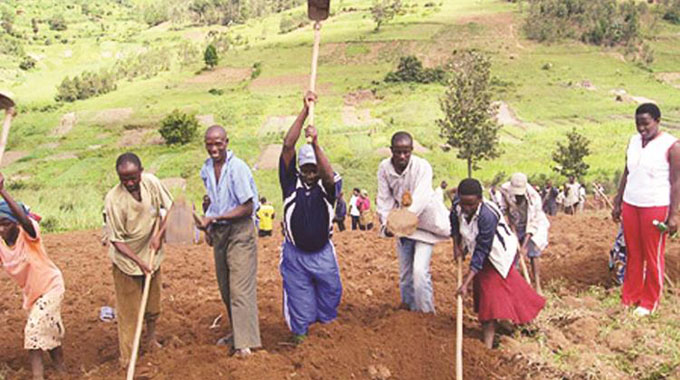
Rudo Grace Gwata-Charamba Correspondent
African indigenous knowledge schemes, encompassing home-grown solutions, are a socio-economic and cultural heritage that belongs to a worldview of wholeness, community and harmony.
Fundamental to this worldview is a strong “collective ethic” rooted in a sense of common responsibility which means the survival of a community stems from harmony, interdependence and interconnectedness.
The use of such systems, largely credited Rwanda’s remarkable achievements in poverty alleviation, are based on experiential knowledge and are deeply embedded in cultural values.
Ubudehe and girinka are typical examples of such long-standing practices and culture of collective action as well as mutual support to solve socio-economic problems within communities.
Ubudehe is a form of social capital, involving trust and reciprocity, where local populations roundly work for their neighbours thus making it key for both the solidarity of the communities and empowerment of individual families, particularly the most vulnerable.
Fundamentally, it is a participatory mechanism for sharing the burden of problem solving, fostering and maintaining social norms plus cohesion as well as ensuring social control within communities.
A Zimbabwean practice termed “nhimbe or jakwara” though narrowly defined, bears close similarities to this concept as well as the umuganda concept discussed in an earlier instalment.
Traditionally, ubudehe was mostly applied to agricultural and home building activities, in effort to ensure timely agricultural operations and promoting food security plus general standards of living.
The practice, like many other traditional systems, was weakened by colonisation and the introduction of a cash-based economy where some members of communities opted to pay others to do work for them.
The system was, however, rehabilitated and reintroduced in 2001 in the context of the Poverty Reduction Strategy (PRSP) to enhance the then newly introduced national decentralisation process, contribute to poverty reduction as well as promote community cohesion and reconciliation.
The associated initiatives were, accordingly, expanded to incorporate road construction, developing education and health facilities and providing security, among others.
Training on ubudehe concepts and procedures was also added to boost execution of the programme. In fact, the contemporary practice is regarded as one of the country’s core development programmes, notably for poverty alleviation.
Community and household projects are financed and implemented at village and household levels with communities meaningfully participating in all processes, particularly providing data for planning plus feedback during implementation, in line with Results Based Management (RBM) principles.
For example, stakeholders are empowered to discuss the characteristics of poverty, suggest strategies for its reduction as well as their role in the associate processes.
In this way, the ubudehe programme strengthens democratic processes and good governance, through maximum community involvement.
This leads to enhanced stakeholder ownership and appreciation of the projects and services delivered.
The programme transformed the nation’s centralised planning and delivery of services, with little to no involvement from local communities, to their active participation from defining their own problems to evaluating the performance of solve the same.
The information that they provide effectively guides decision-making in determining national development objectives for which the national government is held accountable.
Furthermore, the ubudehe programme creates opportunities for people at all levels of society, especially the village level, to interact with one another, share ideas, create institutions and make decisions for their collective development.
This makes it a sound instrument for addressing the national socio-developmental challenges as was evidenced by its conferment, in 2008, of the United Nations Public Service Award for excellence in service delivery.
The programme entails categorisation the population on the basis of social and economic situations, namely income, personal possessions and the quality of life, from ubudehe 1 to 4.
This mechanism assists the government in closely aligning projects and services provided to the needs of communities and households.
In ubudehe 1 are poor families who do not own their places of residence and can hardly afford basic needs.
On the other hand, ubudehe 4 comprise owners of large-scale business, individuals, working with international institutions plus public servants The categories are updated every three years for the purposes of identifying the best practices, lessons learned and emerging challenges; information used for planning and adjustments as appropriate, another typical embodiment of RBM.
Projects are implemented, with government management assistance and oversight, at the household and community levels with each community maintaining a bank account to facilitate the use Credit Fund.
This arrangement offers an opportunity to mitigate the risk and lower costs of projects through community collective action where local problems and, consequently, the benefits are collectively owned.
Beneficiaries are selected in line with the principles of ubudehe and the selected recipient signs a contract with the community committing to timely repayment.
This facilitates access, to the reimbursed funds, by the next recipient(s). Accordingly, community members as well as these would-be recipients actively monitor repayments to ensure timely smooth functioning and ultimately success of the scheme.
The fund also provides access to financing that may not be readily available from Financial Institutions due to the relatively increased levels of risk.
Such credit scheme is very similar to the Zimbabwean informal credit arrangements often termed “kukandirana round” which has had very limited impact on households, if any.
This experience in Rwanda thus gives an indication of the system’s potential if adjusted, formalized and professionally managed.
Girinka, (may you have a cow) is another practice, closely associated with ubudehe, aimed at accelerating poverty reduction through integrating livestock and crop farming.
Also a centuries old cultural practice where a cow was considered as the best gift to be awarded, either as a sign of respect and gratitude or as a marriage dowry.
This is in line with African traditional economies that deem cows invaluable as symbols of wealth, social status and a source of nutrition in the form of meat plus milk and blood cake.
Moreover, their hides were used as clothing, house decoration and carpets while the horn was used for storing seeds.
The girinka concept was translated into the contemporary “Cow-per-Poor-Family” programme, introduced in 2006, which involves providing cows to poor families in efforts to eradicate malnutrition.
The first female calf born to the cow is availed for “passing on” to another household in a similar situation.
Beneficiaries, selected using the principles of ubudehe, receive training in animal husbandry skills as well as continuous support from veterinary officers. Monitoring and evaluation of the systems is conducted with the assistance of local government units.
Both ubudehe and girinka programmes enabled numerous community-led initiatives that transformed the lives of Rwandan communities particularly the vulnerable ubudehe families.
Benefits encompassing construction of modern houses, purchasing livestock, undertaking successful modernised agricultural activities as well as improving education, health and sanitation facilities accrued to communities leading significantly improved standards of living.
Girinka helped to ensure food security, sustenance and stable incomes through increased agricultural output, from the use of manure and other modern methods. Access to milk led to improved nutrition plus increased incomes from commercialized dairy products.
Also, giving each other cows endorsed trust and respect among the parties involved, making it a sound tool for social bonding within communities hence promoting reconciliation and unity.
Additionally, a 1994 report by UNICEF showed that the nation lost 90 percent of its herd during the genocide, making cows a possession reserved for the elite.
Fostering cattle ownership among the poorest in society helped to moderate the divisive perception surrounding cattle ownership and again promoting harmony.
The use of home grown solutions, based on cultural values and norms, has thus been the bedrock for the reconstruction and transformation of Rwanda after the genocide.
In particular, ubudehe has been recognised internationally as a highly successful model for successful development.
Zimbabwe can adapt the existing similar jakwara or nhimbe plus other schemes for asset acquisition to allow access to capital by more stakeholders, notably, the informal sector and hence promote the success of its transformation programme.
This entails reviewing the systems ridding all shortcomings, continuously learning and adjusting, as necessary.
Additionally, the lessons from cow per household programme are highly relevant to Zimbabwe for fine-tuning the on-going efforts towards rebuilding the national herd.
Dr Rudo Grace Gwata-Charamba is an Author, development Project/ Programme Management Consultant and Researcher with a special interest in Results Based Management (RBM), Governance and Leadership. She can be contacted via email: [email protected]


 Online Reporter