admin
admin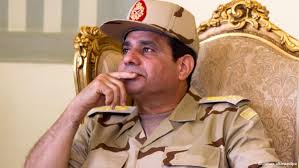
Nathan J. Brown
Over the past two months in Egypt, any alternative to the presidency of Field Marshal Abdel Fattah al-Sisi has all but disappeared from the political horizon. Indeed, by not ruling out his own candidacy in clear and definitive terms, Sisi has (perhaps partly inadvertently) effectively discouraged any viable alternative from emerging and made his assumption of office virtually inevitable.
But if the domestic picture is clear, an international consensus that is nearly as strong has also emerged: A Sisi presidency will start with strong popular support but will have difficulty meeting popular expectations. Its policy orientation remains problematically unclear and would be unlikely to deliver sufficiently to retain the initial wave of enthusiasm.
I do not question that international consensus in its broadest terms.
A couple days after the 2013 coup, I wrote: “We now have some idea how long a honeymoon any Egyptian leader has: less than a year.” But now I think I went too far.
Regardless of its policy performance, I am very doubtful that Sisi’s presidency will be a disaster like Morsi’s. It may disappoint many but it is unlikely to collapse and might evolve in a variety of ways.
Its shape will be determined in part by how he and Egyptians answer three questions about the new political era.
Past presidential successions in Egypt have brought limited but still quite real periods of liberalisation.
Hosni Mubarak began his presidency by meeting with some of the intellectuals and opposition figures whom his late predecessor had just arrested. And that predecessor — Anwar Sadat — had been shocked, completely shocked, to discover upon entering office that domestic surveillance was taking place in Egypt and publicly burned tapes of conversations. Indeed, this is not an Egyptian pattern only — Zine el-Abidine Ben Ali showed Tunisians a far kinder, gentler face when seizing the presidency in 1987 than he did a few years later; even Bashar al-Assad began more benign ophthalmologist than ruthless dictator during his brief “Damascus spring,” a real if similarly limited and short-lived period of slightly freer public discussions.
There are some good reasons why autocrats try not to put a jack-booted foot forward first.
First, a political opening helps establish a good clean start and distinguish, at least briefly, their liberality from the predecessor’s harshness.
Henry Hale has described an even more profound dynamic for new leaders in what he calls “patronal presidentialism” — a golden opportunity to “move to strip rival groups (sometimes including their own former coalition allies) of power and assets — this is often done, sincerely or not, under the banner of ‘rooting out corruption’.”
Sisi will likely feel such factors though a bit more lightly than his predecessors.
He will come in with his popularity already high and does not have the same need to build a name for himself. There are no obvious challengers to threaten his presidency, even if there are some figures and institutions with bloody hands from which he might want to distance himself.
And Sisi, as a political figure, has emerged very much a product of one of Egypt’s leading institutions (the military). And the new political order, which is propelling him to lead it, has the strong support of other strong state institutions.
But that point leads to a factor that might operate unusually strongly in Sisi’s case: While his popularity seems quite strong inside the country, the new regime’s name is mud internationally. In order to understand why, it pays to take note of a dramatic asymmetry between how Egypt’s political situation is perceived domestically and internationally.
Inside Egypt, most people who are allowed to articulate their views in public applaud the new order and allegations of international attempts to divide the country are as legion as they are loopy.
Internationally, diplomats, pundits, academics, and journalists tend to shake their heads at how it is the country’s new leadership’s actions are driving the society in divisive and troublesome directions.
The darker view of the situation is not confined to democracy and human rights advocates.
What troubles international observers is not merely the large number of dead Egyptians or the literally uncounted arrested upon whom the new rulers have built their rule. Arrests, indiscriminate force, and hysterical media do make for rather depressing reports from human rights organizations and dreary news stories.
But what has struck me in policy-oriented discussions in different settings outside of Egypt is how a broad consensus is emerging that the new regime is not merely without a plan to deal with Egypt’s political woes but is actively aggravating them.
Nathan J. Brown is a professor of political science and international affairs at the George Washington University, non-resident senior associate at the Carnegie Endowment for International Peace, and author of When Victory is Not an Option: Islamist Movements in Arab Politics. (Cornell University Press, 2012). — FP.


 Online Reporter