Online Reporter
Victor Maphosa recently in Uzumba Maramba Pfungwe
Matsenga Primary School pupils can now study by electricity.
Teachers who once drifted to the city for brighter prospects might be inclined to remain at the rural school. At Holgate Business Centre — home to 70 shops serving 12 nearby villages — the whirr of fridges and the sparks from welding machines mark a new phenomenon: rural industrialisation, powered one connection at a time.
The Rural Electrification Agency (REA) has completed a transformative project connecting Matsenga Primary and Secondary Schools, along with two business centres in the Uzumba Maramba Pfungwe (UMP) district to the national power grid — an initiative that promises to reshape education, commerce and daily life in this largely rural corner of Mashonaland East province.
For decades, rural schools and clinics across Zimbabwe have haemorrhaged qualified personnel. Teachers and nurses, essential to community wellbeing, have consistently gravitated towards urban centres where electricity is a given, not a luxury.
The consequences have been devastating, disrupted learning, compromised healthcare and a widening gap between rural and urban development.
But if the recent commissioning ceremony in Matsenga is an indication, those days may be numbered.
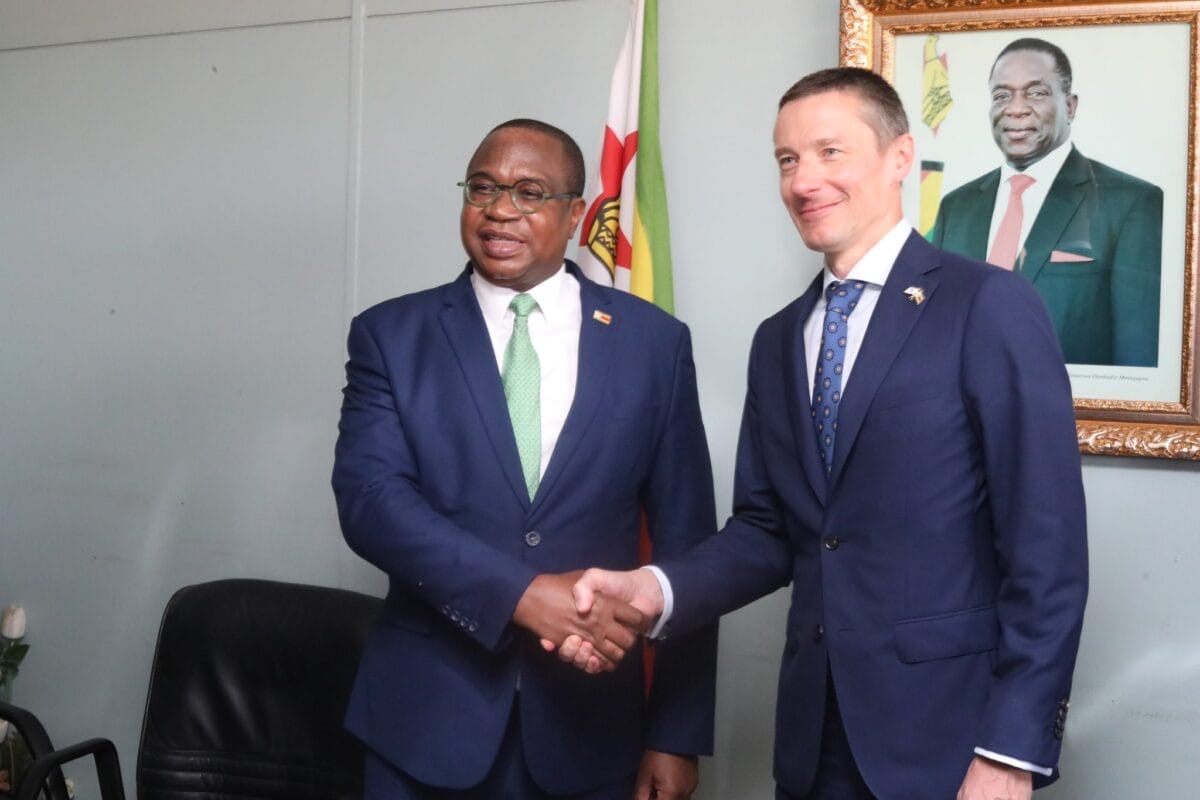
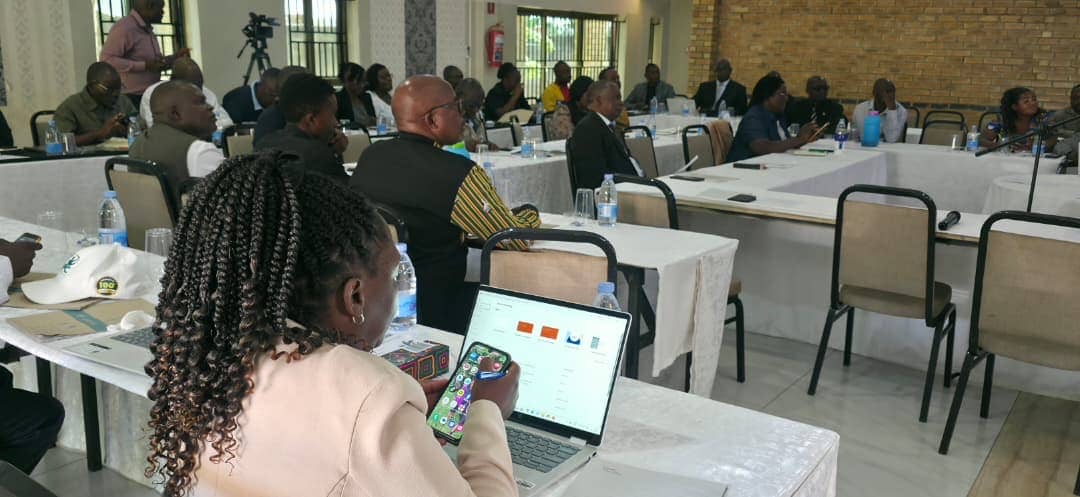
Advocate Itayi Ndudzo, Minister of State for Provincial Affairs and Devolution for Mashonaland East, arrived in the district flanked by REA senior officials to officially commission the Matsenga and Holgate electrification projects.
His message to the gathered community was unmistakably clear: the Second Republic is delivering on its promises.
“It is critical that infrastructure which brings critical services to the people, such as clinics, schools and business centres, be connected to electricity,” Advocate Ndudzo told the assembled beneficiaries.
“All this is happening in our province, thanks to Government, which is providing funds through the Rural Electrification Fund.”
The minister’s words carried the weight of visible transformation. Where once there were poles awaiting wires, now there are functioning connections powering classrooms, homes and businesses.
“Government is well aware that electricity is key in terms of business and the transformation of people’s livelihoods,” he said.
“This is why there is this programme. So I commend REA for its work. Beloved people, this is what our leader, President Mnangagwa, is doing for us. This is commendable. Let us all appreciate this.”
But with new infrastructure comes new responsibility. Advocate Ndudzo issued a stern warning against vandalism, a persistent threat to rural electrification projects across the country.
“We do not want to hear that there is someone who vandalises this infrastructure. All of you should be on the lookout for these unscrupulous elements. This is your infrastructure and you should make sure that it is safe at all costs.”
The minister challenged the community to think beyond mere consumption of electricity towards productive use that could generate employment and economic growth.
“Furthermore, I urge you to use electricity productively. You should work towards uplifting your livelihoods and developing your communities. President Mnangagwa is saying, let there be employment creation everywhere, even in the rural areas. Government will continue to bring programmes that are aimed at empowering communities.”
Behind the ceremony lies months of careful planning and construction. Provincial Rural Electrification Agency manager for Mashonaland East, Engineer Edward Kandare, provided the technical context for what the community has achieved.
“We are running a programme to ensure that all public institutions, that is, schools as well as clinics, are electrified by 2026,” he explained, outlining an ambitious timeline that would fundamentally alter the landscape of rural service delivery.
The Matsenga project, which began in February last year and reached completion in September, involved constructing approximately three kilometres of powerline from the Matsenga piggery to the schools.
The connection now powers teachers’ houses and the administration block — facilities that, when illuminated, represent more than mere convenience.
“Today, we have come to commission the electrification project of Matsenga Primary and Secondary schools as well as the business centre,” Engineer Kandare said.
But the scope of work extended beyond educational institutions. At Holgate Business Centre, REA constructed about 1,8 kilometres of high voltage line and installed a 200kva substation capable of supplying power to more than 80 business shops.
“This business centre is serving about 12 villages, meaning these people can access modern services powered by electricity,” Engineer Kandare noted, highlighting the multiplier effect such infrastructure can have on rural commerce.
Beyond the immediate benefits of electrification, the projects themselves created local employment during implementation — a secondary but significant contribution to the district’s economy.
For Maramba Pfungwe Member of Parliament Cde Tichaona Karumazondo (ZANU PF), the electrification projects represent tangible proof that the Government’s development philosophy is more than rhetoric.
“Indeed, our President is a listening leader, a lot of developments are happening in UMP thanks to the Second Republic under President Mnangagwa,” he said.
“The President said no one and no place should be left behind when we talk of development and it is happening. Vision 2030 is a reality; we are witnessing massive developments in this district.”
The MP’s enthusiasm reflects the practical implications for his constituents. Education, he noted, stands to benefit enormously.
“Our children are benefiting in schools. There are some practical subjects which require electricity for them to be effectively conducted.”
Healthcare, too, will see improvements that directly affect community wellbeing.
“In clinics, there are some medicines that require refrigeration, so without electricity, it becomes difficult to store those medicines.”
And commerce — the lifeblood of rural economies — can finally expand beyond the limitations of daylight hours and perishable goods.
“Our business centres can grow in terms of volume and services as long as there is electricity, so we are thankful to our President and the hardworking staff at REA for this initiative.”
Perhaps no one appreciates the transformation more than those who work at the frontline of rural education. Mrs Janet Chirimuuta, a teacher at Matsenga Primary School, spoke with visible emotion about what electricity means for her school and her colleagues.
“This is commendable. Our school has been transformed and we are thankful for this development. We can now print some documents for our pupils. Our children now have an improved learning environment, which is commendable.”
But her words revealed something deeper — the personal impact on educators who have chosen to work in rural areas despite the challenges.
“As teachers, it also becomes easy for us to upgrade ourselves academically since we would be able to study even during the night, so we are thankful to the Government for this initiative.”
The ability to study after dark, to prepare lessons with adequate lighting, to access online resources — these are opportunities that urban teachers take for granted but that have been denied to their rural counterparts. Until now.
The Matsenga and Holgate projects are part of a broader national effort to bridge the urban-rural divide through infrastructure development. As Zimbabwe pursues its Vision 2030 goals, the electrification of public institutions in remote areas represents a foundational step toward more ambitious objectives.
Rural industrialisation, a key pillar of the Government’s development strategy, remains nearly impossible without reliable power. Small-scale manufacturing, agro-processing and modern commercial services all depend on electricity.
By connecting business centres, REA is laying the groundwork for economic activities that could keep young people in their communities rather than driving them to cities in search of opportunities.
For the 12 villages served by Holgate Business Centre, the presence of electricity transforms what’s possible. Grain mills can operate more efficiently. Cold storage becomes feasible for perishable produce. Welding and carpentry workshops can expand their services. And perhaps most importantly, the digital divide begins to close as internet connectivity becomes a realistic possibility.
As the community celebrates its new connections, the challenge of sustainability looms. Rural electrification projects across Africa have sometimes fallen victim to vandalism, with copper thieves and infrastructure saboteurs undoing years of development investment in moments of criminal opportunism.
Advocate Ndudzo’s warning was therefore not merely ceremonial but practical. Community ownership of the infrastructure — the sense that these power lines belong to the people of Matsenga and Holgate — represents the best defence against those who would steal or damage it.
The message to residents was unambiguous: watch over this development as if your future depends on it, because in many ways, it does.
As the sun sets over Uzumba Maramba Pfungwe, the lights now flicker on at Matsenga Primary and Secondary Schools.
Teachers prepare their lessons in illuminated homes. Children study without straining their eyes. At Holgate Business Centre, shops extend their hours and expand their services.
The scene, once unimaginable in this remote district, is now daily reality. And if Engineer Kandare’s timeline holds, similar scenes will play out across every public institution in Mashonaland East province and other provinces by 2026.
For the people of Matsenga and Holgate, the message from their leaders resonates with particular clarity: in Zimbabwe’s Second Republic, development is not a privilege reserved for urban centres but a right extended to every citizen, regardless of how remote their community may be.