Chronicle Editor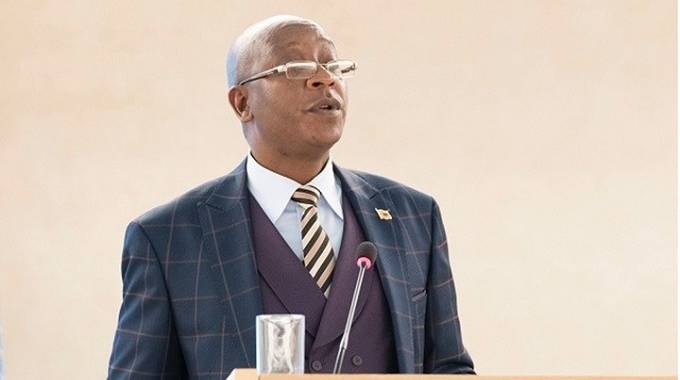
Robin Muchetu, Senior Reporter
THE Government has set December as the target timeline for the introduction of electronic title deeds for citizens currently relying on paper deeds, as well as homeowners who are still using municipal cards issued by the colonial administration as proof of ownership.
This initiative aims to eliminate corruption associated with the creation of fake title deeds used to defraud individuals of their properties.
Speaking on the sidelines of an induction workshop hosted by the joint portfolio committee on Justice, Legal and Parliamentary Affairs, and the Thematic Committee on Human Rights in Bulawayo yesterday, Minister of Justice, Legal and Parliamentary Affairs, Ziyambi Ziyambi, emphasised the enhanced security of the digital system.
“We have noticed that about 30 percent of those that should have title deeds are the ones that have them, the majority of our people, over 20 000 people who should have title deeds do not have them for various reasons.
“In the early days of our colonisation, townships were created and these people were not given title deeds, their names were recorded at the various district registry municipal offices. The process of transitioning and ensuring they have title deeds did not fully develop,” he said.
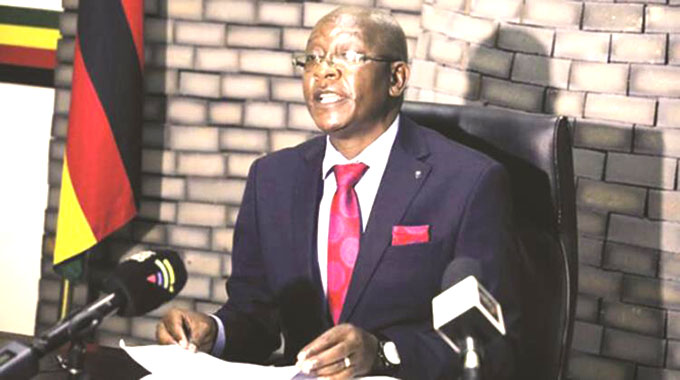
Minister Ziyambi said townships around the country have suffered the most.
“Townships like Makokoba and Lobengula in Bulawayo, Mbare in Harare, the majority of the people do not have title deeds and other emerging suburbs, people do not have title deeds. President Mnangagwa then came up with the Presidential Title Deeds Programme to ensure that the majority of these people will have title deeds that will enable them to unlock value through their properties and this is the thrust that we are now following,” said Minister Ziyambi.
The colonial municipalities gave homes to residents in the townships and only availed a card as proof of ownership to the homeowners such that the majority never got title deeds for these homes.
Minister Ziyambi said others have agreements of sale from the persons they secured houses from and not actual title deeds.
He further said President Mnangagwa has directed the digitalisation of these essential documents.
“Currently, we have paper-based title deeds, the President has directed that we migrate from these bond paper title deeds to digitised ones that have more security features. If you recall we had an incident where Cde Mutumbuka’s (former Minister of Education) title deeds were tampered with, and his house was sold, now we are migrating from this old system to digital title deeds in order to cure that issue and this is the thrust that we are now undertaking,” said Minister Ziyambi.
The process of going digital with the essential document has commenced.
“We have already partnered with a company that is assisting us to do that and I think all the modalities have been done and very soon, before the end of the year the programme will be rolled out and people will be called upon to surrender their paper-based title deeds in favour of the digitised title deeds,” said Minister Ziyambi.
The electronic title deeds cannot be accessed or altered if one does not have a security password to access them.
Mr Dzingai Mutumbuka, the first Minister of Education in Zimbabwe had title deeds to his USD$600 000 Chisipite home in Harare forged by the duo of Tatenda Shaft Wakatama and Jonah Ngome with the aid of a Deeds Officer Lynette Mlambo and the house sold for a song in 2021.
The fraudsters forged the title deeds and advertised the home for sale in the media and it was purchased by one Harrison Marange and his wife for a mere US$140 000, However, the forgery was detected and the suspects were arrested.
The case is still before the courts.
During the induction workshop, the Speaker of Parliament, Advocate Jacob Mudenda, said the two Committees on Justice, Legal and Parliamentary Affairs and the Thematic Committee on Human Rights are complementary in executing oversight on the Executive to ensure that an environment of justice, democratic accountability and the protection of human rights are sustainable in Zimbabwe.
“Together, these Committees play a vital role in upholding the rule of law, constitutionalism and fostering a society where human rights are respected and safeguarded. Your collaboration and dedication to duty in this regard guarantee our collective mission of promoting transparent governance, equity and justice for all in our country through the Parliamentary tripartite roles of legislation, representation and oversight,” said Adv Mudenda.
He said as elected representatives, it is imperative that they are fully aware of the critical constitutional provisions that govern the parameters of the responsibilities of their Committees.
“Thus, while exercising your legislative, oversight and representative mandate, it is poignant that in the execution of your constitutional mandate, be firmly alive to the fact that you are carrying your mandate under the authority graciously granted to you by the people of Zimbabwe and our Constitution. You are mere stewards of the people’s political authority and, therefore, you should zealously endeavour to actualise their socio-economic aspirations with utmost humility,” he said. — @NyembeziMu


 Online Reporter