malvernmugadzikwa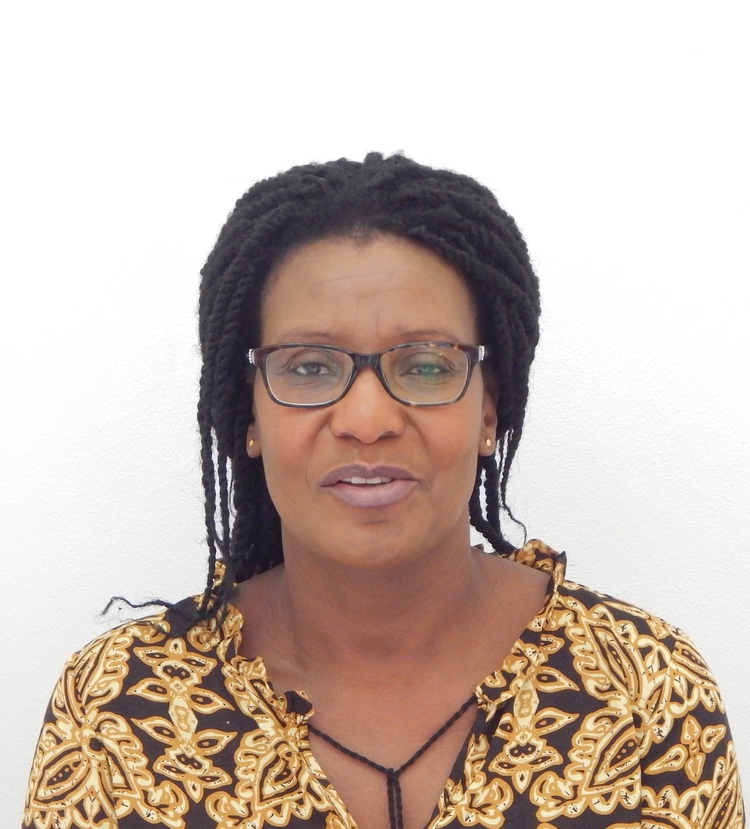
Dr Christine Peta
Disability Issues
BODILY differences and restrictions in role effectiveness play a central role in determining the life experiences of persons with disabilities.
Appearance is the most common feature that results in marginalisation, discrimination and social exclusion.
When we see a person with a body that is different from ours, we often regard that individual as abnormal.
But the term abnormal should never be used when we refer to persons with disabilities.
The issue is not a binary perspective of being normal and abnormal, but the point is about difference.
The reality is that not all human bodies are the same.
Bodies come in different shapes and sizes — they are just different, not abnormal.
People generally regard bodies of persons with disabilities as ugly, deformed, fat, grotesque, ambiguous, disproportionate or scary.
Some people invest in medical surgeries in an effort to correct what they regard as abnormalities of their own bodily appearances.
In other words, people try to normalise bodies which they regard as abnormal.
For example, some people may try to “Westernise” their faces; those of short stature may try to extend their limbs so that they become tall; others will try to remove what they regard as blemishes on their bodies; and yet others will seek to augment their breasts, staple their stomachs or lift their faces.
Although some surgeries may help to sustain untenable lives, such as in the case of open-heart valves, others may cause more harm than good.
Regardless of whether surgical procedures are undertaken under the banner of reconstruction or cosmetology, such practices resemble ferocious attempts to minimise human differences and an intolerance of bodily variations.
Researchers have illuminated the fact that the human body is in many ways a site of oppression.
This is seen in scenarios in which people can create their own oppression.
When you engage in all sorts of practices that seek to make your body appear “normal”, it means you are giving yourself a hard time by trying to fit in with the majority of people, especially in a context where you can live your life without trying to conform to any societal expectation with regard to the appearance of your body.
To have one leg that is slightly shorter than the other and to use an assistive device for bodily balance and movement do not mean one is abnormal.
There is, therefore, no need for one to have sleepless nights over the issue or to engage in a complex web of social relationships and practices that may include religious and traditional machineries.
The discourse of normality and norms, which is generated by scientific knowledge, results in people desiring to conform to such customs.
The practice of normalisation breeds control in all facets of life, thus putting people under extreme pressure to make an effort to conform to such norms.
As a result, people who find themselves falling outside of such standards are generally branded abnormal and are beset with diverse procedures that seek to discipline their bodies so that they get rid of the “abnormalities”.
Such efforts lead people to seek voluntary safeguards in scenarios where they uphold their own oppression through self-monitoring and self-disciplining of their bodies.
One can liken the above politics of the body to Europe’s interaction with other cultures during its colonisation project.
The West regarded other cultures as primitive in comparison to its norms.
Resultantly, other people were wrongly described as lazy, degenerate, uncivilised and barbaric as opposed to the so-called civilised, hard-working, brave, nationalistic and tough British.
The African person became someone whose narrative was omitted in international dialogue and was hardly acknowledged at international assemblies.
With this kind of thinking, the lives of many Africans were negatively affected by colonisation.
We, therefore, need to guard against othering persons with disabilities, bearing in mind that the bottom line is we are all human beings.
We should positively embrace issues of bodily difference.
Nonetheless, persons with disabilities themselves also need to be responsible citizens, thus refraining from using disability as a “weapon of destruction” or a weapon of reverse marginalisation.
Collaboration between persons with disabilities and those without disabilities is required so that we push the national development agenda forward together.
Dr Christine Peta is a disability, public health, policy, international development and research expert. She is the national director of Disability Affairs in Zimbabwe. She can be contacted on: [email protected]


 Online Reporter