

 admin
admin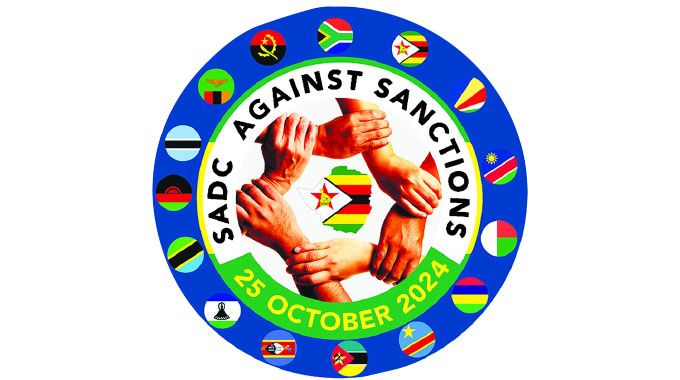
Innocent Mujeri
Herald Correspondent
As Zimbabwe and the rest of the Southern African Development Community (SADC) gear up for Anti-Sanctions Day on October 25, 2024, this year’s theme, “Embracing Innovation Towards Vision 2030: The Relentless Fight Against Illegal Sanctions,” provides an urgent call to action.
It not only reflects Zimbabwe’s long-standing struggle against these punitive measures, but also points to a forward-thinking, innovation-driven approach in tackling the country’s socio-economic challenges.
Zimbabweans, both within the country and across the diaspora, must heed this call, amplifying efforts to end the sanctions that have hampered national growth and development for over two decades.
With the nation’s Vision 2030 plan charting a course towards becoming an upper-middle-income economy, embracing innovative solutions is critical.
This theme underscores a growing recognition that while sanctions have inflicted significant damage, Zimbabwe must rise above these challenges through resilience, creativity and unity.
To appreciate the importance of innovation in Zimbabwe’s development trajectory, one must first understand the profound impact that sanctions have had on the nation.
Since the imposition of sanctions in the early 2000s by Western countries—primarily the United States, the European Union, and their allies—Zimbabwe’s economy has suffered immeasurable setbacks.
The sanctions have created broader economic consequences that affect the entire population. This includes blocked access to international finance, trade restrictions, and limited engagement with multilateral financial institutions, such as the International Monetary Fund (IMF) and the World Bank.
The resulting economic fallout has been felt most acutely in key sectors like agriculture, mining and manufacturing, all of which are vital to Zimbabwe’s economic well-being. The nation has lost more than US$40 billion in potential revenue and development assistance due to the sanctions.
In addition, the sanctions have been a significant barrier to Zimbabwe’s access to international markets, reducing foreign direct investment and further stifling economic growth.
While the sanctions have posed severe obstacles, Government has consistently maintained that innovation, particularly in sectors like technology and agriculture, will be key to the nation’s resilience.
The Vision 2030 agenda, launched by President Mnangagwa, is a plan that calls for the modernisation of key industries, the transformation of infrastructure, and the development of a more robust and diversified economy.
This year’s anti-sanctions theme speaks directly to these aspirations.
Innovation, as envisioned in this context, means much more than simply adopting new technologies.
It means finding creative solutions to circumvent the limitations imposed by sanctions, strengthening local industries, and enhancing the capabilities of Zimbabwe’s workforce to adapt to new global realities.
For instance, digital technologies and financial innovations, such as mobile banking and the burgeoning fintech sector, have helped Zimbabwe mitigate some of the disruptions caused by sanctions.
These innovations have provided alternative avenues for economic activity, allowing citizens to continue trading and transacting, even in the face of restricted access to international banking systems.
Zimbabwe’s technological landscape, despite the constraints, has been growing steadily, providing a foundation for future economic transformation.
Initiatives, such as the expansion of e-commerce platforms, the adoption of artificial intelligence (AI) in healthcare, and the digitisation of public services are all steps in the right direction. Additionally, the country’s strong educational institutions, including universities and research centres, have become breeding grounds for the next generation of innovators.
This push for technological advancement is not just about convenience, but about survival in a rapidly changing global economy.
Zimbabwe’s youth, who make up a significant portion of the population, are particularly well-positioned to drive this transformation.
By embracing sectors like technology, engineering, and innovation-driven entrepreneurship, Zimbabwe can lessen its reliance on external markets and instead build its economy from within.
Another critical area where innovation is essential for achieving Vision 2030 is agriculture.
Zimbabwe, once the breadbasket of Africa, has seen its agricultural productivity diminished by years of sanctions and other vices. However, recent efforts to modernise the agricultural sector, including the introduction of climate-smart technologies, sustainable farming practices, and advanced irrigation systems, are beginning to yield results.
These innovations not only boost food security, but also create opportunities for exporting agricultural products to other markets.
Developing agro-processing industries will allow Zimbabwe to add value to its agricultural output, creating jobs and stimulating growth in rural areas.
The goal is not just to feed the nation, but to turn agriculture into a high-value export industry that can generate significant foreign currency earnings, even in a sanctions environment.
While innovation is an essential part of overcoming the sanctions, it is equally critical for every Zimbabwean to actively support the call for their removal.
Sanctions are not just a political issue; they are a matter of national survival and prosperity.
Every Zimbabwean, whether in business, education, healthcare, or the arts, must recognise that the success of Vision 2030 depends on lifting these debilitating sanctions.
Amplifying calls for the removal of sanctions means participating in the public dialogue, raising awareness on social media, and engaging in peaceful advocacy both locally and internationally.
Zimbabwe’s diplomatic missions have played a crucial role in highlighting the country’s plight, but this effort needs to be bolstered by voices from all corners of society.
By uniting in this cause, Zimbabweans can send a powerful message to the international community that the sanctions are unjust and counterproductive, hindering not just the Government, but the people’s right to economic self-determination.
Another crucial aspect of the Anti-Sanctions Day is the show of solidarity from Zimbabwe’s neighbours in the SADC region. The bloc has been a vocal advocate for the removal of sanctions, recognising that their effects are not confined to Zimbabwe alone, but impact the region as a whole.
Cross-border trade, regional cooperation, and collective economic growth are all undermined by the sanctions.
This regional solidarity is more important now than ever before.
As SADC member states continue to experience the adverse effects of the global economic environment, working together to ensure the removal of sanctions will be a significant step towards shared prosperity.
Zimbabwe’s innovations in agriculture, technology and industry can be shared across the region, creating a more resilient and interdependent Southern Africa.
This year theme is a timely and vital reminder that Zimbabwe’s future lies in its ability to innovate and adapt. The fight against sanctions is not just a political battle, but an economic one that requires the ingenuity, resilience, and unity of all Zimbabweans.
Every Zimbabwean must take part in this fight by calling for the removal of sanctions, promoting innovation in their respective fields, and supporting the Vision 2030 agenda.
By embracing innovation and amplifying the call for justice, Zimbabwe cannot only overcome the challenges posed by sanctions, but also build a brighter, more prosperous future for all.



 Online Reporter