Online Reporter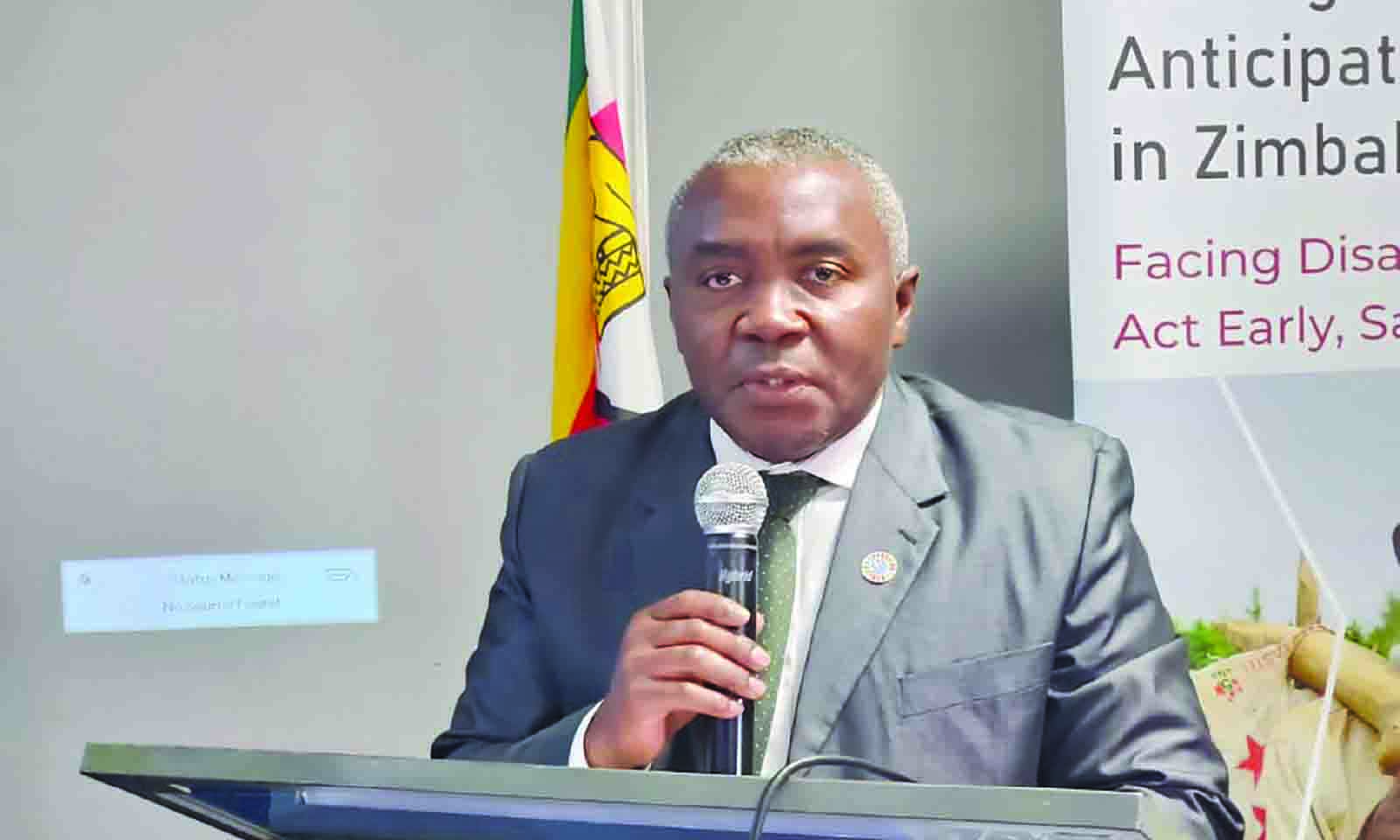
Business Reporter
CAPACITY enhancement of crop and livestock frontline officers is critical as natural hazards increasingly pose the greatest threats to agricultural productivity and food security in Zimbabwe, a senior Food and Agriculture Organisation (FAO) official has said.
The call comes as the Government continues to make significant progress in institutionalising anticipatory action within the broader Disaster Risk Management architecture, anchored on a multi-sectoral and multi-stakeholder approach to resilience building.
Addressing more than 30 officers drawn from districts prone to droughts, floods and other climate-induced hazards at a training workshop on Geographic Information Systems (GIS), Remote Sensing (RS) and KoBo Toolbox in Bulawayo, FAO Subregional Coordinator for Southern Africa and Representative to Zimbabwe, Dr Patrice Talla, said effective early warning systems are increasingly vital in protecting agricultural livelihoods.
Natural hazards are emerging as the top threats to agricultural productivity and food security in Zimbabwe, noted Dr Talla.
However, today, with effective early warning systems, it can be predicted with increasing confidence the occurrence and humanitarian impact of some of these shocks, such as droughts, floods, or storms but also some disease outbreaks.
“Taking actions based on such predictions to support vulnerable communities facing disasters aims to prevent and mitigate the effects of shocks through fast, dignified and cost-effective action that can also protect development gains,” said Dr Talla.
Dr Talla added that early warning and anticipatory action in agriculture involved using data and forecasts to predict hazards and taking measures before disasters strike to safeguard livelihoods.
Such actions could include distributing drought-tolerant seed varieties or strengthening livestock shelters.
Dr Talla noted that the Early Warning–Early Action approach, pioneered by the FAO and now widely adopted globally, helps prevent shocks from escalating into full-blown humanitarian crises by activating pre-arranged plans and financing mechanisms triggered by scientific forecasts.
Dr Talla underscored the crucial role played by Agricultural Business Advisory Officers in ensuring communities act on warnings.
“These officers are vital in disseminating warning messages, monitoring local conditions, interpreting forecasts, guiding farmers on appropriate early actions and providing feedback on the effectiveness of interventions. They serve as a direct link between national systems and local communities, ensuring that warnings are understood and acted upon at grassroots level,” he said.
Dr Talla also stressed the importance of veterinary officers in early warning systems.
“Veterinary officers are crucial for early warning and anticipatory action by systematically collecting and analysing animal disease data to generate alerts and risk assessments for timely government intervention, such as vaccination and movement control.
“They participate in the training and implementation of early warning systems, providing field-level expertise, developing diagnostic tools, and coordinating with national and international bodies,” he said.
Dr Talla said the capacity enhancement programme was timely, given the strides made by the Government to institutionalise Anticipatory Action within its resilience frameworks.
“This capacity enhancement of crop and livestock frontline officers is crucial, coming at a time when the Government of Zimbabwe has made great strides in institutionalising Anticipatory Action within the broader Disaster Risk Management architecture, adopting a multi-sectoral, multi-stakeholder approach in resilience building,” he said.
The Bulawayo workshop is aimed at strengthening disaster preparedness and resilience among sub-national officers from the Directorate of Agriculture and Rural Development Advisory Services (ARDAS) and the Directorate of Veterinary Services (DVS).
It seeks to meet both immediate operational needs and long-term strategic goals that support Zimbabwe’s early warning and anticipatory action systems as the Government intensifies efforts to secure national food and nutrition security.